0
0

• Tehran says it is reviewing US proposal, insists communication with US has stopped
• Trump claims talks going on ‘continuously’
• Rubio tells Congress Iran has agreed to negotiate aspects of nuclear programme
• Says Mojtaba Khamenei alive and ‘increasingly engaging’
• Pakistan calls for diplomacy, stronger UN mediation efforts
TEHRAN / WASHINGTON: Iran is reviewing a proposed agreement with the US to halt their war but has not communicated with Washington for a few days, Iranian media reported on Tuesday, though US President Donald Trump said negotiations had been going on continuously.
More than three months after the US and Israel launched strikes against Iran, the conflict is stuck in a stalemate, with a shaky ceasefire in place while the pivotal Strait of Hormuz remains largely shut to maritime traffic.
Iran has not yet responded to a proposed final text of a temporary deal and was taking a “stern” approach given what it sees as a history of US non-compliance and longstanding mistrust, Mehr news agency cited a source as saying.
The semi-official Fars agency, also citing a source, added that messages on the possible deal, or memorandum of understanding, had stopped a few days ago, with the last one being Tehran’s “clear message” over Lebanon, where Iran is seeking a halt to Israel’s incursion against its ally Hezbollah.
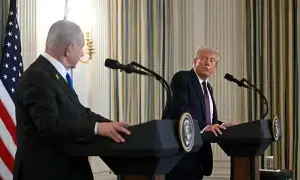
Trump said that suggestion was “false and erroneous” and that the conversations between the two sides had continued without a pause.
“The conversations between us have been going on continuously, including four days ago, three days ago, two days ago, one day ago, and today,” he said in a social media post. He made similar comments on Monday, before the Iranian report.
Trump said on Monday there would be a deal over the next week to extend a ceasefire agreed in early April and reopen the strait. Since mid-March, he has repeatedly said he is close to a deal, which would postpone thorny issues including the future of Iran’s nuclear programme. A ceasefire has largely held since early April, but Iran and the US have exchanged strikes several times over the past week.
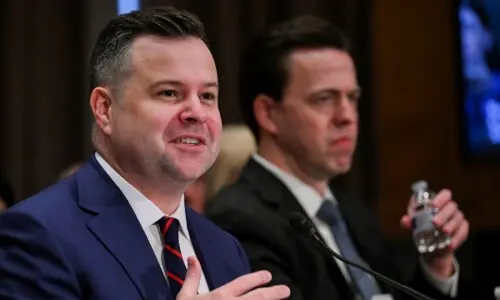
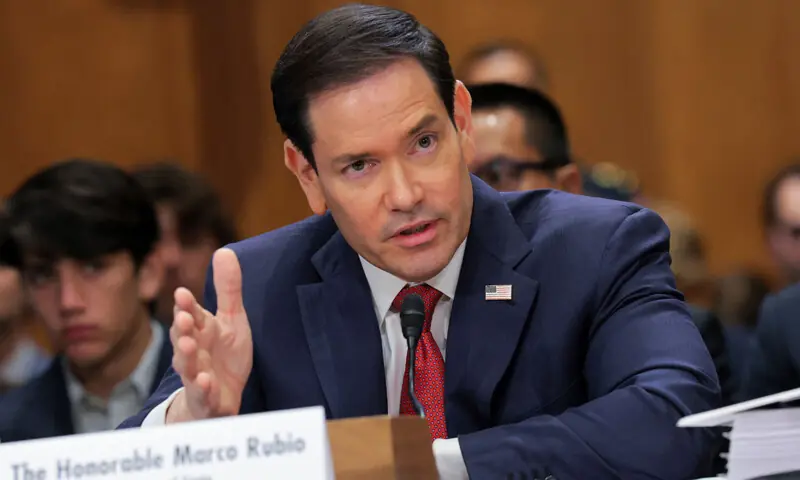
US Secretary of State Marco Rubio told lawmakers on Tuesday that Iran had agreed to negotiate aspects of its nuclear programme that it previously refused to discuss, but added that was not a guarantee that negotiations would lead to a deal.
Trump has said stopping Iran acquiring nuclear weapons was his top priority. Iran has always denied wanting to build a nuclear bomb, saying its atomic programme is for peaceful purposes only.
Iran is also pushing for a limited interim agreement as it tries to ease economic pressure while avoiding major concessions on its nuclear programme, according to Iranian sources.
Rubio signals tough posture
Rubio, who is also Trump’s national security adviser, said in testimony to Congress that the US negotiating team had not offered Iran sanctions relief in exchange for reopening the strait, though he said that was the first condition it must meet.
“Iran is being sanctioned because they’ve highly enriched uranium. Iran is being sanctioned because of their nuclear activities. If they agree to give up those things, there will be sanctions relief associated with their commitment and compliance with those agreements,” he said.
Rubio also insisted that Iran’s supreme leader Mojtaba Khamenei, who was wounded in US-Israeli attacks and has not been seen in public since assuming office, is alive and increasingly active. “I think there are indications out there that he is increasingly engaging at some level,” Rubio said.
He presented a forcefully “America First” vision of American foreign policy before the Senate Foreign Relations Committee, emphasising a more transactional, security-driven global posture under Trump’s second term.
“The purpose of American foreign policy is once again the defence of the American nation: our people, our homeland, our sovereignty, our civilization and our future,” Rubio said at the outset of his testimony.
He added that US leadership must remain global but explicitly self-interested: “We are a global superpower — the most powerful country on Earth… But all of that means very little if that power is not used to protect the people who built it.”
Reinforcing the administration’s doctrine, Rubio told senators: “We are here to win — to win for our country, for our people, and for our interests,” and further underscored a rejection of traditional aid paradigms, stating: “The US government is not a charity. We are not here to play social worker. We are here to win.”
Pakistan urges diplomacy
Meanwhile, Pakistan renewed its call for restraint, de-escalation and a return to diplomacy in the Middle East crisis, saying that dialogue and mediation remain the only sustainable path to resolving conflicts and preventing wider regional instability.
Addressing the UN General Assembly during a debate on strengthening mediation in conflict prevention and resolution, Pakistan’s Permanent Representative to the United Nations, Ambassador Asim Iftikhar Ahmad, said on Monday Islamabad had consistently advocated diplomacy in the recent tensions involving Iran and the United States.
“As a friendly neighbour of Iran, a brotherly partner of the Gulf countries and a country with longstanding ties of amity with the United States, Pakistan continues to make sincere efforts to facilitate a durable solution for regional and global peace and stability,” he said.
The Pakistani envoy used the occasion to press for a stronger role for mediation and preventive diplomacy in addressing international disputes before they escalate into crises.
“Conflicts are not inevitable. They are often the result of diplomacy delayed, dialogue denied, and disputes left to fester,” Mr Ahmad told the assembly. “The first responsibility of the United Nations is not merely to respond to conflicts after they erupt, but to prevent them before they consume lives, regions and generations.”
He argued that mediation should become a central pillar of international conflict prevention rather than a tool used only after violence breaks out. “Mediation must become the guiding principle of prevention, not an instrument of crisis management,” he said.
Later in the day, speaking at an emergency Security Council meeting on Ukraine convened at Romania’s request, Ambassador Ahmad warned that protracted conflicts carry increasing risks of miscalculation and escalation.
He said unresolved wars often generate spillover effects and wider confrontations, a pattern that the international community was witnessing in several regions.
Anwar Iqbal in Washington also contributed to this report
With additional input from agencies
Published in Dawn, June 3rd, 2026