1
1

PRESIDENT Donald Trump’s mercurial personality has been under intense scrutiny in his own country and beyond. Many of his personality traits and governing style have been widely commented upon and discussed.
What is perhaps under-recognised but more consequential, especially for his foreign policy, is how he takes initiatives or starts an endeavour but never finishes them. He embarks on a course of action but doesn’t see it through to bring it to closure. Whether this is because of his short attention span, lack of staying power or consistency, the result is half-done ventures. Among the reasons for this is that he sets unrealistic objectives and when he finds they are unattainable he moves on. Trump changes course when he cannot get his own way. Rather than try to fix the issue at hand, he prefers to kick the can down the road. He switches attention almost randomly from one policy area to another, leaving issues unresolved.
The most striking illustration of Trump’s unfinished ventures is his Gaza peace plan announced with such fanfare seven months ago. Instead of following through with his own 20-point plan, he decided to attack Iran along with Israel. This shift in focus left the Gaza plan at best in limbo but also in disarray. Yes, there is a ceasefire. But it is constantly violated by Israeli attacks, which have claimed the lives of over 700 Palestinians since it came into force in October 2025. Israel occupies over half of Gaza and Israeli Prime Minister Benjamin Netanyahu has now ordered his military to seize 70 per cent of the Strip. The withdrawal of Israeli forces, envisaged by Trump’s plan, never got underway. In fact, what was set out as a multiphase plan didn’t go beyond the first phase. The much-touted international stabilisation force has neither been assembled nor deployed.
President Trump embarks on a course of action but often doesn’t bring it to closure.
Little if anything is heard about the so-called Board of Peace established in January 2026, which Trump described as the most consequential organisation the world had seen. It was given responsibility for the reconstruction of Gaza but that hasn’t even started. Instead, reports indicate the organisation is mired in legal and political problems and the official fund for the Board has no cash. The building of a ‘New Gaza’ supposed to transform the territory into the “riviera of the Middle East” is nowhere on the horizon. The residents of Gaza continue to struggle in dire humanitarian conditions amid massive devastation. This is the shambolic state of Trump’s Gaza peace plan either because he has lost interest or simply shifted priorities to the war on Iran.
Another example of Trump’s unfinished diplomatic interventions is his administration’s efforts to end the Ukraine war, now in its fourth year, though eclipsed by the Middle East crisis. This is the war Trump promised to end in “24 hours” and which he proclaimed would never have started on his watch. He first tried to get Ukraine to accept a plan favourable to Russia saying Ukraine had “no cards” to play. When Kyiv resisted, a 20-point peace plan was agreed between the US and Ukraine in December 2025 aimed at ending the war. But over the past year, Trump routinely insulted the Ukrainian leadership, paused military aid to Ukraine and kept changing his position even while striking a minerals deal with Kyiv. He threatened to impose sanctions on Russia but never made good on this. His administration pursued on and off negotiations with Russia and sought to broker talks between Kyiv and Moscow in trilateral meetings.
Hopes that Trump’s summit meeting in August 2025 with Russian President Vladimir Putin in Alaska would yield a deal or even a ceasefire came to naught. Trump himself raised expectations that he would secure a commitment from Putin for a truce. When he failed, he claimed the best way to end the conflict was to “go directly to a peace agreement, which would end the war, and not a mere ceasefire agreement, which often do not hold up”. Subsequent peace talks made little progress much less produce a breakthrough. Talks stalled in February with Ukrainian officials believing the Trump administration was reluctant to mount pressure on Putin. Before leaving for China, Trump still claimed a settlement between Ukraine and Russia was getting “very close”. But Russian officials countered there was no clear plan to end the war. Meanwhile, US Secretary of State Marco Rubio acknowledged last month that the peace process on Ukraine had stagnated and said Washington was not interested in “endless meetings that lead to nothing”. As the war in Ukraine grinds on, there is slim possibility of reviving peace talks even after the Iran war ends. Both warring sides seem to have lost faith in the process with President Volodymyr Zelensky said to have given up on the US president. This means another diplomatic effort by Trump, which he claimed would be quick and easy to conclude, has not been brought to a close.
While the world waits to see when Trump will close on the Iran war the question is whether he is able to do so in a way consistent with his stated objectives. The no-war, no-peace state of play and diplomatic impasse can continue for weeks if not months. For Trump, the political and economic costs are very high of leaving the Middle East crisis to fester and move on without any resolution. This time it would be hard for him to leave without a deal even though he seems unwilling to accept that it cannot just be on his terms. Also, closure means a lasting deal that ensures there is no return to war, not just an extension of a short-term ceasefire.
The consequences of Trump’s unfinished diplomatic ventures and interventions are obviously detrimental to America’s global standing. They sow doubts about US reliability among Washington’s allies and encourage rivals and adversaries to hold their ground and wait it out rather than show any accommodation. Moreover, when the US does not complete what it starts and moves on leaving behind unfinished business, it loses credibility. That inevitably weakens its position in the world.
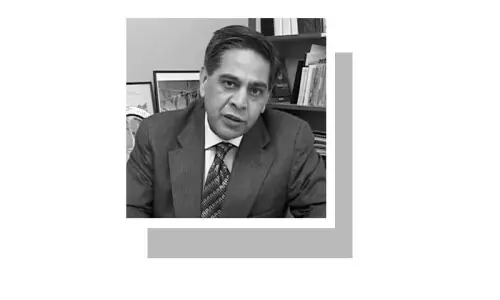
The writer is a former ambassador to the US, UK and UN.
Published in Dawn, June 1st, 2026