Work on the Orange Line, which was inaugurated in October 2020 and funded by a soft US$1.6 billion loan from China, began in 2015. Traversing a 27-kilometre route with 26 stations, it was the first train project in Lahore.
When its construction was announced, and even afterwards, there was a lot of debate about the project. Some of it had to do with the high cost and low expectations regarding its benefits, the impact the trains would have on the environment, Lahore’s heritage sites and its culture. The importance of urban transport was, generally, acknowledged, and the narrative of progress, modernisation and development was strong.
The train route was adjusted in a few places to address some concerns and construction was halted as well to address certain issues, but the trains eventually began operating in late 2020. Fifty workers died over the five years of the construction period. However, the Orange Line serves as one of the main transport arteries across the city today.
The narratives of progress versus environment or heritage preservation are, of course, too simple and reductionist. A large project like this would clearly have many different impacts. Cities change over time; the introduction of the Orange Line was another change, albeit a big one, at a time when a lot was changing in Lahore.
Academics, architects, artists and activists reflect on how a major transport project can reshape neighbourhoods and redefine a city
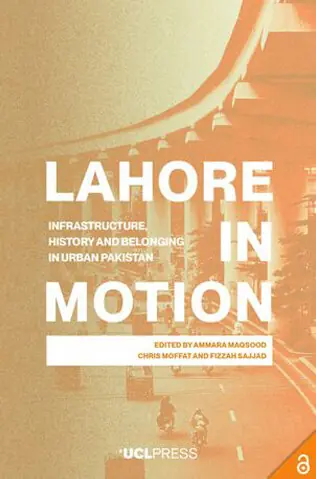
The introduction of Bus Rapid Transport, the construction of a signal-free corridor, many underpasses and overpasses and the Ring Road are just a few other infrastructure and transport projects. Cities are ‘forums of frictions’ and places where change is a constant. This is what gave the editors of the volume Lahore in Motion: Infrastructure, History and Belonging in Urban Pakistan the idea: to answer questions such as ‘How has Lahore negotiated the arrival of the Orange Line?’ and ‘What are some of the narratives that one can pick up on?’.
The three editors of the book (Ammara Maqsood, Associate Professor in Social Anthropology at University College London; Chris Moffat, Senior Lecturer in South Asian History at Queen Mary University of London; and Fizzah Sajjad, an urban planner and geographer with research positions at the London School of Economics and the Lahore University of Management Sciences or Lums) decided to base one chapter each on the 26 Orange Line train stations and their surroundings, invited leading social scientists to each write a chapter.
The contributors comprise historians, anthropologists, sociologists, architects and urban planners including historian Ali Usman Qasmi, sociologist Nida Kirmani, and political sociologist Umair Javed, in addition to architect Hala Bashir Malik, architect and urban planner Mishele Ijaz, and architect, teacher and visual artist Bibi Hajra, an as well as the three editors.
The idea was for each author to visit a station at least once, walk around the neighbourhood, pick up on some of the narratives permeating the area and, if possible, make sense of them by looking at their own ties with Lahore, and then pen a chapter that brought out the narratives and frictions that highlighted the changes urbanisation was bringing in these localities.
We end up with a complex mosaic as a result. Many of the writers are from Lahore or have lived there for many years, so their nostalgia is palpable. Quite a few discuss the Lahore they heard about from their grandparents or parents, or the Lahore of their childhood and how neighbourhoods in the city have changed over the last few decades.
Some pieces highlight the decline of neighbourhoods as businesses have shut down or shifted out of these areas, or as residents have moved to ‘better’ neighbourhoods. Other chapters tell a different story, where a neighbourhood has been invigorated and made more accessible through improved infrastructure and transportation.
Transport networks have broken the relative isolation of certain neighbourhoods and forced them, willingly or not, to integrate more fully into the city. This has also had the effect of homogenising certain areas, so that some neighbourhoods have lost or diluted their distinct characters and cultures. But then, this is part of what urbanisation is. Change has been there and always will be, but only some of it can be — directly or indirectly — attributed to the Orange Line.
Some chapters offer nice snippets of local history. Even Lahoris would probably not know many of the historical facts sprinkled across the chapters: the many shrines dotting Lahore and their history, as well as the histories of many British and even Mughal era buildings and monuments (for example, the reason why a certain area might have a particular name or culture, and so on). I have lived in Lahore for most of my life, and I certainly did not know many of the historical details in the volume.
Despite the same brief and editorial guidelines given to each writer, the result is a collection of chapters that vary significantly in style and content. Some engage more with neighbourhoods than others; some are more reflective, and some engage more with memories. Some are a bit forced, particularly when making connections with neighbourhoods, the Orange Line, or even Lahore. But the variety also brings in diverse perspectives, which is one of the book’s stated aims.
Since neighbourhoods are being discussed, it was deemed appropriate to include photographs in each chapter to provide visual context. This has worked well. But it also meant that the book had to be printed on glossy paper. This has made the book quite heavy. To save on expensive glossy paper, a smaller font size has also been used. I did find reading the book a bit hard because of that: there was just too much printed matter on each page.
There is a good introductory chapter in which the editors outline the motivation and summarise the book’s contributions. The book reminded me of Dr Manan Ahmed Asif’s recent book on Lahore: Disrupted City: Walking the Pathways of Memory and History in Lahore (2024). It was good to see that the editors invited him to write the Afterword to the book, in which he connects his work to his memories of Lahore.
The book is not about the impact of the Orange Line on transport and/or the facilitation of mobility, or whether it has been a boon for Lahore’s development or a curse in terms of its impact on its environment, culture or heritage. It is, rightly, much more nuanced than that. It confronts the various frictions that large projects, in particular, and urban development and change bring about in general.
Neighbourhoods change, livelihoods are impacted, houses and buildings are demolished, new ones come up, old pathways are blocked, new ones open up, congregation points get disrupted, new ones might get set up, local traditions change, people move neighbourhoods, some lose a lot, some gain a lot: the story is never simple.
The book, through the eyes of 26 odd witnesses, sheds some light on these stories. If you are curious about Lahore and its history, or about urban development in Lahore, this is definitely a good read.
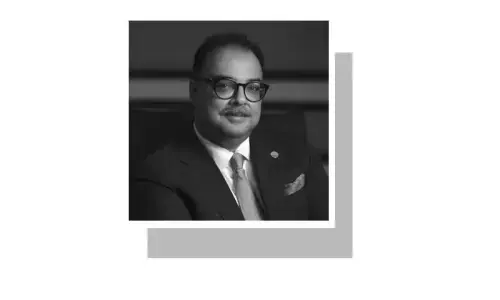
The reviewer is a senior research fellow at the Institute of Development and Economic Alternatives and an associate professor of economics at Lums
Published in Dawn, Books & Authors, 31st, 2026