'Flurry of missiles': Indian sailors risk work at sea as Middle East war grinds on
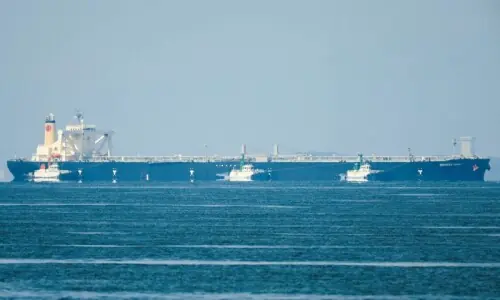
Born to landless Indian farmers, Sunil Pooniya thought a job at sea would be his ticket out of poverty, instead his first voyage saw him diving into the ocean to escape a deadly attack driven by the US-Israel war on Iran.
For hundreds of thousands of Indians, merchant shipping jobs are a lucrative proposition despite the inherent risks.
The attack on Pooniya’s ship killed two fellow Indians — the country’s sailors are among the highest merchant maritime casualties from the Middle East war.
Dalip Singh and Ashish Kumar Singh were the first Indians killed in the conflict, after their oil tanker was hit on March 1 by projectiles off Oman’s Khasab port.
“There was a huge noise and the whole ship shook,” Pooniya recalled.
“I thought something had gone wrong with the engine, but a missile had hit us,” Pooniya added, who had been on the Palau-flagged MV Skylight.
“The whole ship was up in flames.”
Pooniya, 26, had travelled together with Dalip to Dubai, where they boarded the tanker.
“Everyone jumped into the sea wearing life jackets,” Pooniya told AFP, now back home in India. “I screamed for Dalip, but he was gone in the fire.”
India is one of the largest contributors of sailors on merchant shipping worldwide, with more than 320,000 active seafarers in 2025, according to the country’s shipping ministry.
Eleven merchant sailors have been killed in the conflict, according to the International Maritime Organization (IMO). At least four were Indian.
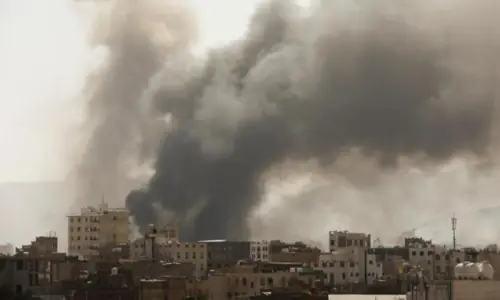
Iran has restricted shipping through the Strait of Hormuz — which normally carries about one-fifth of the world’s oil and liquefied natural gas (LNG) shipments — since the United States and Israel launched attacks on February 28.
The US has imposed its own naval blockade on Iranian ports.
‘Flurry of missiles’
Ships have been hit by projectiles and fired on in dozens of incidents, according to the British maritime security monitor UKMTO.
An Indian-flagged ship carrying livestock from Somalia was reported to have been hit and sunk off Oman on May 13 — all 14 crew were rescued.
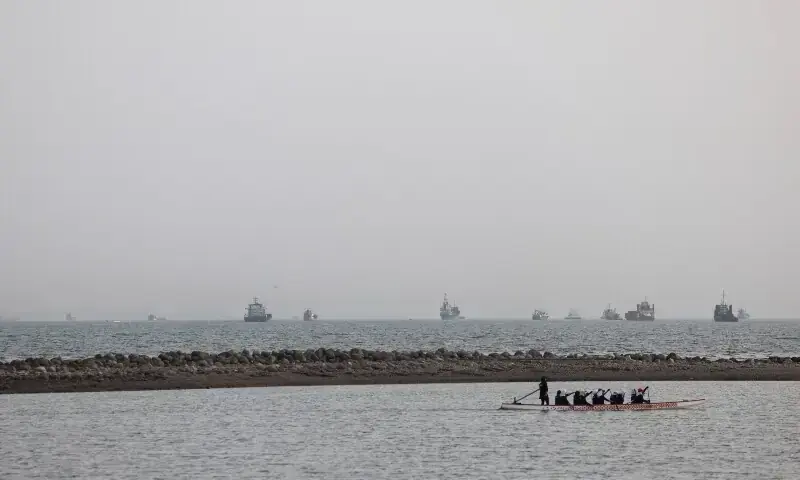
Thousands of Indians are among the estimated 20,000 seafarers stranded by the Strait of Hormuz blockade.
But Manoj Yadav, general secretary of the Forward Seamen’s Union of India, said people just want to earn.
“We have a massive unemployment problem,” he said. “Being on a ship is a convenient way out for many, as it is a relatively well-paying job for the qualification it demands.”
Dalip, 25, a high-school graduate from the hot deserts of Rajasthan, was an engineering support member, on his second voyage.
“Year after year, he failed to get a government job,” his younger brother Manoj Singh, 24, told AFP.
Desperate for a better life for his family, Dalip borrowed money and enrolled himself in a maritime training programme, and secured a job on a merchant ship.
Dalip’s salary — $450 dollars a month — was roughly three times the average income of a rural household.
His brother Manoj Singh, a stone cutter, had been hoping to follow him to sea — a plan he has since abandoned.
“My father died of shock after hearing that my brother was dead,” he said. “I cannot afford to leave home now.”
The family of the ship’s captain, Ashish Kumar Singh, 38, from the eastern state of Bihar, is mourning his death.
“I just want the government to help me get my husband’s remains back,” said his wife, Anshu Kumari. “How do I otherwise get closure?”
Raju Ram, 33, also from Rajasthan, has been on a tanker in the port of Fujairah in the United Arab Emirates since April, waiting to cross the Strait of Hormuz.
He has witnessed a “flurry of missiles” near his vessel.
“It is risky, of course,” he told AFP, by telephone from the vessel. “But at least our families respect us for the money we send back home.”
Pooniya, meanwhile, says he has few other options.
“The jobs that people like us get in India, you are always stuck in a cycle of debt,” he said. “In this line of work, at least the money is good.”