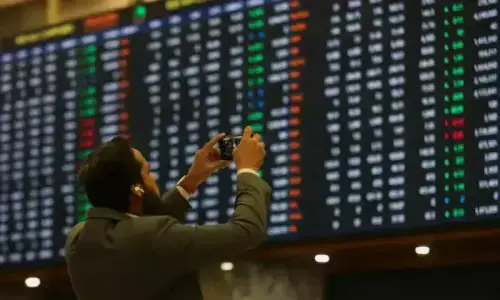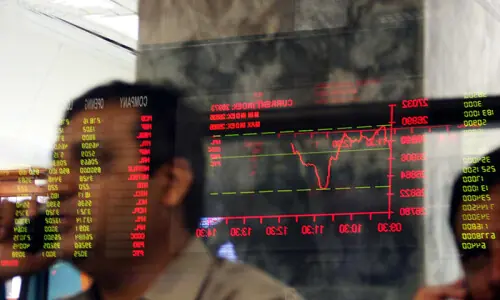
KARACHI: After a three-session recovery drive, the Pakistan Stock Exchange (PSX) came under intense selling pressure as investors took profits on Friday, pushing the KSE 100 index into the red as volatility persisted ahead of the long Eidul Azha holidays next week.
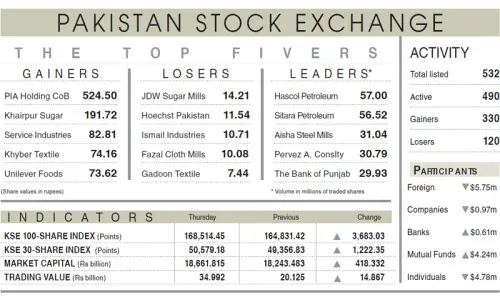
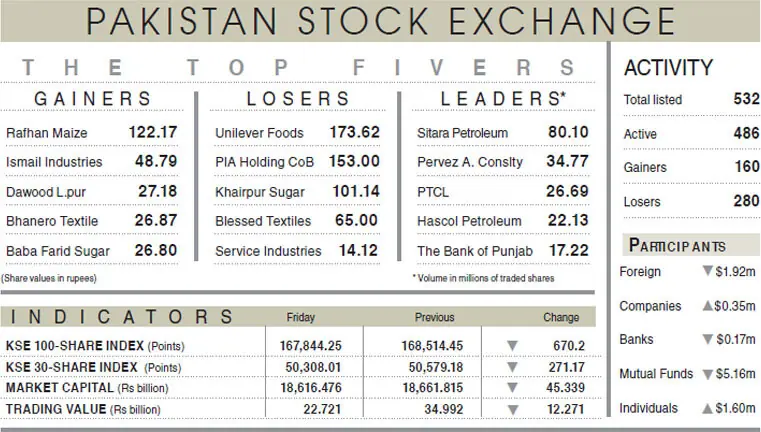
Ali Najib, Deputy Head of Trading at Arif Habib Ltd, said the PSX, after a mixed trading session, closed at 167,844.25, down 670.20 points or 0.40 per cent.
The market opened on a positive note as investor sentiment improved amid reports of ongoing US-Iran negotiations and easing international oil prices.
However, profit-taking in the latter half of the session erased early gains, pushing the benchmark into negative territory.
On the geopolitical front, the UAE, alongside Saudi Arabia and Qatar, urged US President Donald Trump to allow more time for diplomacy with Iran. US Secretary of State Marco Rubio noted “slight progress” in negotiations, although uncertainty over a lasting agreement persists.
Investor participation weakened sharply, with traded volume plunging 34.08pc to 480.81 million shares and turnover value falling 35.06pc to Rs22.7bn. Sitara Petroluem led the volume chart with 80 million shares.
Topline Securities Ltd said the index opened on a positive note and gained to an intraday high of 169,624.78, thanks to news flow suggesting that peace negotiations have entered a final stage, which led to a decline in oil prices. However, later in the day, investors came in to sell ahead of the weekend.
The top negative contributions to the index came from United Bank, Habib Bank, Lucky Cement, Engro Holdings, and Systems Ltd, which cumulatively contributed 354 points to the index.
Analysts see Middle East developments as a continuing key catalyst for the market, with investors carefully monitoring diplomatic progress and geopolitical news. Recent advances in negotiations have improved sentiment, although doubts about reaching a lasting deal remain.
Any further de-escalation could bolster investor confidence, while adverse developments may trigger renewed volatility across regional markets.
Published in Dawn, May 23rd, 2026