0
0

ISLAMABAD: Pakistan has responded to claims made by India during a meeting of the United Nations Security Council (UNSC), saying that the neighbouring country stood exposed for “terrorism, occupation, aggression, repression and disregard for international law”.
The development came during a UNSC debate on the protection of civilians. During the debate, India’s permanent representative to the UN, Harish Parvathaneni, accused Pakistan of ignoring international humanitarian obligations, targeting civilians and having a “long-tainted record of genocidal acts”, Times of India reported. He also reiterated the Afghan Taliban’s claims regarding the targeting of a hospital in Kabul earlier this year.
The statement by India came after Pakistan had earlier highlighted the plight of the people of occupied Kashmir.
“India once again came to this council wearing the mask of a victim, but the world can see the face behind that mask,” said Pakistan’s representative, Saima Saleem, in response to the Indian envoy’s remarks.
Islamabad hits back at New Delhi’s claims, highlights its disdain for international law
“It is the face of a state that exports terrorism abroad, occupies people by force, persecutes minorities at home, weaponises water, commits aggression in the region, and then tries to lecture others on the protection of civilians,” she added.
‘Terrorist proxies’
“Its terrorist proxies, including the Tehreek-i-Taliban Pakistan, Balochistan Liberation Army and Majeed Brigade, have killed thousands of civilians, including women and children, in our mosques, markets, schools and streets through networks financed, facilitated and operated from Afghan soil,” she continued.
Commenting on Afghanistan, she said that Pakistan had carried out “precise, deliberate and professional counterterrorism operations against terrorist hideouts, training camps, ammunition storage sites and support networks used to plan and launch attacks against Pakistani civilians, security forces and infrastructure”.
“These operations were directed solely against terrorists and their infrastructure, not against the brotherly people of Afghanistan or civilian facilities. Allegations advanced by the Taliban regime and echoed by their Indian patrons are part of a familiar disinformation campaign to hide their crimes against innocent civilians in Pakistan,” she said.
“We can sense India’s disappointment, as its investments in the use of Afghan terrorist franchises against Pakistan are going to waste due to our effective counterterrorism operations,” Ms Saleem remarked.
She went on to say that India could neither conceal nor deny its occupation of Kashmir. She added that civilians in occupied Kashmir were being killed, detained, dispossessed and silenced, while an entire people were being denied their right to self-determination.
She further said India’s treatment of its minorities should “alarm the conscience of the world”, adding that “Islamophobia has been normalised as policy, hate speech rewarded in politics, mob violence met with impunity, and discrimination turned into a daily reality for Muslims and other minorities”.
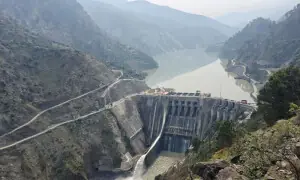
Ms Saleem also highlighted India’s decision to hold the Indus Waters Treaty in abeyance, saying this pointed to its disregard for international law.
“A state that threatens the water, food security and livelihoods of millions of Pakistanis cannot certainly speak of civilian protection,” she said.
Published in Dawn, May 22nd, 2026