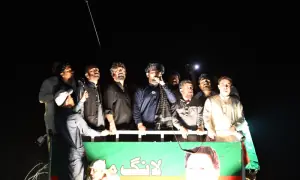
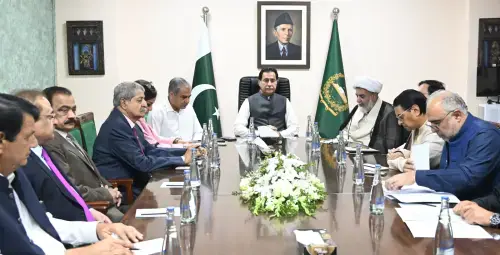
THE opposition is astir. There is talk of widespread protests this Friday over a list of dissatisfactions with the federal government. That list includes secular gripes like inflation, the high prices of fuel, and, in the opposition’s words, “prevailing lawlessness”, as well as more political grievances such as the restoration of fundamental rights, the release of political prisoners, and the poor treatment allegedly being visited upon former prime minister Imran Khan and his spouse in jail. It has been a while since Pakistan has seen the kind of public participation one usually associates with a healthy political system, and it remains to be seen if an opposition protest at the scale of what has been promised will even materialise. Most recent attempts to put pressure on the government through mass mobilisation have proven underwhelming — likely a symptom of public disillusionment with the practice following repeated violent crackdowns on political gatherings. Still, the ruling parties would be well-served to allow the opposition to have its say. Peaceful public protests are a civil right as well as one of the healthier media for social catharsis. This is something Pakistan sorely needs; perhaps now more than ever.
The PTI is no stranger to street politics, but its tactics so far have not yielded much for its leadership in terms of tangible benefits. Perhaps it is time it rethought its approach. The government, meanwhile, must resist its own tendency to clamp down on the first sign of civil dissatisfaction. Pakistan’s political system was built on democratic principles, and those principles must be honoured. The government must allow the opposition parties to protest as long as they commit to observing the law and ensuring peaceful assembly. It should not create administrative difficulties or resort to unleashing armed law enforcers on protesters exercising their right to express their grievances. Leaders on both sides of the divide must also realise that there may be no place for them left if they allow brute force to become the only means of keeping the administrative machinery running. Modern societies have evolved on the basis of certain unwritten social contracts between the rulers and the ruled. It is only by honouring that contract — through restraint in power and responsibility in protest — that Pakistan’s leaders can hope to hold together a political system still worth believing in.
Published in Dawn, May 21st, 2026