0
0

NEELA Gumbad, or the blue dome, is a monument near Lahore’s famous Anarkali Bazaar. The 17th-century structure is the mausoleum of a Sufi Saint Syed Abdur Razzaq. Neela Gumbad owes its name to the Central Asian-styled blue tiles that once covered the dome. The complex has a mosque, too.
As the Punjab government began a massive refurbishment programme of the historic structure in recent months, some curious persons began asking questions about the history of the octagonal building and the person buried therein. But historical facts about this imposing landmark and the revered Sufi are somewhat clouded as different sources give conflicting pieces of information on them.
In a book published recently, titled Tareekh-i-Lahore, a brief article is included that describes the tomb called Neela Gumbad. Written by Prof Muhammad Shuj’auddin, this article was originally published in March 15, 1948, issue of Fanoos, a magazine published from Lahore. The piece says that most of the blue tiles that gave the building its name are gone — and he wrote this in the 1940s.
Quoting Mufti Ghulam Sarvar, Prof Shuj’a adds that the building is the burial place of a godly person Syed Abdur Razzaq Makki Sabzwari, whose ancestors had migrated from Sabzwar, Iran, to Ghazni, Afghanistan. In his youth, Abdur Razzaq Makki travelled to Peshawar and then to Delhi, joining the royal forces. But he soon devoted himself to religion and, so wrote some scholars, in 1001 Hijri/ 1592-3 AD, he became a spiritual disciple of Miraan Muhammad Shah Mauj Darya Bukhari of Lahore, a saint of Suharvardiya Sufi Order, who died in 1013 Hijri/ 1604 AD. Abdur Razzaq settled in Lahore and was revered as a great Sufi and spiritual personality. Abdur Razzaq is often called ‘Makki’ and based on this cognomen some scholars, such as K. L. Hindi, wrote that he had migrated from Makkah, though there is little evidence to prove the statement.
Though Prof Shuj’a has written that Saint Abdur Razzaq passed away in 1048 Hijri/1638 AD, there seems to be some typographical error as the author of Tehqeeqaat-i-Chishti has mentioned 1084 Hijri as Abdur Razzaq’s death year, which corresponds to 1673-74. Yet another year of death is given by Dr Abdullah Chughtai as he wrote in his Tareekh-i-Amaakin-i-Lahore that Abdur Razzaq had arrived in Lahore during Mughal emperor Humayun’s era and died in 953 Hijri (or 1546/47).
At some later stage, the building of the mausoleum was constructed and with it a grand mosque. Both the mosque and the mausoleum fell into the hands of Sikhs when Ranjit Singh captured Lahore in 1799. During the Sikh reign, the mosque was converted into a military warehouse and the entire surrounding area was turned into a cantonment. In 1856, the British shifted the cantonment to another area known as Miaan Mir. The British redeemed both Neela Gumbad and the annexed mosque to the Muslims who got the buildings repaired.
Tareekh-i-Lahore, subtitled Prof Muhammad Shuj’auddin Marhoom Ke Ghair Mudavvan Maqaalaat, is edited by Afzal Haq Qarshi and published by Lahore’s Maktab-i-Jamal. Other articles in the book deliberate on Lahore’s political and cultural history during different eras, such as, Ghaznavid, Aibak and Mughal. It also delineates some other historical monuments, such as, Jahangir’s mausoleum, Shalamar Gardens, Mahabat Khan’s garden and mausoleum, Lahore’s royal baths and other relics.
The book includes articles on some historical personalities from Lahore, for instance, Hazrat Ali Bin Usman Hajveri, popularly known as Data Ganj Bakhsh, Shah Chiraagh, Nawab Abdus Samad and some others. Begumpura, a neighbourhood in Lahore, also known as Mughalpura, was among the symbol of Mughal era Lahore’s grandeurs and splendours. Its historical buildings, says the author, were gradually crumbling and disappearing in 1940s. Many of the relics, not only in Lahore but also elsewhere in the country, are gone forever and restoring the remaining ones must be our priority.
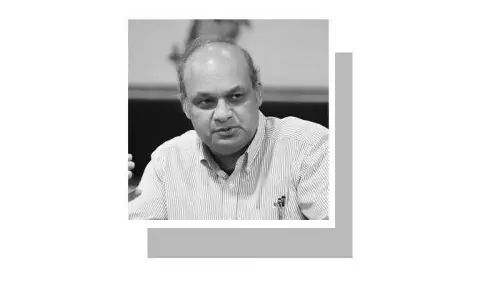
In his foreword, Qarshi says that Prof Muhammad Shuj’auddin (1918-1965) was an educator, historian and archaeologist. He was a walking encyclopaedia of Lahore’s history, its historic buildings — graves, tombs, gardens, havelis (mansions) and other remnants. In addition to teaching at Lahore’s Dyal Singh College, he taught at Punjab University’s history department and contributed to literary and academic Urdu journals. Aside from a couple of textbooks, Prof Shuja’s book titled Noor Jehan and Her Times had appeared in his lifetime. Asraar-i-Samadi, a manuscript that he compiled, published posthumously. Some of his books still remain unpublished.
As mentioned by Prof Muhammad Aslam in his book Khuftagaan-i-Khaak-i-Lahore, Prof Muhammad Shuj’auddin died in Lahore on Jan 27, 1965.
Published in Dawn, May 18th, 2026