Lahore Chamber of Commerce and Industry seeks cut in business costs


 0
0

BLAHORE: Finance Minister Muhammad Aurangzeb announced that the digitisation initiatives within the Federal Board of Revenue (FBR) are being enhanced through Pakistan Revenue Automation Ltd (PRAL).
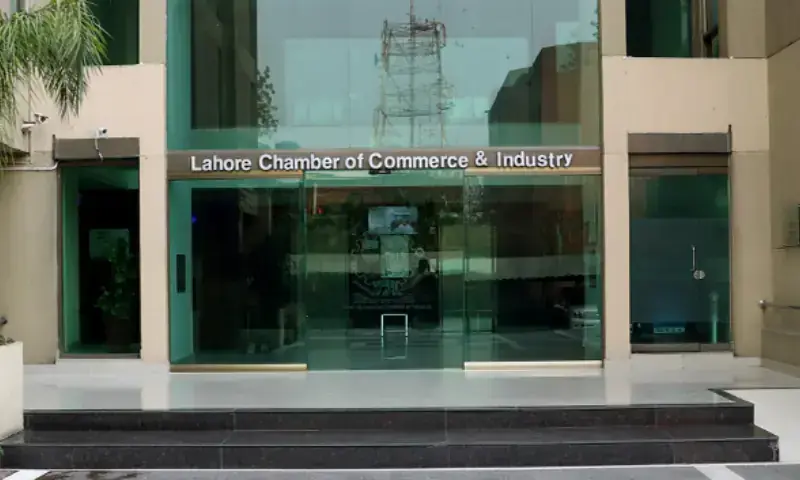
According to the Lahore Chamber of Commerce and Industry (LCCI), the finance minister, in a meeting with LCCI President Faheem Ur Rehman Saigol, appreciated the comprehensive proposals submitted by the chamber for the 2026-27 budget.
Aurangzeb acknowledged the chamber’s constructive role in highlighting the challenges faced by the business community. He directed the Director General of the Tax Policy Office, Dr Najeeb Ahmed Memon, to review the budget proposals presented by the LCCI.
The minister told the LCCI president that reforms in the FBR are aimed at minimising human interaction, facilitating taxpayers and improving the overall business environment in the country.
He said the consultations with business community would continue on a regular basis to ensure effective stakeholder engagement in economic policymaking.
Speaking on the occasion, the LCCI president said that consistent engagement between the government and private sector is essential for restoring business confidence, promoting industrial growth and achieving sustainable economic stability.
The LCCI budget proposals called for an end to policy instability caused by frequent SROs and shifting tax interpretations, terming unpredictability as one of the major reasons behind de-industrialisation. The chamber also urged the government to reduce the cost of doing business, which it said is currently 22 to 30 per cent higher than competing regional economies.
It proposed introduction of a sector-wise tariff structure to protect domestic industries operating under significantly higher costs than regional competitors. It also demanded restoration of a simple and predictable Final Tax Regime (FTR) for exporters and the introduction of a fixed tax regime for traders to broaden the tax base.
Among other proposals, the LCCI stressed timely payment of tax refunds with compensation for delays, a reduction in withholding tax disparity between manufacturers and commercial importers, a revision of Section 113 for low-margin sectors, and a review of Section 7E to encourage documented investment.
Published in Dawn, May 8th, 2026