Can Trump’s push for a deal with Iran turn a tactical pause into lasting peace?
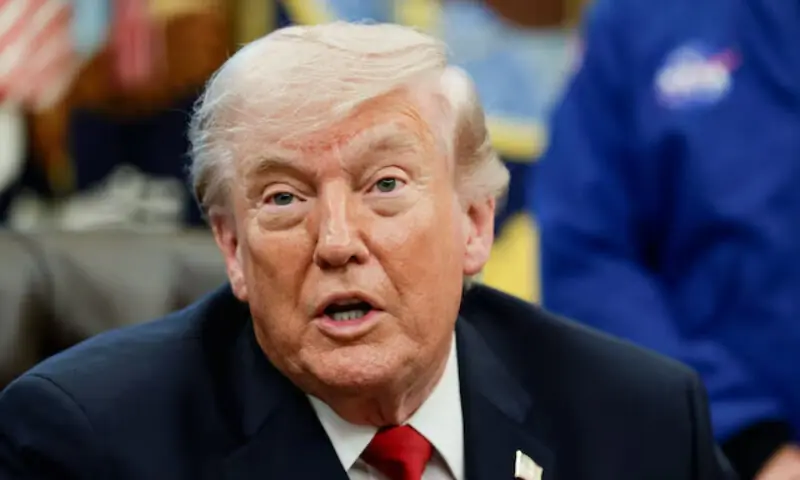


WASHINGTON: After weeks of military escalation, economic pressure and threats of a wider regional conflict, the Trump administration now appears to be searching for a diplomatic exit from its confrontation with Iran, even as officials in Washington insist the United States still holds the upper hand.
President Donald Trump’s decision this week to pause a planned naval operation aimed at escorting commercial vessels through the Strait of Hormuz has triggered debate over whether Washington is moving toward a negotiated settlement or simply recalibrating pressure before renewed escalation.
The debate has been further intensified by Trump’s assertion that a peace deal with Iran is now likely — a claim that contrasts with the uncertainty still surrounding core disputes over nuclear capability, sanctions and maritime security.
Analysts say the latest shift reflects a familiar pattern in US-Iran relations: escalation followed by partial de-escalation, without a clear end state.
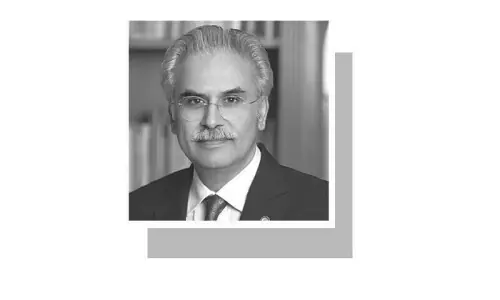
One of the most prominent voices analysing this moment is Vali Nasr, an Iranian-American scholar and professor at Johns Hopkins University’s School of Advanced International Studies. A former senior adviser to the US State Department, he has been commenting on the crisis in interviews, including to CNN, and in public commentary.
Nasr argues that Washington may now be trying to wind down the confrontation without fully achieving its stated objectives.
“Once the war ends, it will not start again. Likely the administration is claiming these maximal gains as political cover to end the war without achieving any of the objectives that it was after when the war started.”
He adds that the crisis has created new strategic problems rather than resolving old ones: “Now its goal is to end the war and solve a problem that did not exist before the war: the closure of the Strait of Hormuz.”
Nasr also stresses that diplomacy between the two sides has repeatedly followed a cycle of apparent breakthroughs that fail to materialise.
“We have been here before. He [Trump] claimed we are very close to a deal. He put his wish list on the table, and ended it when the Iranians did not respond as he expected.”
That’s why, he said, he [Trump] was also taking the latest claims of a possible deal “with a grain of salt.”
On the likely sequencing of negotiations, he suggests Iran will not make irreversible nuclear commitments first: “The Iranians are going to give the same response they gave before, which is we can end the war now. You lift your blockade. We open the Strait of Hormuz. We will see if this works for a month. During that time, we can start talking about everything else.”
He adds that Tehran is likely to test whether Washington can sustain de-escalation before engaging on the nuclear issue. “They are not going to make any commitments on the nuclear issue before they see that the president can deliver on the first step, which is lifting the blockade.”
A more structural interpretation is offered by Richard Haass, an American diplomat and former president of the Council on Foreign Relations, a leading US foreign policy think tank.
Haass argues that both sides have an immediate shared interest in preventing disruption of maritime trade.
“We should take Iran up on its proposal to reopen the Strait of Hormuz,” he said.
He warns that linking maritime access to broader nuclear negotiations could have global consequences.
“To link opening it to resolving the complex, contentious nuclear issue risks plunging the world economy into depression.”
Haass also argues that “Iran has proven to be far more resourceful and resilient than Trump bargained for,” and cautions that continued escalation is unlikely to achieve broader US strategic goals.
“Continued war or escalation would not bring the United States closer to accomplishing these goals“ of regime change or a nuclear deal.
Instead, he advocates a phased approach focused on maritime stability. “A ‘Strait First’ approach makes the most sense given the economic urgency of reopening the waterway.”
He suggests a framework treating the Strait as an international waterway with shared oversight and mechanisms to prevent incidents.
From within Washington’s political system, Senator Jack Reed, a Democrat from Rhode Island and ranking member of the Senate Armed Services Committee, has raised concerns about coherence in US policy.
In remarks in congressional and media interviews in Washington, Reed has criticised shifting operational decisions during the crisis.
“One day, we suspend Operation Epic Fury. The next day we impose Operation Freedom… and the next day we annul Operation Freedom, or at least temporarily suspend it.”
He argues that the policy direction lacks clarity.
“It’s completely incoherent.” Reed has also raised concerns about transparency with Congress.
“This is one of those situations where the Department of Defence is not providing any information to Congress, and not just to Democrats but Republicans too.”
Taken together, the three perspectives highlight both the possibility and the fragility of the current diplomatic opening.
Nasr sees a managed exit rather than a decisive settlement. Haass sees a narrow but realistic pathway through maritime stabilisation. Reed sees strategic inconsistency and unclear objectives in Washington’s approach.