Punjab CM launches AI-based sanitation monitoring
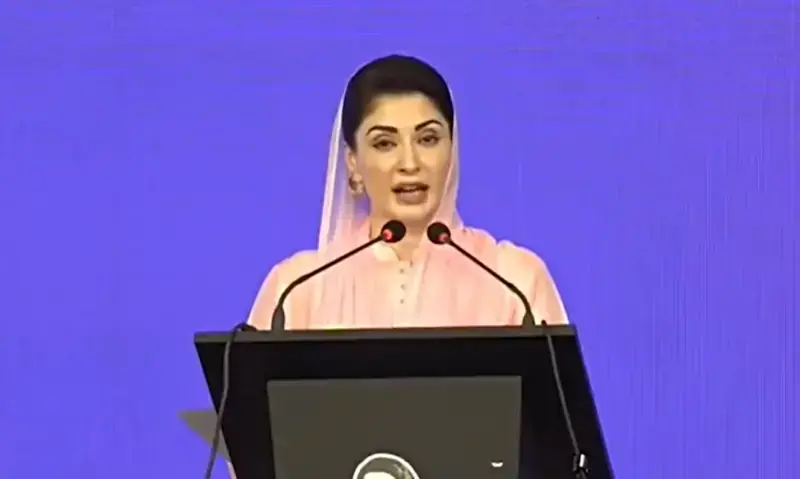
LAHORE: Chief Minister Maryam Nawaz claimed on Tuesday that she had put an end to political interference in administrative affairs as she considered it a sin.
“I have eliminated political interference in administrative affairs, ensuring that such decisions are made on merit. I consider political interference a sin,” she told bureaucrats during the launch of an artificial intelligence-based sanitation monitoring system across the province, bringing tens of thousands of workers and vehicles under digital oversight as a part of ‘Suthra Punjab’ initiative.
Under the initiative, around 40,000 sanitation vehicles and over 176,000 workers will be monitored through AI-enabled systems. Specially equipped motorbikes fitted with automated cameras will be deployed to identify garbage in real time, capture live images and relay field conditions to a central monitoring system.
In her address, she said, “Our political elite tries to ‘adjust’ its men (in the government). If someone tries to secure a position through a parachute entry, they are unlikely to perform as they rely more on backing than on merit or accountability”.
CM maryam mentioned how lawmakers and ministers interfered in transfers and postings.
“Pressure comes from the MNAs, MPAs and ministers in administrative affairs. But I have never instructed anyone to hire one person or dismiss another. Anyone brought in through my influence would be unlikely to perform,” she said and added that she was there to take pressure and not take sides.
“If you can’t take pressure, leave and join some other profession,” she told the officers.
She talked about her sleep deprivation since she became the CM.
“I sleep only four to six hours, but I never doze off in meetings because I take my responsibilities seriously.” She warned that no corruption would be tolerated in the projects and there should not be any ghost employees.
The CM said the Suthra Punjab initiative was closest to her heart, adding that cleanliness was not just a slogan but a reflection of collective societal thinking.
“This is not merely a cleanliness project but a social transformation. Every process must be documented, transparent and aligned with KPIs,” she said.
“Every village should have the same standard of cleanliness as cities,” she said, expressing her vision that no area of Punjab should remain deprived of sanitation facilities.
Referring to international standards, she cited countries like Japan and Singapore where cleanliness was maintained round the clock, noting that field presence was essential for effective monitoring.
CM expressed anger at the Suthra Punjab employees who threw garbage during protests over unpaid salaries, saying that while the right to protest was legitimate, such conduct would not be tolerated.
Published in Dawn, May 6th, 2026