• Cape Verde refuses to allow MV Hondius to dock
• Mostly British, American and Spanish passengers on board; deceased include German, Dutch nationals
• WHO says risk remains low, as hantavirus not easily transmitted between people
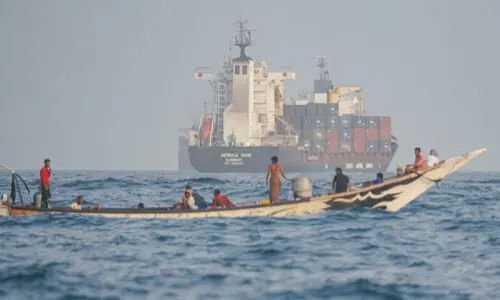
GENEVA / FRANKFURT: Three people died and nearly 150 others remained trapped on a luxury cruise ship, off West Africa, due to a suspected outbreak of hantavirus on Monday, as passengers were not allowed to disembark in Cape Verde where it is anchored, authorities said, expressing concern for the local population.
Mostly people from Spain, Britain and the United States are among 23 nationalities of the 149 people aboard the MV Hondius, which was travelling from Ushuaia in Argentina to Cape Verde off the coast of west Africa.
The island nation’s denial to disembark came even through WHO Europe said the risk to the wider public remained low.
Two died on board and one after disembarking the ship earlier. One passenger is in intensive care in Johannesburg and two others “require urgent medical care”. Hantavirus, an illness usually transmitted to humans from rodents, has been confirmed in the passenger currently in intensive care in Johannesburg, the operator said.
As the ship “was not granted authorisation to dock at the port of Praia”, off which it is anchored, Spain’s Canary Islands are under consideration for disembarkation, “where further medical screening and handling could take place”, the operator said.
South Africa’s health department confirmed two of the dead were Dutch nationals, a 70-year-old man, who died on St. Helena, and later his wife, 69, who died in South Africa after collapsing at O.R. Tambo International Airport. A laboratory test confirmed the presence of hantavirus in the British man being treated in a private clinic in Johannesburg, the department added.
Germany also confirmed the death of one of its citizens.
‘Serious medical situation’
The ship’s Netherlands-based operator, Oceanwide Expeditions, said it was “managing a serious medical situation” and looking into whether passengers could be screened and disembarked on the islands of Las Palmas and Tenerife.
It said it was trying to arrange the repatriation of two crew members with symptoms of the disease, one British and one Dutch, along with the body of the German national and a “guest closely associated with the deceased” who was not ill.
“We’re not just headlines: we’re people with families, with lives, with people waiting for us at home,” Jake Rosmarin, a US travel blogger, said in a tearful Instagram video post from the ship on Monday. “There is a lot of uncertainty and that is the hardest part,” he added.
WHO acting with urgency
WHO regional director for Europe, Hans Kluge, said, “The risk to the wider public remains low. There is no need for panic or travel restrictions.” He said the WHO was acting with urgency to support the response to the outbreak and was working with the countries involved to support medical care, evacuation, investigations and a public health risk assessment.
“Hantavirus infections are uncommon and usually linked to exposure to infected rodents. While severe in some cases, it is not easily transmitted between people,” he said.
A spokesperson for the Netherlands’ National Institute for Public Health (RIVM), which is assisting, said the source of the infection was not yet clear.
Hantavirus, which can cause fatal respiratory illness, is spread when droppings and urine of rodents become airborne. There are no specific drugs to treat hantavirus, so treatment focuses on supportive care, including putting patients on ventilators in severe cases.
Hantavirus usually begins with flu-like symptoms, such as fatigue and fever, one to eight weeks after exposure.
Published in Dawn, May 5th, 2026