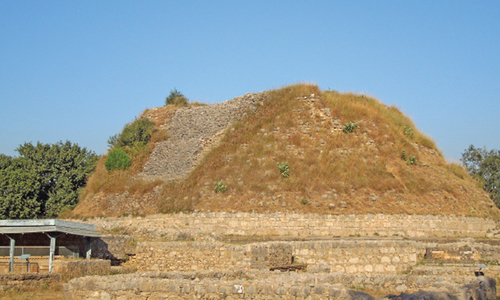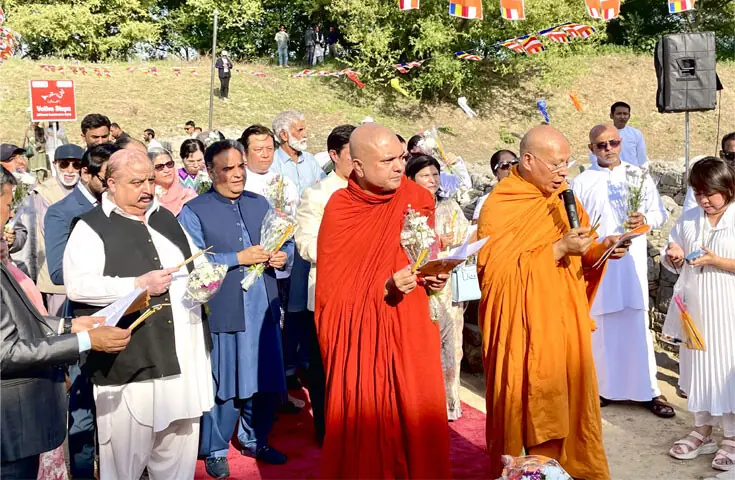
TAXILA: After nearly 15 centuries of silence, the ancient Dharmarajika Stupa came alive on Friday as chants of Buddhist monks echoed once again across the historic site, marking the first such occasion since its destruction in the 5th century CE by the White Huns.
For centuries, the site had remained largely quiet, disturbed only by the soft tread of visitors and the rustle of leaves in the breeze. On Friday afternoon, however, the centuries-old calm gave way to a spiritually charged atmosphere as monks performed religious rituals and delivered a Dhamma sermon at one of the most significant Buddhist heritage sites associated with Emperor Ashoka.
The peace prayer ceremony was organised by the Punjab Archaeology Department in collaboration with Buddhist delegations from five Southeast Asian countries, including Sri Lanka, Thailand, Nepal, Vietnam and Myanmar.
The ritual began in the afternoon with venerable monks from Sri Lanka presenting traditional offerings of incense, light, water, flowers, fruit and rice, followed by the delivery of the Dhamma sermon.
Each offering carried symbolic meaning. Incense represented purity and moral essence, light signified wisdom, water reflected clarity and purification, flowers symbolised the transient nature of life, fruits represented enlightenment, while rice and other food items embodied sustenance for both body and mind.
The ceremony concluded with circumambulation around the main stupa.
The event coincided with Vesak Day, the most sacred Buddhist festival, which marks the birth, enlightenment and passing of Gautama Buddha. Observed by Buddhists around the world, the day, also known as Buddha Purnima, commemorates the birth of Buddha in 623 BC, his attainment of enlightenment, and his passing at the age of 80, all believed to have occurred on the same day. According to Buddhist tradition, the year 2026 marks the 2,570th anniversary of Buddha’s enlightenment.
The United Nations declared Vesak as International Vesak Day in 2000.
Most Venerable Thebo, a distinguished monk from Sri Lanka, along with the renowned Most Venerable Anil Sakiya and other monks, led prayers and delivered sermons while circling the stupa. They called for the revival of the message of peace associated with Emperor Ashoka, who is believed to have promoted Buddhist teachings from this very site over 1,500 years ago.
In his sermon, Most Venerable Anil Sakiya described the stupa as a symbol of peace and said the ceremony was a reminder of the urgent need for harmony in today’s world.
He noted that Taxila was a major centre of learning in the ancient Gandhara civilisation and played a key role in the spread of Buddhism across the region and beyond.
Speaking to the media, Thailand’s Ambassador to Pakistan, Rongvudhi Virabutr, said five Southeast Asian countries had joined hands to celebrate Vesak Day at Taxila. He expressed optimism about increased religious tourism from Thailand but noted the need for improvements in infrastructure and services.
Sri Lanka’s High Commissioner, retired Admiral Ravindra Chandrasiri Wijegunaratne, said such events would further strengthen the longstanding cultural ties between the two countries and help promote a global message of peace.
Ambassador of Nepal to Pakistan, Ms Rita Dhital, termed the event a success, noting that joint participation by multiple countries highlighted the shared values of peace and interfaith harmony. She said such initiatives would enhance mutual understanding and promote religious tourism.
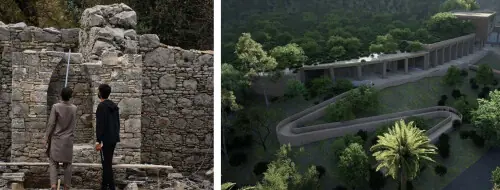
Syed Zaheer Shah Zaildar, an office-bearer of the Pak-Romania Friendship Association, described the event as a potential “game changer” for Taxila, saying it could boost religious tourism and support infrastructure development under a Rs3.97 billion heritage project.
Later, addressing a seminar titled “A Confluence of Faith, Culture, and Shared Heritage” at the Taxila Museum, Federal Minister for National Heritage and Culture Aurangzeb Khan Khichi reaffirmed Pakistan’s commitment to preserving its Buddhist heritage.
He said the country held immense potential for religious tourism due to its rich cultural legacy.
Published in Dawn, May 3rd, 2026