ISLAMABAD: Pakistan marked International Labour Day on Friday with the Ministry of Climate Change and Environmental Coordination warning that intensifying heatwaves and recurring floods are fast evolving into a nationwide labour crisis, exposing millions of workers to growing health and economic risks.
Climate change is no longer an environmental issue alone; it is a labour crisis unfolding in real time, said Mohammad Saleem Shaikh, the ministry’s media spokesperson and climate policy advocacy specialist.
He said Pakistan’s workforce estimated at over 57 million was increasingly on the frontlines of climate vulnerability, from heat-stressed daily wage earners to flood-affected farmers.
Despite contributing around one per cent to global greenhouse gas emissions, Pakistan remains among the countries most vulnerable to climate change. Around 43 per cent of its workers are employed in agriculture, leaving a significant portion directly exposed to erratic rainfall, drought and floods.
Climate impacts projected to reduce Pakistan’s GDP by up to 1820pc by 2050 without accelerated adaptation measures
Shaikh noted that the frequency and intensity of extreme weather events, including heatwaves, floods and glacial lake outburst floods (Glofs), had increased sharply over the past two decades, disproportionately affecting informal and outdoor workers with limited safety nets.
When heat reduces workers’ capacity or floods wipe out livelihoods overnight, the impact is immediate, personal and deeply economic, he said.
The human cost is also rising. Heatwaves have claimed hundreds of lives in recent years, including more than 568 deaths during the 2024 extreme heat event, while thousands suffered heatstroke. Studies suggest heat-related deaths could exceed 15,000 annually under current climate conditions.
Citing the World Bank’s Country Climate and Development Report, Shaikh said rising temperatures and extreme weather were already eroding labour productivity and damaging public health, with climate impacts projected to reduce Pakistan’s GDP by up to 1820 per cent by 2050 without accelerated adaptation measures.
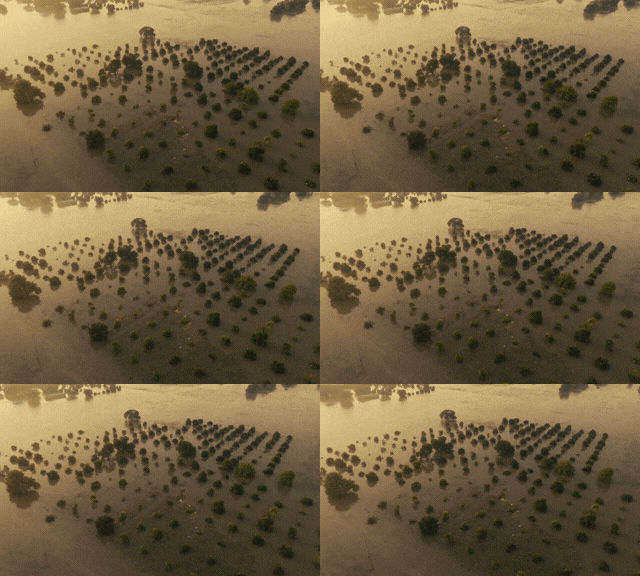
Referring to a joint assessment by the International Labour Organisation, World Bank and Asian Development Bank, he said around 3.3 million jobs were affected by the 2025 floods, with nearly 78pc of employment losses concentrated in rural areas.
We are witnessing a dangerous convergence; extreme heat is reducing productivity, floods are destroying jobs, and vulnerable workers lack safety nets, he said, warning that climate change could push millions into poverty and reverse development gains if urgent action was not taken.
Published in Dawn, May 2nd, 2026