Tribal chiefs lack legal authority to attest documents, Federal Constitutional Court rules


 0
0
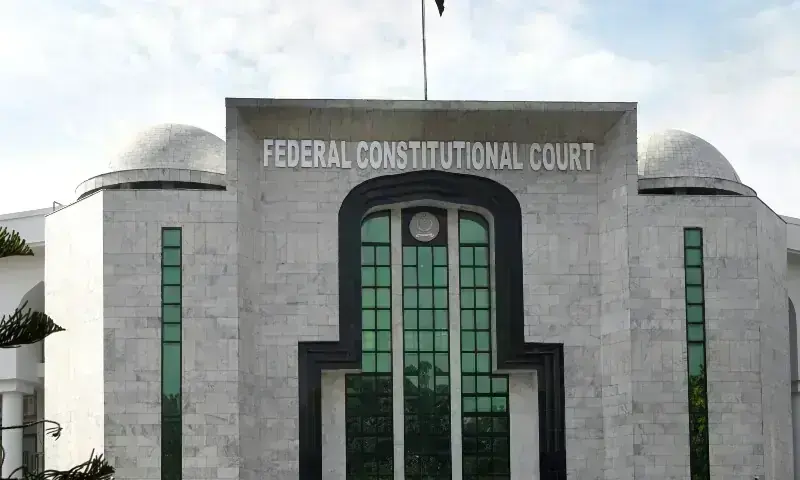

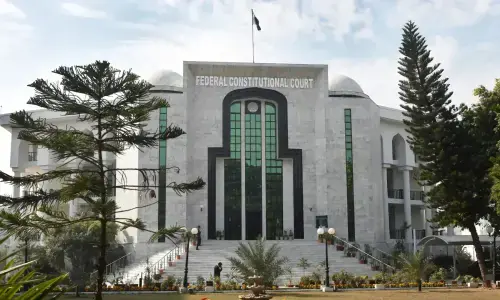
ISLAMABAD: The Federal Constitutional Court (FCC) has ruled that the customary practice of nominating or recognising a chieftain/sardar by members of a tribe does not vest such an individual with the legal authority to attest local certificates, domicile certificates, or Computerised National Identity Card (CNIC) applications.
The observations came while rejecting a petition filed by a self-proclaimed tribal chieftain seeking his recognition as the “sardar” of the Kharoti tribe.
A two-judge bench consisting of Justice Aamer Farooq and Justice Rozi Khan Barrech rejected the petition of Ghulam Ali Khan, noting that the sardari system stood abolished under the law and that no individual could claim customary authority overriding statutory requirements.
The petitioner, claiming to be the chieftain of the Kharoti tribe in Balochistan, had approached the interior ministry, seeking acceptance of his attestation for the issuance of local certificates, domicile certificates, CNICs, and passports for his tribesmen. He asserted that his fellow tribesmen face rigorous interrogation for procuring these documents.
Following the refusal of his request by the interior ministry, he filed a writ petition before the Balochistan High Court (BHC), which also dismissed the plea on July 31, 2024. Consequently, he approached the FCC.
Authored by Justice Barrech, a 12-page judgement explained that the authority to issue attestations could only be exercised where it was expressly conferred or recognised under specific statutory provisions or duly framed administrative rules.
Therefore, even if the petitioner claims recognition as a tribal sardar under customary law, such recognition, in the absence of express statutory backing and administrative rules, does not ipso facto (by that fact) confer legal authority or binding effect upon public authorities to issue official documents solely because of his attestation.
Thus, any declaration sought must be consistent with constitutional principles of equality, the rule of law, and the supremacy of statutory governance over customary assertions, the judgement said.
Any claim by a chieftain/sardar to demand royalties, or other monetary or material benefits from tribesmen, government authorities, or private entities, merely based on practices of customary status and title of sardar and it lacked legal sanctity unless supported by a clear statutory framework, the judgement emphasised.
In a constitutional dispensation governed by the rule of law, no individual can assume fiscal or administrative authority without express authorisation under law and administrative rules, it said.
Justice Barrech observed that any such demand, if not traceable to a valid legal instrument, statute or administrative command, would be devoid of lawful justification and could not be enforced through judicial process.
It is noteworthy, Justice Barrech said, that the institution of a sardar or the feudal system had been abolished through the promulgation of the System of Sardari (Abolition) Ordinance, 1976, published on April 8, 1976.
Section 3 of the ordinance unequivocally abolishes the sardari system and terminates the legal recognition of such status and privileges, it said.
Therefore, the petitioner’s attempt to invoke Article 28 for the recognition of a sardar status is misconceived, Justice Barrech said, adding that no legal benefit or enforceable right could be claimed based on a system that no longer enjoyed statutory recognition.
In view of the foregoing constitutional, statutory provisions and judicial precedents, Justice Barrech said, it was evident that while the petitioner undoubtedly retained the right to preserve and promote his language, script and culture, such right did not extend to the recognition of a sardar or chieftain in a manner contrary to the prevailing legal framework.
Justice Barrech maintained that the sardari system stood unequivocally abolished under the law, and no judicial endorsement could be accorded to a status or institution that had ceased to have legal existence.
He noted that the constitutional guarantee under Article 28, being expressly subject to law, could not be invoked to revive or legitimise a system that had been abrogated by statute.
Consequently, the relief sought by the petitioner was devoid of legal basis and could not be granted, Justice Barrech observed, rejecting the plea.