Independent press being stifled in Pakistan, says Hameed Haroon
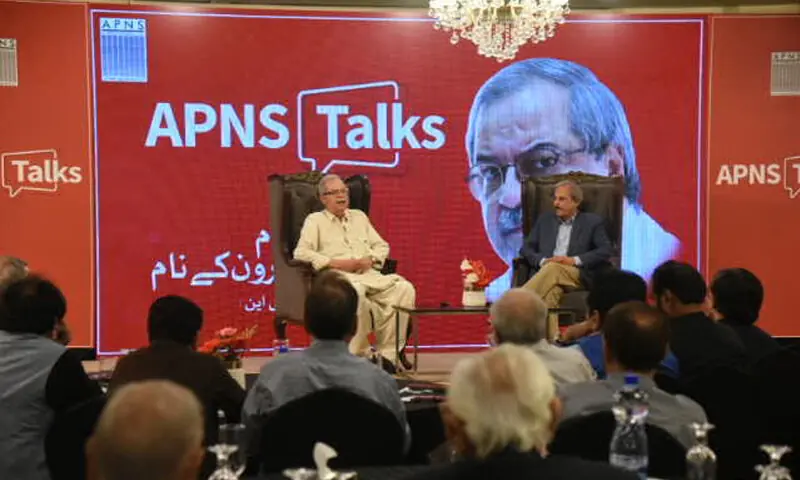


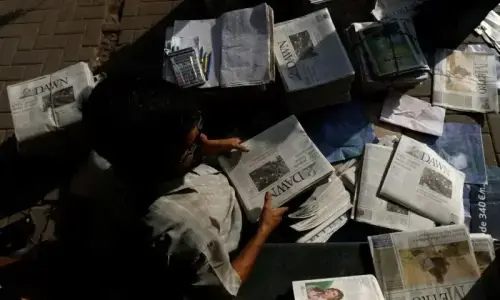
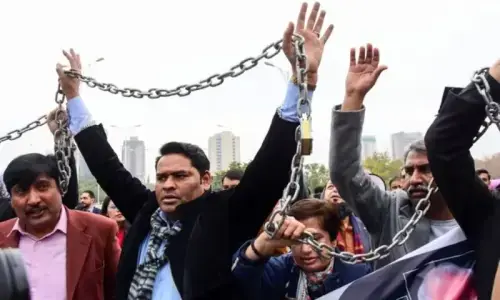
KARACHI: The governments in Pakistan have long adopted an “anti-media attitude”, which has put pressure on the free press and hindered the growth of independent journalism in the country.
Even during periods of martial law, such as that of Pervez Musharraf, there were certain restraints and action against journalists and media houses was not always taken lightly. At present times, however, it’s “the law of the jungle” where those in power act without hesitation.
These views were expressed by former president of the All Pakistan Newspapers Society (APNS) and DawnMedia CEO Hameed Haroon during a programme titled ‘APNS Talks’ organised by the Society at a local hotel on Wednesday.
At the outset, APNS President Senator Sarmad Ali said the session aimed to highlight the challenges and pressures faced by the media industry in Pakistan, as well as the rapid changes taking place within it. He added that the event also focused on Haroon’s life, achievements and his struggle for press freedom in the country.
Urges newspapers to introduce innovation to attract younger audiences
Moderating the session, journalist Mazhar Abbas started by asking Mr Haroon to explain how Dawn, described as the “dream of Jinnah and Liaquat Ali Khan”, was being crippled through “conspiracies” and advertisement bans for pursuing independent journalism.
Haroon said the press in Pakistan had largely been “tamed” and those who tried to maintain an independent voice and professional standards were often targeted and weakened.
He added that this was also the case with Dawn. “It is surviving on a shoestring,” he said and shared that there are advertisement bans not only from the government, but private advertisements are also being blocked through pressure.
He was of the view that media houses had been targeted and attacked many times in past but the government’s “anti-media attitude” had now reached new limits.
“It’s the law of the jungle now,” he said and added that apart from the media, the judiciary was also under attack given how judges’ transfers have been done.
In response to a question about the future of the free press, Haroon said the prospects appeared weak under the current circumstances. However, he expressed hope that media organisations could improve their position by working together and ensuring job security and dignity for journalists.
“Unless you learn to provide permanent jobs to journalists, you cannot run a newspaper,” he said.
Haroon said newspapers, in particular, needed to “change” themselves and introduce innovation to attract younger audiences, rather than complain that the youth no longer read.
Responding to a question about coverage of Balochistan, he said the press in the country had long operated under constraints when reporting on the province. He noted that there had always been a strong influence of the military, intelligence agencies and tribal sardars which limited journalists’ freedom.
Answering questions about his personal interests, Haroon said that while he loved art, history and literature, his greatest passion was music.
When asked if he intended to join politics, he replied in the negative. “You cannot be in politics and in the media at the same time,” he remarked.
Earlier, a documentary was also screened. It highlighted Haroon’s life and achievements, the accolades he received and his role in strengthening the international reputation of Dawn. It described him as an uncompromising and fearless voice and traced his career as reporter, analyst and publisher among other things.
Published in Dawn, April 30th, 2026