0
0
PESHAWAR: The US-based Zafar Mir Foundation in collaboration with The Association of Physicians of Pakistani Descent of North America has restored eyesight of 10,000 people in Pakistan since 2017.
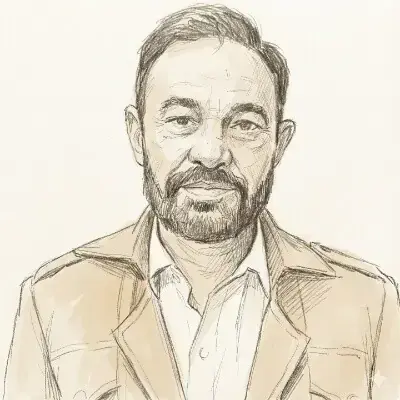
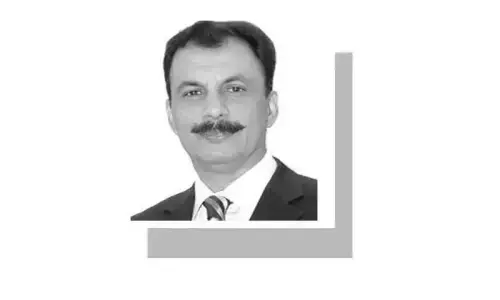
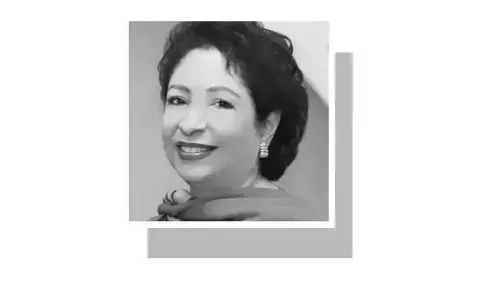
The foundation was established by Dr Fawad Zafar and his sisters Dr Aisha Zafar and Saima Zafar, a former president of APPNA, in the memory of their parents late Dr Zafar Hayat, former principal of Nishtar Medical College Multan, and Dr Bilqees Zafar. It has been sending corneas from the US to 42 hospitals in 20 cities of Pakistan, where they are transplanted to patients within 48 hours.
Dr Fawad, an urologist, told this scribe that the cornea project was meant to restore the vision of people blinded by trauma, injuries, blasts and wielding etc and eyes got damaged leading to loss of vision.
“In Pakistan, organ donation culture is almost non-existent due to which people with vision problems are destined to stay blind but as US has the biggest cornea donation, therefore, we took the initiative from scratches. It has been expanded now,” he said.
Founder of foundation says $3.5 million spent on buying corneas
He said that it was a source of their mental satisfaction for which Pakistani ophthalmologists also deserved praise as it was not possible without their help. “So far, we have spent $3.5 million on buying corneas from US banks, the cost of which varies from $350 to $500,” he added.
Dr Fawad said that major portion of the cost was borne by their foundation with financial support of Khyber Medical College Alumni Association of North America (KMCAANA), especially cardiologists Dr Arshad Rehan, a former president of APPNA, Mohammad Naeem Khan, gastroenterologist Dr Rashid Hanif and others, who belonged to Khyber Pakhtunkhwa province.
“About 35 APPNA members are active donors,” he said. A graduate of King Edward Medical College Lahore, Dr Fawad said that he started work by sending corneas to his Mao Hospital Lahore but now they were covering patients in remote areas in Khyber Pakhtunkhwa and Balochistan.
According to him, his sister Dr Aisha Zafar, who was chairman of APPNA’s charity and disaster committee for many years and died of cancer few years ago, played significant role in the cornea project. “My son, Dr Faraaz Zafar, is also main donor,” he said.
He said that initially, they ran the project through APPNA but now their foundation was in direct contacts with ophthalmologists in Pakistani hospitals. The beneficiaries belonged to backward districts where cornea transplants had never been carried out but local ophthalmologists deserved praise that they not only conducted procedures but also prepared patients before and after transplants along with follow-ups, he added.
Dr Fawad expressed concern over stoppage of cornea transplants in Ayub Teaching Hospital (ATH) Abbottabad six months ago where Dr Danish Zafar played significant role in conducting the procedures.
However, Prof Abid Jameel, the chairman of Board of Governors ATH, told Dawn that he had issued clear instructions to resume the programme as soon as possible. “Our doctors face some issues regarding transportation of corneas that will be resolved very soon because it is very important programme,” he said.
Dr Fawad, the founder of the non-profit foundation based in West Des Moines, Central Lowa USA, said they were also directly contacted by families from Pakistan for whom corneas were sent through ophthalmologists in the respective districts.
Children, elder people, women, men and young people received same response as its cost in developing countries was more than Rs500,000, not affordable by majority of Pakistanis, he said.
Dr Fawad said that they had also started the programme one year ago in Afghanistan and 150 people were benefitted from it in Kabul and Jalalabad through doctors trained in Peshawar.
“The programme has been stopped in Afghanistan owing to closure of Pak-Afghan border.
We were in process to begin sending cornea through Turkey but of late we were told that Taliban had placed ban on transplants, arguing that organ transplants weren’t allowed in Islam,” he said.
Published in Dawn, April 28th, 2026