Jailed PTI leaders slam govt over loadshedding



LAHORE: Five incarcerated PTI leaders at Kot Lakhpat jail have called upon the federal government to stop passing the buck and focus on real issues being faced by the power division, adding that false narratives could never address real challenges.
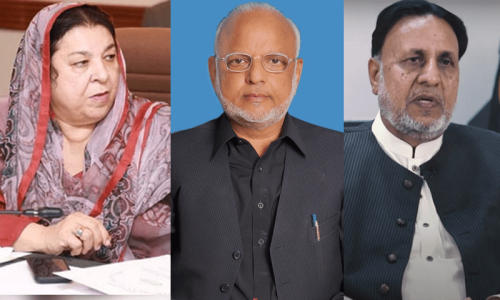
In a statement issued through their counsel Rana Mudassar Umer, jailed leaders Shah Mahmood Qureshi, Dr Yasmin Rashid, Ejaz Chaudhry, Omer Sarfraz Cheema and Mian Mehmoodur Rashid bemoaned that the country’s power division, with an installed generation capacity of 46,000MW, was not able to manage the current peak demand of 19,000MW.
“With announced power outages of two-and-a-half hours, people in urban areas were suffering seven to eight hours of loadshedding, while those living in rural areas were trying to cope with loadshedding ranging between 12 and 18 hours every day,” the statement said.
They said Power Minister Awais Leghari had informed the people that this was being done to protect them from an increase in their electricity bills.
LNG supplies’ disruption due to ME war termed main reason for long hours of outages
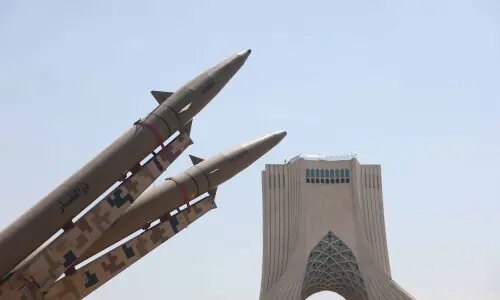
The jailed PTI leaders said that the Middle East crisis, triggered by the US-Israeli war against Iran, had disrupted LNG supplies and that it was the main reason for the current loadshedding, which was beyond the government’s control.
However, they said if one looked at the energy mix of coal, solar, wind, hydel and nuclear energy, these power plants provided no more than 6,000MW.
The PTI leaders further said that the power division minister had conceded that there was no issue of load management in the southern areas, and that the country had surplus electricity but it could not be utilised in the northern and central regions due to transmission constraints.
“It seems that our power division has learnt nothing from the oil crisis of 2022, and has failed to address structural vulnerabilities identified four years ago,” they lamented.
They said the power minister must acknowledge the fact that the country’s current energy crisis was not on account of the Middle East war. Though it had put an additional burden, the crisis was far deeper and far more complex than being narrated by the government, they added.
They stressed that the power division must thank the people of the country, who contributed to the solar revolution by adding 18,000MW of solar energy through their private investments and saving billions of dollars over the last eight years by preventing additional import of fossil fuels.
“Instead of appreciating the private investors who contributed to the solar revolution in the country, they are living under the constant threat of discontinuity of the net metering policy. When will our planners realise that the future path is renewable energy?” they asked.
They further questioned why a country with a capacity of generating 50,000MW of clean, cheap hydel energy had to install expensive IPP plants based on imported fuel.
“What was the logic in providing sovereign guarantees for capacity payments, which have contributed to our circular debt crisis? Did anyone hold the architects of the IPP policy accountable for the rise in electricity tariffs?” they asked.
Published in Dawn, April 27th, 2026