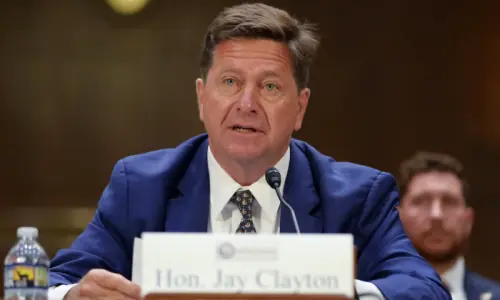

GBP 5.89 MILLION. That’s the average annual pay package of a FTSE 100 CEO. And it’s a number that keeps soaring, up 64 per cent over the past three years. But those CEOs still feel sorry for themselves when they contrast their takings to those of the American tech bros: according to the Financial Times, SpaceX’s Elon Musk could earn $1 trillion if he meets his targets, while Alphabet’s Sundar Pichai is on track for $692m over three years.
News of CEO pay rises coincides with dire UN warnings of an imminent global food ‘catastrophe’ and the return of 30m people to poverty. Before the war, 266m people, primarily in low-income, conflict-hit countries were facing ‘acute food insecurity’. As uncertainty lingers across the Strait of Hormuz, petrol prices rise, fertiliser costs soar, poor farmers plant less and get worse yields, and more people go hungry. Up to 45m more, according to World Food Programme forecasts.
Pakistan, sadly, is among the 10 most food-insecure countries in the world. According to the UN food crises report, 9.3m Pakistanis are in “crisis” conditions, and a further 1.7m face a food “emergency”, the severe states of food deprivation just short of famine. These 2025 stats are driven by flooding and climate-related disasters, and will be compounded this year by war-linked stresses on the food system. (Funny, isn’t it, that this news generated fewer headlines and Insta reels than that of Karachiite Sualeh Asif’s AI start-up Cursor being acquired by SpaceX for $60 billion?)
This divergence between the ultra-rich, tech-enabled beneficiaries of the AI age and the desperately poor ravaged by conflict and climate change is the story of our times. Prolonged and proliferating conflicts in the region and globally will only exacerbate this divide. How can politics manage this polarity?
How can politics manage this polarity?
Recent years have brought portents of the ‘age of anger’. The worldwide rise in far-right and populist political movements has been interpreted as a reaction to being left behind or left out. Identity politics has led to factionalism and social fragmentation, with examples of lashings out and localised violence against marginalised, vulnerable groups (trans people, asylum seekers, immigrants and, in Pakistan’s case, religious minorities). There is a zero-sum mentality in politics, with perceptions that one group’s gain inevitably indicates another’s loss. Resulting social unrest produces cycles of upheaval and state suppression.
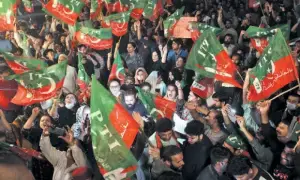
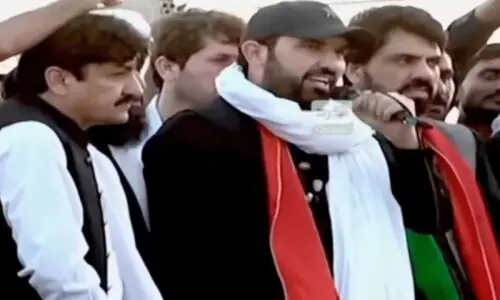
Pakistan has been through one loop of this cycle. Recall how in recent years each province was alight with protest, with the PTI, PTM, Baloch long marches and Haq Do Tehreek, Sindhi nationalist parties and the Awami Action Committee in Gilgit-Baltistan taking to the streets to decry enforced disappearances, disenfranchisement, soaring food costs, unjust resource planning, etc. That noise has since been quashed by state suppression and surveillance.
But can the cycle sustain when a large mass of people has nothing left to lose? When famine and disease threaten, violence becomes a last resort, the age of anger becomes an age of war. This is reflected in the growing trend in the West of executive protection. In addition to their hefty pay packages, those rich CEOs also get security guards, with Goldman Sachs last October reporting that 25 per cent of companies offer security details for top leaders. None want to fall victim to an assassin’s rage, the way the CEO of UnitedHealthcare did in 2024.
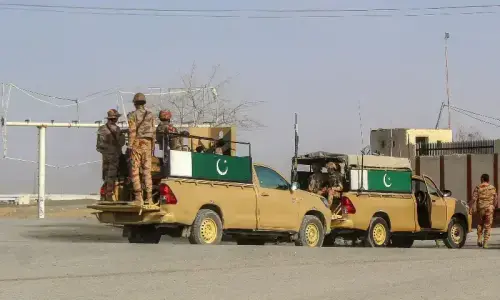
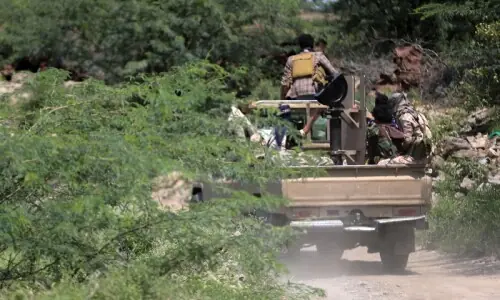
Outside the elite corporate bubble, this manifests as a resignation to conflict as a permanent reality, as we see in Iran, Gaza, Le-banon and, more drastically, Sudan. Closer to home, violence persists despite intense suppressive tactics.
It is not too late to start a different cycle. It requires learning lessons and proactively opting for a different pathway. This is easier said than done. Recent elections in India’s West Bengal state — where the BJP has allegedly cleansed electoral rolls on dubious grounds, disenfranchising up to 9m voters, many of them Muslim, in order to push out the long-standing Trinamool Congress — show how power seekers are resistant to learning tough lessons, and foreseeing the inevitable recourse of those forcibly excluded.
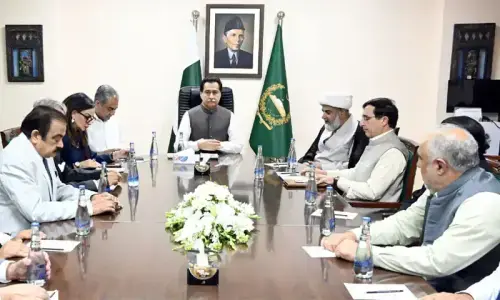
Let’s hope for a better outcome with the US-Iran talks. A negotiated end to the violence, with both sides feeling they’ve secured a victory, however pyrrhic, could commence a more positive cycle. If conditions agreed are permanent, the prospect for rebuilding regional trust and then literally rebuilding the region, increase. These talks matter not just for the immediate relief they offer implicated countries but also for the poor and hungry everywhere on our interconnected globe, and to stave off a wider age of war.
The writer is a political and integrity risk analyst.
X: @humayusuf
Published in Dawn, April 27th, 2026