Iran into Hooria Sayeed earlier this month at the Karachi Expo Centre, where she and other student chefs from the College of Tourism and Hotel Management (COTHM) had prepared a variety of Saudi Arabian dishes during the Pakistan Travel Mart 2026 exhibition, an annual travel and hospitality showcase.
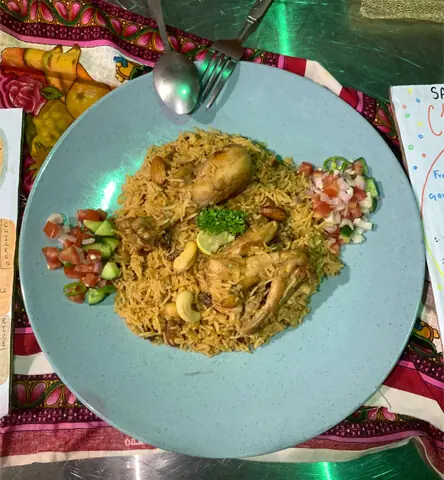
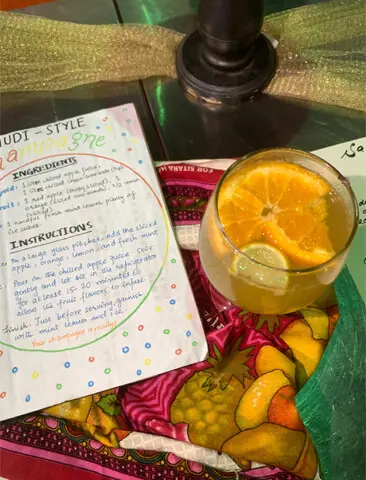
Hooria’s spread featured a shawarma platter as the appetiser, chicken kabsa — a rice dish — as the main course and a non-alcoholic champagne as the accompanying beverage. What drew me to it was the orderly, methodical layout — her spread displayed separately from the other students’ set-ups, each dish accompanied by a handwritten recipe card in colourful markers.
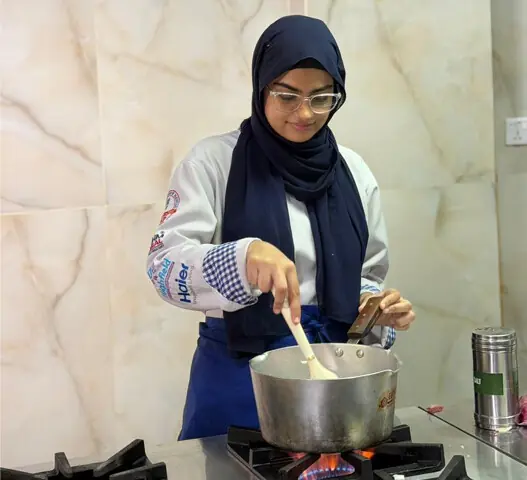
“It was a group activity, in which we were assigned to prepare an appetiser, a main course item and a beverage,” Hooria tells Eos. “As I’m new at COTHM and don’t know my coursemates well, I opted to go solo.”
Hooria may be new at COTHM but she is not new to cooking. She loves to cook and has been doing it since she was 12 years old. It began with a sweet tooth — and the desserts she made because of it. “Everyone at home liked them, which encouraged me to go further,” she recalls.
A young trainee chef prepares an Arab feast…
Then came a time when she took over the responsibility of cooking dinner from her mother. Hooria says that her mother, an exceptional cook herself, gave her free rein, though she never left her alone in the kitchen. Soon, Hooria told her family about her plan to train as a professional chef.
“Everyone at home said I did not need to, because I already knew how to cook,” she says. She countered that she wanted to work as a chef at a restaurant or hotel, or even open her own restaurant someday. “For that, I require a degree or diploma, and the kind of hands-on training that I could never get in my home kitchen,” she points out.
It was this dream that led her to COTHM and to the Karachi Expo Centre on that day, where I asked her about her choice of dishes, especially the non-alcoholic champagne.
She says that she wanted it on her menu because it’s a celebratory drink and “sounds kind of grand.” She explains that, being a Muslim, she has never tasted the drink nor served the standard alcoholic version. “Instead, I have tried to make a non-alcoholic variant.”
She was happy to share how each dish came together.
NON-ALCOHOLIC CHAMPAGNE
To make the champagne, Hooria pours one litre of chilled apple juice into a large glass pitcher and squeezes the fresh juice of a lemon over it, before adding about one cup of orange pulp. She allows it to sit in the refrigerator for 15 to 20 minutes for the flavours to infuse.
Having read that champagne is fizzy and somewhat acidic to the throat, Hooria uses chilled sparkling water and a clear lemon/lime soft drink soda in equal quantities (one litre of each) to pour over the apple juice (to sweeten and round out the soda base), lemon juice and orange pulp concoction. She adds a handful of crushed mint leaves and lots of ice to the concoction before serving.
SHAWARMA APPETISER
For the shawarma, Hooria made the pitta bread from scratch. The young chef adds a teaspoon each of yeast and sugar with warm water to activate the yeast before adding in the all-purpose flour and a tablespoon of cooking oil to make a soft dough. She covers the dough and leaves it to double in size before dividing it into small balls, flattening each into a pitta with a rolling pin and roasting on a griddle.
For the filling, Hooria cuts boneless chicken into julienne strips and marinates them for 45 minutes in the juice of one lemon and a quarter teaspoon of paprika, black pepper, white pepper and a pinch of garam masala [mix of ground spices] powder, with salt according to taste.
She cooks the chicken in a frying pan with a tablespoon of oil, then assembles it inside the folded pitta bread with lots of cucumber and tomato slices.

CHICKEN KABSA
Chicken kabsa is a rice dish popular in Saudi Arabia, where cooking tends to favour mild, fragrant spices over hot ones. It resembles the South Asian pulao in appearance but has a method of its own.
Hooria begins by frying onions in oil, then adds the chicken and whole garam masala before pouring in water to make the broth. Once the chicken has cooked through, she removes it from the broth and fries it separately — this is what sets kabsa apart, giving the chicken a golden colour and a slight crispiness rather than the softness it would have if left to sit.
The rice then goes into the broth to cook, absorbing all the flavour the chicken has left behind. As with any rice dish, she ensures the broth is double the quantity of the rice.
Once the rice is done, she places the fried chicken back on top and finishes with a garnish of fried raisins and cashew nuts.
The writer is a member of staff.
X: @HasanShazia
Published in Dawn, EOS, April 26th, 2026