• Beirut calls action a ‘war crime’, vows to seek international justice
• Rights groups demand accountability, say intentional targeting of civilians is illegal
• Attack overshadows new round of negotiations
BEIRUT: Lebanese leaders on Thursday condemned Israeli ‘war crimes’ after an air strike killed a journalist in the country’s south, an attack that caused an uproar as it coincided with a new round of ceasefire talks between the two nations in Washington.
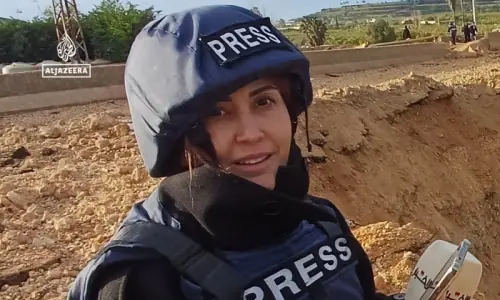
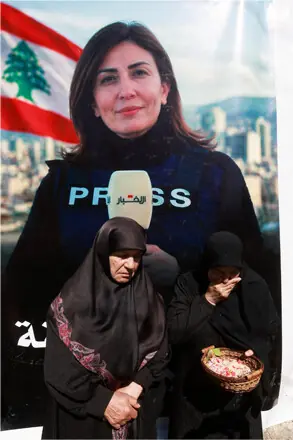
The Israeli army said it was reviewing the Wednesday incident that killed Amal Khalil, a 42-year-old journalist for the Lebanese daily Al-Akhbar. Rescuers and her employer confirmed her death in a strike on a house in the village of Al-Tiri, which came during a fragile 10-day ceasefire in the war between Israel and the Iran-backed group Hezbollah.
“Israel deliberately targets journalists in order to conceal the truth about its crimes against Lebanon,” President Joseph Aoun said in a statement denouncing what he called “war crimes”.
Prime Minister Nawaf Salam echoed the condemnation, writing on X that “targeting journalists and obstructing access for rescue teams constitutes a war crime”.
He added that his government would take the case to international bodies. An Israeli army spokesperson, when contacted by AFP on Thursday, said, “the incident is still under review”.
The killing occurred as Israeli and Lebanese delegations are in Washington for talks on Thursday, where Beirut will seek a one-month extension of a ceasefire set to expire this week. Aoun is pushing for the agreement to include stipulations protecting civilians, housing, and journalists.
According to Lebanon’s National News Agency, Khalil and another journalist, Zeinab Faraj, had taken refuge in a house in Al-Tiri after a nearby Israeli airstrike targeted a car.
That initial strike killed the mayor of the nearby town of Bint Jbeil and another man. An Israeli strike then hit the house where the two journalists were sheltering.
The health ministry said the attack wounded Faraj and trapped Khalil under the rubble.
A Lebanese Red Cross official told AFP they rescued Faraj but had to withdraw “because of a warning strike” before they could reach Khalil. It took several hours for rescue workers to regain access and recover her body after contacting UN peacekeepers.
The incident drew swift condemnation from rights groups. Jonathan Dagher, head of the Middle East desk at Reporters Without Borders, said the sequence of strikes “would indicate targeting and obstruction of aid constituting war crimes”.
Ramzi Kaiss, Lebanon researcher for Human Rights Watch, called for a credible investigation “with a view towards justice and accountability”.
“Intentionally targeting civilians is a war crime,” Kaiss said.
At a protest in downtown Beirut, fellow journalists demanded action. “Accountability is the most important thing,” journalist Inas Sherri told AFP. “If we were holding people accountable, Israel would not have continued killing journalists one after another.”
Published in Dawn, April 24th, 2026