Tiny Pacific nations face tough choices on food, fuel posed by Iran war
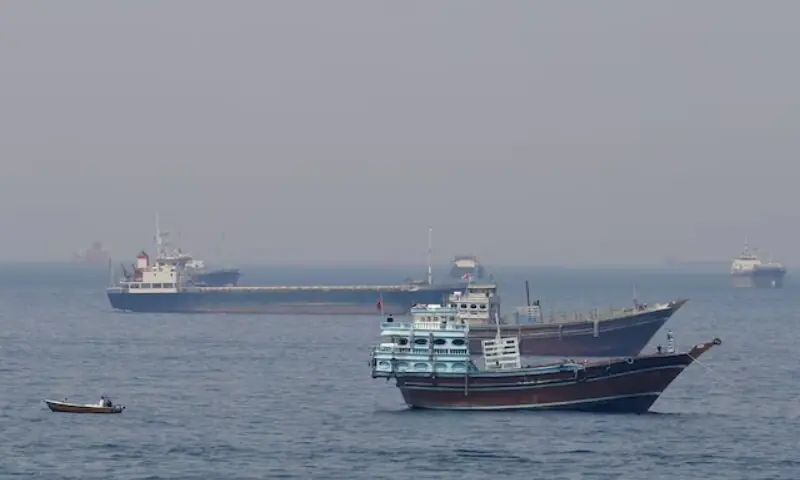
Far-flung Pacific nations are reeling from the impact of a global fuel crisis as authorities scramble to manage energy supplies while families must grapple with fuel curbs and higher costs for food and access to healthcare.
Global oil supplies are running down as the US-Israeli war with Iran disrupts traffic through the Strait of Hormuz, which typically carries about 20 per cent of the world’s oil and liquefied natural gas flows.
Aid agencies have warned that the crisis has driven up prices for diesel, petrol and kerosene by as much as 70pc in Papua New Guinea since the start of the Iran war.
“Many of our communities, because they rely on boat transport for movement are … having challenges bringing food supplies to outlying centres,” said Godfrey Bongomin, programme operations director for World Vision in Papua New Guinea.
With transport to clinics now out of reach financially for some, people were skipping medical appointments and missing life-saving HIV and tuberculosis medicines, added Bongomin. “It is affecting their livelihoods.”
Pacific Island nations are the most reliant on diesel for power generation worldwide, the International Finance Corp said in 2024. Data from Zero Carbon Analytics showed it fuelled more than half of electricity output in 2022, except for Fiji.
Pacific countries imported about 2.2 million metric tons of gasoline, diesel, gasoil and jet fuel in 2025, largely from Singapore and South Korea, Kpler ship-tracking data showed.
But imports for the first half of April were just a quarter of the figure for all of March.
Broader threat lurks
The strain in Papua New Guinea, where nearly 40pc of people live below its poverty line, point to a broader threat across Pacific nations that rely heavily on imported fuel and maritime and air links.
“Even if the ceasefire holds, it will take a while for prices to come down to where they were before the conflict,” said Abdul Abiad, deputy chief economist of the Asian Development Bank.
“There’ll be a lot of pain.” The region was particularly vulnerable as fuel imports are worth between 8pc and 11pc of GDP in many countries, and 27pc in Tuvalu, he added.
If the conflict was resolved quickly, regional growth was expected to moderate by almost a full percentage point in 2026 to 3.4pc, Abiad said, but if the war continued, it would sap growth further.
“China is willing to maintain communication with all parties and work together to safeguard global energy security,” Guo Jiakun, a foreign ministry spokesperson, said last week in reply to a question on the plight of Pacific states, where the country wields increasing influence.
Across the Pacific, say staff of Catholic aid body Caritas Internationalis, the crisis is squeezing household budgets by driving up travel fares, food prices and costs of other essentials, with low-income families hit hardest.
“You have families that when they’re stretched financially, they’re asking themselves, can I afford to do this anymore or do I need to actually just spend more money on food?” said Kim Koch, regional director for Save the Children, based in Fiji.
Measures to cushion the impact
Last week the Pacific Islands Forum troika, a group of past, current and incoming chairs, agreed to invoke the region’s emergency response mechanism to tackle the unfolding crisis, for the first time since the Covid-19 pandemic.
In Kiribati, people are struggling to get to work, school and access healthcare, Caritas said. Tuvalu and the Marshall Islands have both declared states of emergency.
The Cook Islands, Nauru and Papua New Guinea have moved to subsidise or cap rising fuel costs, while governments have urged people not to stockpile or panic-buy items, even limiting purchases in some places.
In Fiji, ministers agreed to take a pay cut of 20pc to help shoulder some of the measures to offset fuel costs, though parliament must approve the change.
Visiting Washington this month, New Zealand Foreign Minister Winston Peters urged Secretary of State Marco Rubio to look at fuel deliveries for the Pacific, while New Zealand and Australian diplomats have discussed concerns with some nations.
Australia was looking at ways to assist, but domestic supplies were its first priority, Foreign Minister Penny Wong has told media.
But the problem is growing worse.
“The greatest burden is falling on ordinary wage earners and vulnerable communities,” said Lillian Bing, secretary general for the Episcopal Conference of the Pacific.