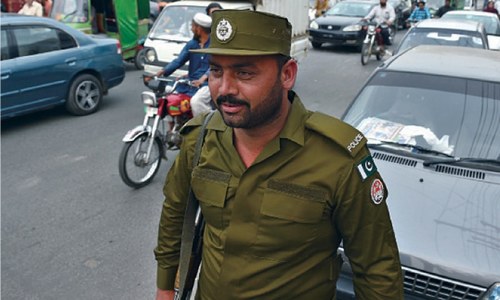
THE appeal by a Lady Health Worker from Muzaffargarh to the chief justice of Pakistan for an independent probe into the killing of her two sons in an alleged police ‘encounter’ underlines the eroding public trust in provincial authorities to deliver justice. Her account of police torture and the subsequent killing of her sons in a so-called encounter is not an isolated allegation. It reflects a continuing pattern in which the once sporadic instances of police staging encounters to eliminate suspected criminals appear to have evolved into a systemic practice. Figures cited by the media and rights groups reinforce this concern. Estimates based on reported incidents indicate that hundreds of police encounters in recent months have resulted in a staggering number of deaths across Punjab. Rather than prompting action, these encounters have at times been praised by political authorities as an effective deterrent against crime. It signals not just tolerance of extrajudicial methods, but also a tacit endorsement of them as an official crime control policy.
The rise in encounters is a failure of the criminal justice system. When police rely on eliminating rather than prosecuting suspects, it is an admission that investigation, evidence-gathering and trial processes are either too weak or too inconvenient to pursue. The Constitution guarantees every citizen the right to a fair trial. Once the state begins to decide who deserves that right and who does not, it crosses a dangerous threshold. The acceptance of such killings carries consequences that extend well beyond individual cases. It brutalises society, erodes public trust and blurs the line between law enforcement and lawlessness. Encounter killings offer the illusion of swift results. But they are a shortcut that ultimately weakens the very institutions meant to uphold justice. The case before the court, therefore, is not only about one family’s quest for justice. It is a test of whether the judiciary is willing to confront a practice that undermines its own raison d’être.
Published in Dawn, April 22nd, 2026