0
0

PAKISTAN has taken a landmark step with the enactment of the Pakistan Citizenship (Amendment) Act, 2026. The amendment clarifies the retroactive effect of the landmark 2000 reform to the Pakistan Citizenship Act, 1951, which first recognised the right of Pakistani women to confer nationality on their children on an equal basis with men.
In the 1951 law, citizenship by descent could only be acquired through the father. As a consequence of this, children born to Pakistani mothers married to foreign nationals or persons who were undocumented were excluded from citizenship. This gender-discriminatory framework left many children without legal recognition or documentation.
While the 2000 reform looked towards correcting this inequality by allowing Pakistani women to pass citizenship to their children, the benefits were not applied retroactively. As a result, many individuals — specifically those born before 2000 — remained undocumented, because their mothers had been denied the legal right to confer nationality at the time of their birth. This change is an important step towards addressing long-standing gaps in Pakistan’s citizenship framework through legislation. In recent years, courts in Pakistan have also dealt with these issues, addressing them through judgements on a case-by-case basis and helping shape a framework grounded in justice and fairness.
While the courts have played an important role in filling these gaps, access to judicial remedies is not always straightforward. Many of those affected by documentation, citizenship challenges and exclusion come from marginalised communities where access to legal assistance is limited, where there is little awareness of rights, and where navigating complex court procedures can be overwhelming. For families already facing economic hardship and social exclusion, pursuing litigation is often not possible. Due to this, many individuals remained undocumented not because the law supported their exclusion, but because they lacked the means and knowledge to challenge it. By clarifying the law, the recent amendment helps address these issues at their source, reducing the need for individuals to rely on lengthy and inaccessible court processes to secure recognition of rights that should have been available to them in the first place.
Despite the recent amendment, gaps remain in the law.
Citizenship laws cannot only be looked at through the lens of technical provisions in a statute. These are key provisions that shape the most basic realities of people’s lives. The impact is on whether a child can enrol in school, whether families can live freely without fear of exclusion and othering in every aspect of their lives, and whether people can participate in society with dignity and recognition. There are many people who have lived without documentation since birth, and for them, these questions are not legal debates but form part of their day-to-day challenges and their lack of a sense of belonging. This is what makes the recent amendments more than an administrative correction; it acknowledges and actively addresses the gaps.
While the recent amendment marks important progress in addressing gender discrimination in the transmission of citizenship to children, there is one significant inequality that remains within Pakistan’s citizenship laws. Under the Pakistan Citizenship Act, 1951, a foreign wife of a Pakistani man may obtain citizenship through marriage, yet the same right is not available to the foreign husband of a Pakistani woman. In many cases, this means that families are put in a difficult situation due to the lack of documentation or legal status of the husband. This impacts not just the husband but the entire family due to the uncertainty surrounding their situation. The sense of security in everyday life is disrupted, leaving families unsure about their stability and their future. Over time, this also impacts the narrative of belonging and how people see their place in society, leaving many with a feeling that their belonging remains uncertain.
The amendment demonstrates that Pakistan’s citizenship framework is capable of evolving to respond to changing realities. It shows a growing recognition that laws that govern belonging must also reflect fairness and inclusion. Addressing the remaining gender disparity in spousal citizenship would be a natural next step in this process. By ensuring that Pakistani women and men enjoy equal rights in transmitting nationality through marriage, Pakistan can move closer to a legal status framework that fully reflects and upholds the core values of equality and dignity enshrined in its Constitution.
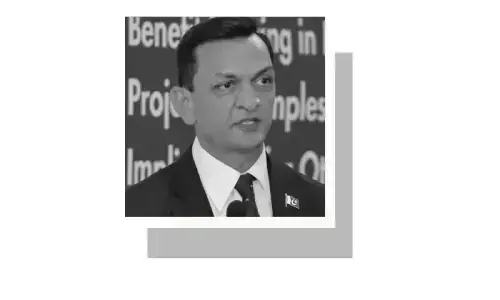
The writer is a lawyer and founder-CEO of Imkaan Welfare Organisation.
Published in Dawn, April 20th, 2026