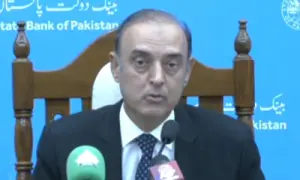
Dr Niaz Ahmad Akhtar was appointed as chairman for the Higher Education Commission (HEC) in February 2026, six months after the last officially appointed chairman ended his tenure. This is a vaunted position — there were over 750 applications. A flurry of articles and op-eds appeared in the news media, highlighting the myriad challenges awaiting the new entrant. There has been some debate over what a new chairman can realistically achieve, since term limits have been slashed from four years to two.
Almost everyone agrees, however, on the desperate need for reform in higher education.
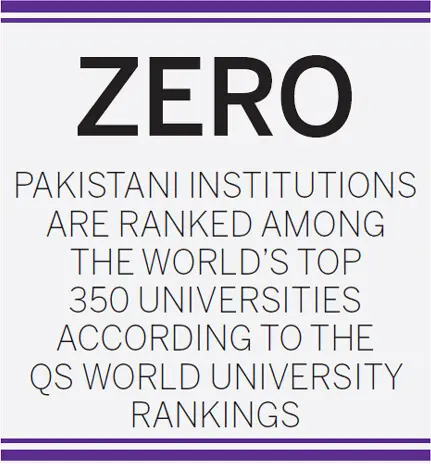
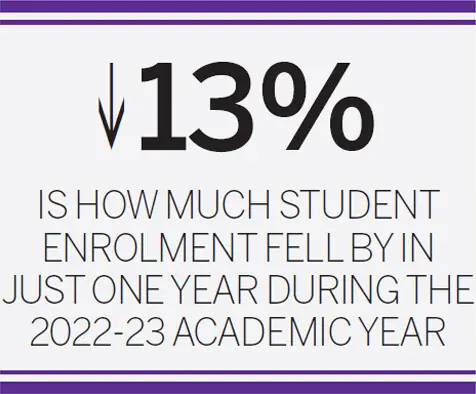
News from the last year has been dismal. Student enrolments are in significant decline. Infighting at the HEC, a conflict between the chairman and the executive director, escalated to the courts. The QS World University Rankings shocked many with the revelation that not a single Pakistani institution made it among the world’s top 350 universities.
The story that takes the cake, though, is one that few people are aware of. It played out quietly in a courtroom of the Islamabad High Court over several months, a case innocuously titled Dr Saadia Masood vs Federation of Pakistan.
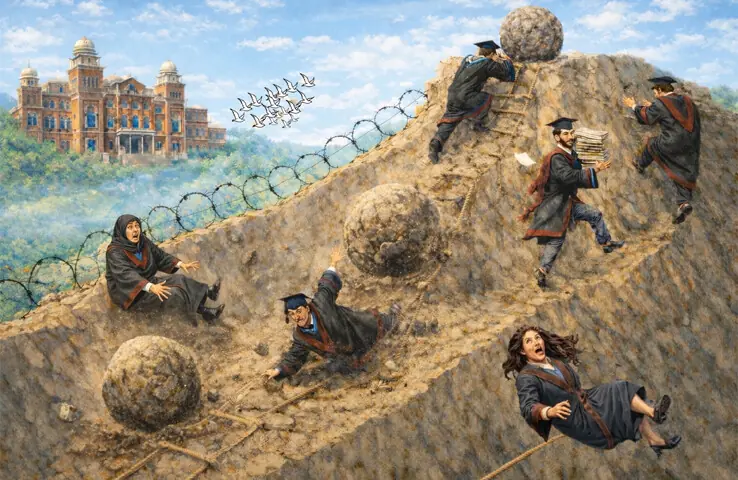
A bold national experiment once promised to transform Pakistan into a ‘knowledge economy.’ But, a little over two decades later, that dream has unravelled into court cases, protests, declining enrolments, sliding university rankings and an exodus of academic talent. At the heart of this failure was the treatment meted out by stakeholders to the faculty tenure track system, which was meant to transform the country’s higher education system…
In these proceedings, the All Pakistan Tenure Track Faculty Association (APTTA) faced off against the HEC and the national finance division. The bone of contention was the release of salaries and benefits for PhD faculty in Pakistani universities. This story secured low coverage in the media, but it is arguably the most important narrative in recent years, because it highlights, in sharp and stunning clarity, the tragic arc of our national higher education experiment.
Consider this: 20 years ago, the HEC instituted a special lucrative new salary package to attract world-class PhD faculties to Pakistan’s universities. This tenure track system (TTS) package was introduced with great fanfare, but was soon consigned to oblivion — the pay scale has been revised only three times over the last two decades.
In 2007, the good old days, when the US dollar averaged around Rs60, the starting salary for an assistant professor was Rs80,000. It was a princely sum. Today, the same position pays around Rs175,000, while the dollar is valued at Rs282 — it is an absolute travesty. The amount may have doubled but purchasing power has crashed several times over.
A mass exodus of our finest and highest qualified minds has been underway for years — almost everyone who can, has packed up and left. I have sat in on faculty hiring interviews where candidates, when shown the salary package, burst into incredulous laughter.
Small wonder that, today, the higher education sector hovers in a state of quiet desperation. This unremarked legal case draws to a close a 20-year saga — the story of how a stunning and ambitious national vision was thwarted by years of apathy and neglect, finally devolving into protests and legal squabbles, bitterness and despair.
How did we get here? How did the system break down so completely? Are there lessons here for us? This is an autopsy of Pakistan’s TTS.
1996-2000: THE KNOWLEDGE ECONOMY
In the 1990s, with the information revolution gearing up and globalisation in full swing, it was clear that the future was not about minerals or manufacturing; it was about technology and skills.
In 1996, the Organisation for Economic Cooperation and Development (OECD) published an influential policy framework for the ‘knowledge economy’, followed by the World Bank’s landmark ‘Knowledge for Development’ report in 1998. Developing countries drew up ambitious roadmaps: there was Cyber Korea 21 Vision, Malaysia’s Vision 2020, IT2000 in Singapore, Taiwan’s Plan to Develop a Knowledge-based Economy, Thailand’s IT2000 and China’s Tenth Five-Year Plan.
The mantra ran something like this: knowledge and specialisations are the new oil. The future belongs to industries that draw together human specialisation, creativity and technology, to open up vast new economic frontiers. This knowledge economy is essential for countries to remain competitive. And it is also a sustainable formula, one that constantly creates new opportunities.
The implication here is obvious: universities are the living beating heart of this ecosystem, the undisputed foundation. Universities not only disseminate knowledge and expertise but, more importantly, they also create it. Vibrant industries build up around the universities, like spokes around a hub.
Considerable data has been amassed to back this up. A massive study of 2019 looked at 15,000 universities in 78 countries and found a direct correlation between an increase in the number of universities and per capita GDP growth.
An investigation of the UK higher education sector over 2021-2022 found that every £1 invested in universities returns around £14 in economic benefit — an overall private sector productivity boost of about £40 billion/year.
2001: MAPPING THE FUTURE
Pakistan’s journey commenced in April 2001, when the government constituted a task force to review the state of higher education.
This body, sponsored by the World Bank, and headed by the luminaries Syed Babar Ali, founder of the Lahore University of Management Sciences (Lums) and Shamsh Kassim-Lakha, founding president of the Aga Khan University, deliberated for seven months, interacted with 700 stakeholders and presented its findings in January 2002.
Their assessment was unsurprising: the existing system was simply unfit “to achieve the dual objectives of nation-building and global competitiveness.” Universities were in dire need of autonomy and improved governance to ensure institutional performance and accountability. To implement nationwide standards and shepherd in a new system, the task force proposed the formation of a central body: the HEC.
The mandate of the HEC would be to develop and accredit new universities, undertake fundraising, and manage and disburse research grants. The HEC would operate under the Ministry of Education but would be an autonomous body, governed by a strong and independent board. The chairman would have the rank of a minister of state.
The task force recommended significantly more funding for universities, including an additional government grant of Rs5 billion annually — almost doubling the existing funding — as well as the creation of a Rs20 billion endowment fund. To attract world-class academics, the task force called for a radical overhaul and the institution of a TTS.
A mass exodus of our finest and highest qualified minds has been underway for years — almost everyone who can, has packed up and left. I have sat in on faculty hiring interviews where candidates, when shown the salary package, burst into incredulous laughter. Small wonder that, today, the higher education sector hovers in a state of quiet desperation. How did we get here? How did the system break down so completely? Are there lessons here for us? This is an autopsy of Pakistan’s TTS.
TENURE: THE HOLY GRAIL OF ACADEMIA
Academic tenure is a defining feature of Western academia. It is a very high-stakes up-or-out system: over a probationary period (the ‘tenure-track’), usually lasting between five to 10 years, academics are rigorously assessed across various key indicators (research publications, teaching performance, academic services etc). Those who demonstrate excellence are offered ‘tenure’ — lifetime employment with job security. This is the supreme prize for aspiring academics.
The TTS is a game changer. Studies tracking US academic careers find that research publication rates rise sharply during the tenure-track period and peak around the time tenure is awarded. The job security that comes with tenure encourages intellectual freedom, inspiring creative and high-risk explorations. Faculty are inclined to take on ambitious long-term projects with high potential value, which is simply not possible on short-term contracts.
But a system is only as good as the people in it, and attracting world-class talent to Pakistani universities required serious incentives. It is worth quoting the task force on this point: “Current emoluments are grossly inadequate to recruit and retain good quality faculty and staff. Emoluments should be de-linked from the government’s basic pay scales [BPS], and should be appropriate for recruitment and retention of quality teachers and staff.”
This last point particularly relates to the recent legal battle between faculty and the HEC over stagnant pay packages. In a darkly comedic twist, the government’s BPS and incentives now significantly exceed tenure track salaries in some leading universities.
Still, even in hindsight, one cannot help but marvel at the raw ambition packed in this 50-page task force report. It is a Herculean endeavour to reform and elevate a single university — any academic would testify, it can take a lifetime — and here we were, strategising about doing this at the national scale.
This was a revolutionary proposition, a genuine moon-shot. And the authors of the report were well aware. Throughout the document, one finds them tempering their recommendations with caution and emphasising a fundamental change in our attitudes for this grand venture to succeed.
2002: THE BRAVE NEW WORLD OF HIGHER EDUCATION
A year after 9/11, Pakistan was now a frontline state in the War on Terror. We were a key US ally and funding was pouring in from all directions. A massive rebranding was underway. Gen Pervez Musharraf’s “enlightened moderation” was in the air.
Action on the task force recommendations was prompt. A steering committee hammered out an implementation plan in August. A month later, with the stroke of a pen, a presidential ordinance formally created the HEC. Serving Federal Minister of Science and Technology, Dr Atta-ur-Rahman, was appointed the first chairman.
In 2003, the HEC introduced the TTS with lucrative salaries and merit-driven career progression. Government universities at the time, much like government offices, already had a BPS system in place. It was decided that a gradual transition would be best. Universities adopting the TTS would run it in parallel with their existing BPS. Existing and new faculty members would be encouraged to hop on to the shiny, brand new TTS. A funding formula was worked out: universities paid all faculty the BPS-equivalent amounts of the salary and the HEC topped up the difference for the TTS faculty.
Over the next decade, government-provisioned funds for universities soared from around Rs8 billion in 2002 to almost Rs48 billion in 2012-2013. Several thousands of MS (Master of Science) and PhD students were dispatched to international universities on scholarships and fully-funded faculty development programmes, with contracts to teach in Pakistan on their return.
2006-2011: REACHING FOR THE SKIES
The results were unprecedented.
The number of Pakistani universities rose from around 110 in 2004 to 163 in 2014. Student enrolments skyrocketed from 471,964 to 1.4 million. Pakistani universities suddenly started to feature in international rankings. The world sat up and took notice.
Industry analyst Thomson Reuters documents that, from 2006 to 2015, the number of Pakistan’s scientific papers went up fourfold, from approximately 2,000 articles per year to 9,000. The number of highly cited papers — academic publications ranking in the top one percent of citations in their field in the year of publication — increased from nine to 98. Over this period, Pakistan outpaced the BRIC group — Brazil, Russia, India and China — as the country with the highest ratio of highly cited papers.
Research tracker Scimago forecast that if Pakistan kept up this pace, by 2018 it would rank among the world’s top 30 countries in terms of research output. A British Council study brought things full circle, attributing this boost to HEC policies that tied research publication requirements directly to faculty career progression.
The centrepiece of this success, the magic glue holding it all together, was, of course, the TTS. The TTS was a clean break with the past in terms of peer review, evaluations, salary and resources. As per the architects of this vision, Pakistan’s universities were teaching-heavy, low-research and bureaucratic — the TTS would transform them into research-driven, globally competitive institutions.
I can supplement this narrative with personal experience. In 2010, I was a PhD student labouring away at an Australian university. My undergrad experience at a leading Pakistani university had thoroughly disillusioned me. So it was a shock when I started to notice papers from the National University of Computer and Emerging Sciences (Fast-Nuces), Lums, and the National University of Sciences and Technology (Nust) popping up in some of the world’s leading publication venues in my research domain — computer networks and information security.
The first few times I couldn’t believe it — I had to double-check the author affiliations. Reading those papers, the surprise gave way to a deeper wonder: this work was not derivative, it was genuinely novel and rigorous. Above all, it was exciting — the hallmark of a vibrant research culture — and comparable to anything coming from a good international university. This was the standard I aspired to as an academic.
I promptly pinged the authors with congratulations — publishing in competitive, top-ranked venues is a massive achievement, it’s akin to winning an Oscar. They confirmed that amazing things were happening in Pakistan.
2008-2013: DEVOLUTION, DEGREES AND DECLINE
So, when did things start to unravel?
Many point to 2010, when the 18th Amendment devolved many federal functions to the provinces, including higher education. This involved breaking up the centralised structure of the HEC — Dr Rahman uses the word “dismantle” — and relegating higher education decisions to provincial authorities. The result was chaos. The Supreme Court reversed the move in the next year.
There is an interesting backdrop to this legal assault on the HEC. In 2010, the Supreme Court tasked the HEC to verify academic degrees of over a thousand lawmakers, hailing from the national and provincial assemblies. This scandal triggered hostility and resentment between the political class and the HEC. After a massive funding cut, 71 university vice-chancellors threatened to resign.
Some, including myself, trace the decline earlier, to 2008, when the HEC faced its first funding crisis: the government axed spending on faculty development programmes. It was abrupt, poorly handled and created intense hardship for scholarship holders in overseas universities. Dr Rahman resigned in protest. Even though funding was restored soon, the optics could not be undone.
This episode signalled a pronounced change in priorities on the part of the government. Higher education was now dispensable and knowledge was no longer Pakistan’s ticket to a better future. It is a marked irony that this shift correlates with our transition from military rule to democracy.
It was the first of many lows.
2015: IN THE WIDENING GYRE
With time and multiple changes of the guard at HEC, the idealistic vision began to crack under the unrelenting pressures of ground realities.
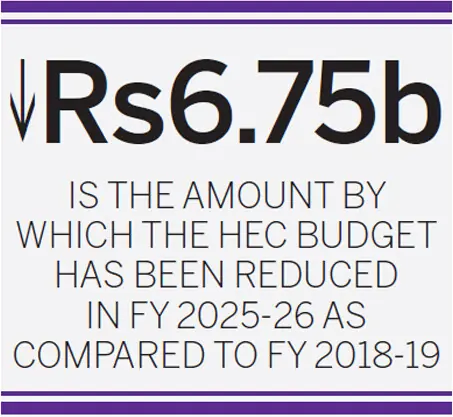
The government’s budget allocation for higher education spending became less generous with each passing year. Poor planning resulted in a large glut of new universities with serious funding and governance issues. Despite the large influx of highly qualified faculty, university administrations remained firmly mired in their bureaucratic ways. The much heralded transition to a real academic culture, the grand renaissance, never happened.
Understanding the typical academic mindset is also key. People rarely join academia to be rich, the glory and adventure of knowledge is usually reward enough. Still, one does not labour night and day, secure degree upon degree, to skate on the edge of poverty. By 2015, it had become obvious that the TTS was ailing. The pay scale had remained largely frozen over the years, even as inflation took a heavy toll. The salaries were no longer sufficient to run a household.
The best and the brightest began to quit, a trickle that soon became an exodus. Overseas opportunities and industry jobs were significantly more lucrative. Universities in the Gulf proved a very popular destination, a trend that still persists.
With this decline at the very heart of the system, a host of compelling critiques gathered urgency, a charge led ably by Dr Pervez Hoodbhoy, Dr Ayesha Razzaque and others. The system had expanded too rapidly and standards and quality controls had proved largely ineffective. Research publishing deteriorated into a numbers game. HEC’s policies could not differentiate between paper quantity and quality, metrics versus genuine substance. Student outcomes started to plummet. International university rankings began to slide.
Today, our higher education system is an embarrassment. Academics are sounding the alarm on fraudulent research practices. Pakistan has one of the world’s leading publication retraction rates. Infighting and intrigue in the ecosystem routinely spills out into the courts and the newspapers.
Our grand higher education experiment, which aimed for the stars two decades ago, is now a cautionary tale.
2017: ENTER THE APTTA
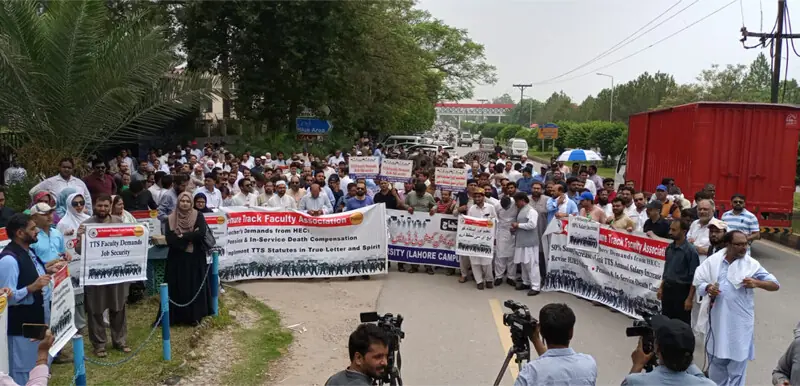
In 2017, the academic Dr Muhammad Binyameen at Bahauddin Zakariya University in Multan started writing emails to the HEC, seeking clarifications on the TTS rules and recommending improvements to benefit faculty. These exchanges did not bear fruit — likely unsurprising to anyone who has communicated with government offices in Pakistan — but it led to academics from various universities coming together to formally launch the APTTA.
The aim of this body was to provide the TTS faculty with a platform to “interact, coordinate, and organise themselves to discuss the issues related to TTS and play their vital role in national development.” With record inflation rearing its head in 2019, the APTTA attempted to engage with the HEC on salaries and then staged public protests outside the HEC head office in Islamabad.
In one such effort in 2020, the HEC chairman at the time, Dr Tariq Banuri, invited protesting faculty into the building. He accepted their demands and announced that the HEC would issue notifications on salary revisions and the introduction of a pension scheme. But those notifications never materialised.
The stars aligned in 2021. The Pakistan Tehreek-i-Insaf (PTI) government announced a significant revision of the TTS package. It was still not much — the starting salary of an assistant professor increased around Rs45,000 — a far cry from the halcyon days of 2008, but at least it gave faculty some room to breathe and hope. A promising sign was that the government indexed the salaries to the BPS to maintain a 35 percent TTS advantage. Whenever the BPS salaries were revised, the TTS pays would automatically increment, thereby at least keeping in track with inflation.
The euphoria was short-lived. The political uncertainty of 2022 triggered a merciless round of price hikes. The expected salary increments did not materialise. On the contrary, at the end of the year, the HEC announced a cap on additional TTS funding for universities due to “serious financial limitations.” New universities were no longer eligible for the TTS funds. The HEC urged universities to undertake additional TTS hiring and funding from their own resources.
APTTA dubbed it yet another betrayal of the TTS faculty. Protests resumed with a new urgency in 2023. The overall disconnect between HEC and universities had grown so pronounced that even BPS faculty organized large scale protests in universities and outside HEC on issues of policy and service structure.
2024: CLASSROOMS TO COURTROOMS
A year later, the APTTA had exhausted its options.
A total of 166 faculty members from various universities banded together to file a petition in the Islamabad High Court. In multiple hearings over the course of a year, presided over by Justice Sardar Ishaq and later Justice Muhammad Asif, out of this confused landscape, there emerged order — a clear vivid picture.
For one, the court acknowledged the core grievance: the TTS package had become “unattractive and contrary to the original spirit of higher education reforms”, in turn “leading to demoralisation and potential loss of academic talent, which is against the national interest and contrary to the constitutional obligation of the State under Article 37(b) to promote education.” The court arranged for some immediate relief, instructing the federal government to release a supplementary grant of Rs1.5 billion for the TTS faculty, dispensed in lump sum payments.
The court also probed details of the HEC funding and expenditures, and further clarified the nitty-gritty of the TTS salary revisions. But, at the end of the day, the court expressed the limits of its powers: “The court cannot itself fix salaries, create a perpetual financial liability, or compel the Federation to allocate funds from the public exchequer in a particular manner.”
The court directed the HEC to prioritise its budget allocations to fulfil its obligations to the TTS faculty. The finance division was directed to assist the HEC in this regard and to place this matter before the federal cabinet for a comprehensive resolution.
It was a victory in principle, even if it rang a little hollow.
When this saga concluded, support emerged from an unexpected source. In November of last year, planning minister Dr Ahsan Iqbal inducted APTTA members in a taskforce dedicated to reform higher education salaries. Though this body had been convening for several months prior, the court’s decision imbued the proceedings with a sense of immediacy. The APTTA’s stance received strong support from various quarters.
Last month, APTTA announced a breakthrough: the government agreed to a significant revision and to formally index TTS salaries to the BPS scale with a 35 percent increment. There was celebration and congratulations on multiple WhatsApp groups and a collective sigh of relief.
SALVAGING HIGHER EDUCATION
At the time of this writing, the paperwork to finalize this revision is underway. There is optimism but also hard-learned caution — nothing is final until it is officially signed. Meanwhile, the neighbouring war promises another relentless round of price hikes in the coming months. A global realignment is in the works and these are very challenging times.
But once the pay scale issue is resolved, the much bigger challenge awaits — our higher education system is broken. Stakeholders no longer see eye-to-eye. Relationships are silently antagonistic. Bureaucrats and managers still trump educationists and PhDs. Quality, innovation and excellence remain a pipedream.
Meanwhile, the APTTA is gearing up for yet another legal battle. In February, APTTA president Dr Asif Ali, a full professor on the TTS at Quaid-i-Azam University (QAU), was demoted to associate professor on the BPS.
This decision is especially concerning. Since the vice-chancellor resigned two months ago to become the new HEC chairman, QAU does not currently have a vice-chancellor or even an acting vice-chancellor. Syndicate and selection board meetings cannot be held, degrees cannot be issued and even certain salary payments hang in limbo. But, somehow, this notification was circulated. This lack of transparency and the suspect timing makes a mockery of academic norms.
Such are the ways in Pakistan. One battle ends and a harder one begins.
This is the first in an investigative series exploring the myriad issues faced by Pakistan’s higher education sector
The writer is a faculty member on the tenure track system. He is grateful to academic colleagues for extensive discussions and feedback on this article.
X: @agrammaton
Published in Dawn, EOS, April 19th, 2026