Green buffer zones made compulsory for industrial areas


 0
0


LAHORE: The Punjab Environment Protection Agency (EPA) has announced a regulatory framework focusing on the establishment of green buffer zones around industrial areas, mandatory plantation drives and strict controls on tree cutting as part of a wider strategy to reduce industrial pollution and improve urban environmental quality.
According to official directives, all industrial clusters across the province will now be required to develop and maintain designated green buffer belts. These zones are intended to act as natural barriers between industrial emissions and residential communities, reducing the direct impact of air pollutants and improving air quality in the surrounding areas. Industrial units have also been directed to ensure compulsory plantation within and around their premises, with compliance to be monitored through field inspections and environmental audits.
Authorities have warned that failure to implement plantation requirements or buffer zone standards will result in regulatory action under applicable environmental laws.
Unauthorised cutting of trees in industrial, commercial or green belt areas has been explicitly prohibited and for any tree cutting, the new framework introduces a requirement of prior authorisation from environmental authorities.
EPA bans unauthorised tree cutting under new regulatory framework
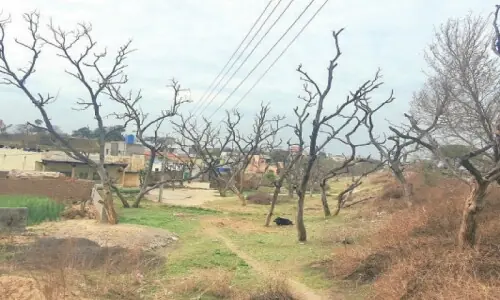
Officials say the move is aimed at preventing the gradual loss of urban green cover, which has been identified as a key factor behind rising smog levels and heat in Punjab.
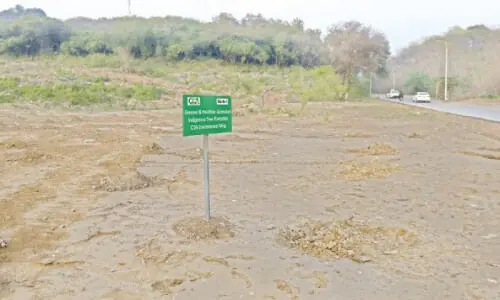
Greenbelts along roads and industrial corridors have also been placed under enhanced protection, with monitoring mechanisms being strengthened to prevent encroachments or damage.
The EPA instructed all relevant departments to ensure full implementation of plantation targets and maintenance of green zones. Field monitoring teams will conduct regular inspections, while violations will be subject to penalties, legal proceedings and possible operational restrictions on non-compliant units.
EPA Director General Imran Hamid Sheikh says that the initiative is not limited to enforcement alone but is designed to bring about a long-term behavioural shift among industrial operators, developers, and local administrations. He adds that industrial growth and environmental protection must operate in parallel, and that compliance with buffer zones and plantation requirements is essential for sustainable development.
According to him, behavioural change will be achieved through a combination of strict enforcement, monitoring and stakeholders’ engagement and that industries should internalise environmental responsibility rather than merely reacting to inspections.
Sheikh has highlighted that repeated violations, especially regarding tree cutting and failure to maintain greenbelts, would be dealt with under a zero-tolerance policy.
Earlier, Provincial Minister for Communications and Works Malik Sohaib Ahmed Bharth chaired a meeting to address climate change and environmental pollution. Officers of the Ring Road Authority attended the meeting. The department is carrying a plantation campaign around Lahore Ring Road and it has planted 150,000 plants and trees over the past 10 months.
The minister was given a detailed briefing on the plantation campaign.
He was informed that the growth and monitoring of plants and trees is being carried out through geo-technology while each plant is being digitally verified and geo-tagged with the “Plant for Pakistan” portal.
The briefing further highlighted that plantation has been completed at Niazi Shaheed, Quaid-e-Azam, and Mian Nawaz Sharif interchanges, while it has also been carried out from airport to Askari 10, the airport to Ghazi City, and SL-3 routes.
During this campaign, special focus has also been given to the development of oxygen pockets along the Ring Road. Bharth directed the Ring Road administration to plant an additional 30,000 trees by June, saying that the initiative will enhance the beauty of the Ring Road.
Published in Dawn, April 18th, 2026