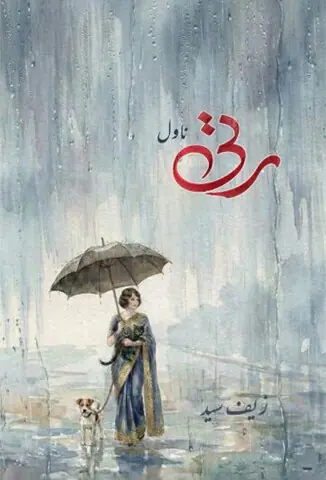
Ruttie
By Zaif Syed
Tilismaat Publications
ISBN: 9786-279487032
286pp.
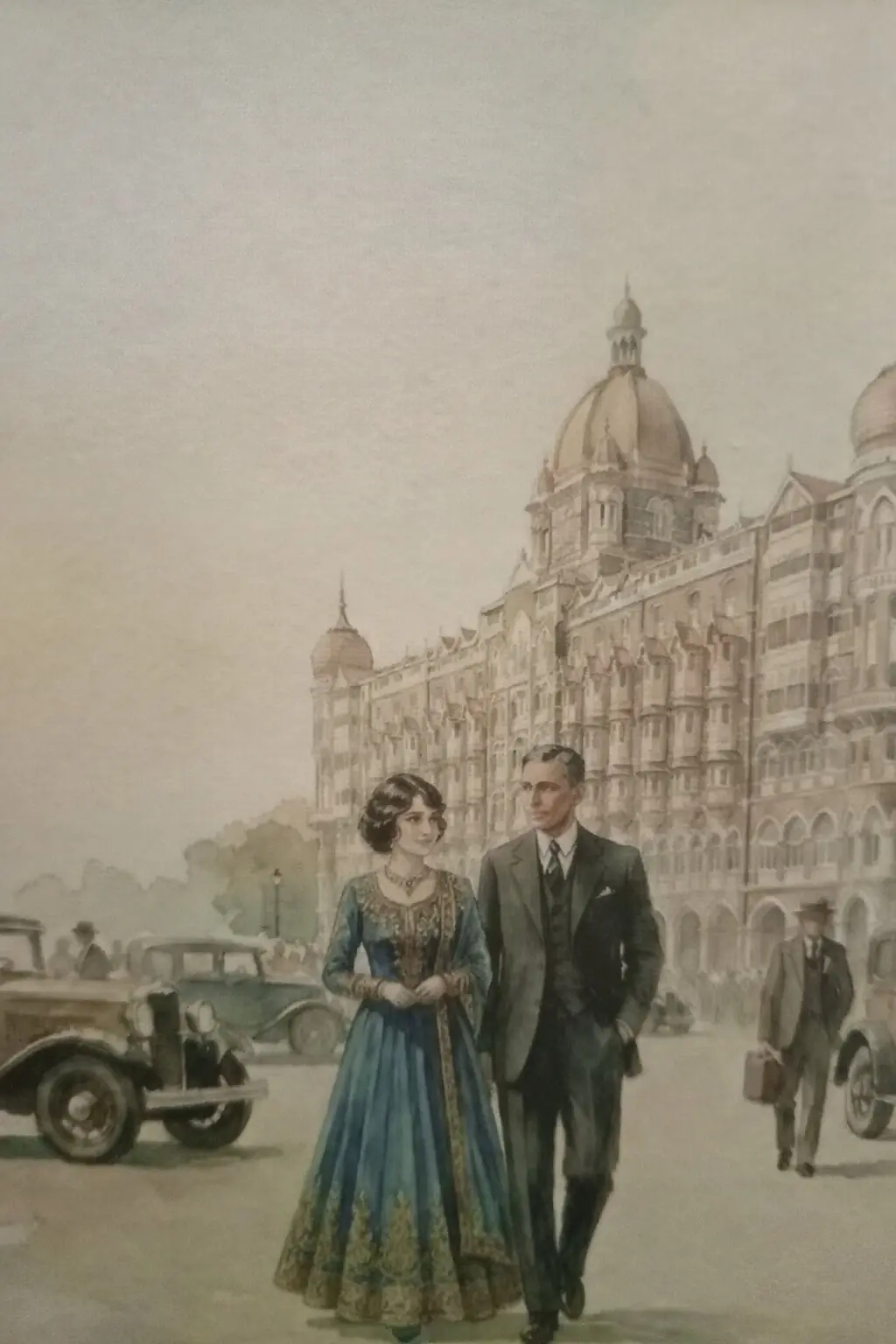
It is the night of February 20, 1918. On the marble floors of the Taj Mahal Hotel, Ruttie Petit sways in a sea-green chiffon saree, as if water itself has learned how to dance. It is her 18th birthday.
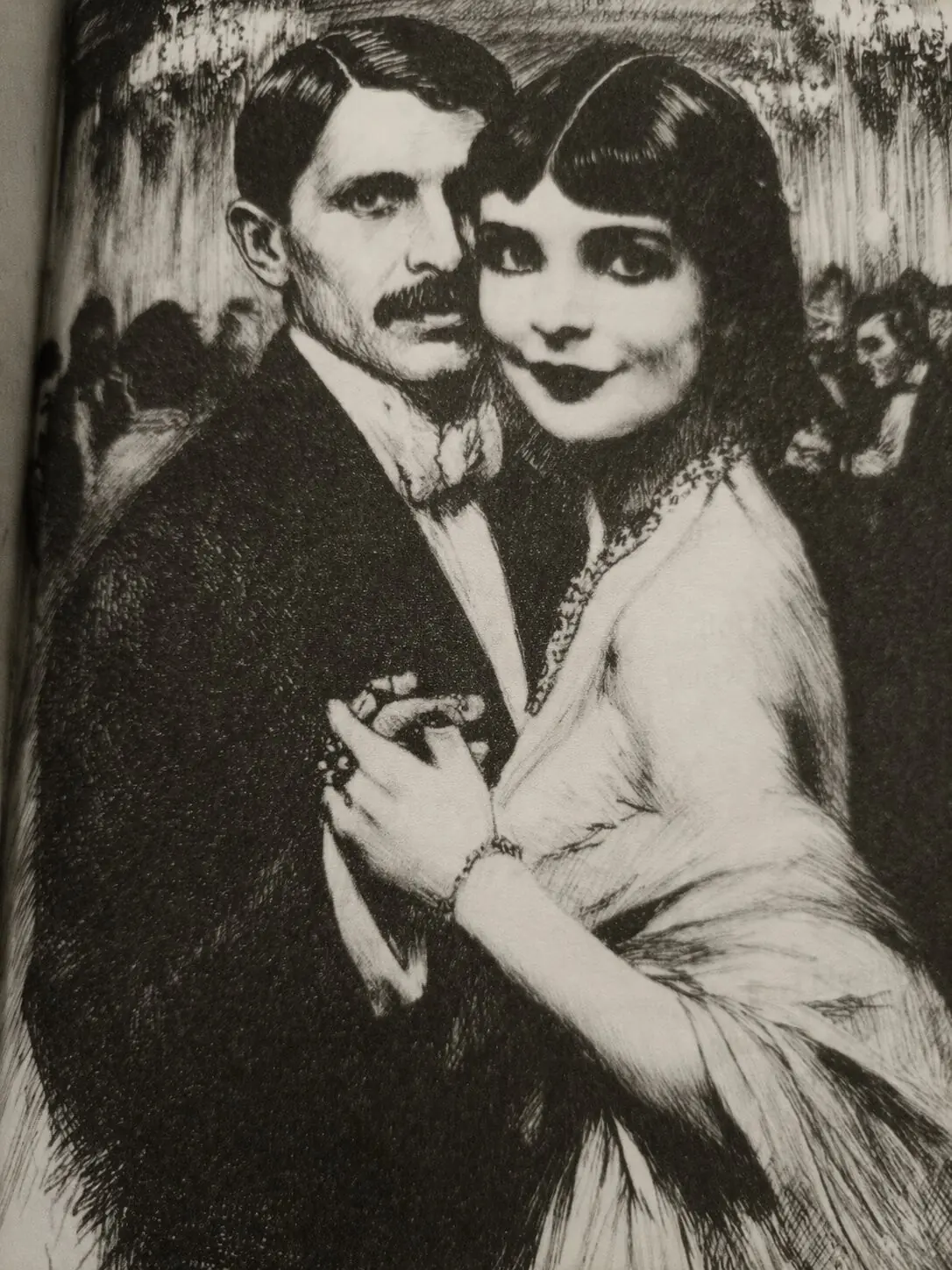
In front of Bombay’s elite, she moves without hesitation into Jinnah’s arms and turns towards the Anglo-Indian bandleader Ken Mac, asking him, “Play Chopin’s Tristesse… for me today.” In that moment, her ethereal beauty and her laughter, light as bangles, are at their peak. The melody rises: “So deep is the night… no moon tonight…” and Ruttie feels as if life is eternal, as if nothing could ever dim this shimmering moment.
Years later, the same melody drifts into the marble veranda of the Karachi Club. It is the evening of August 15, 1947. A new nation is born, history itself stands at a turning point, yet one heart remains lost in the shadows of the past. The Quaid-i-Azam Muhammad Ali Jinnah has called Ken Mac over from Bombay. A whisper echoes: “Will your memory haunt me till I die? So deep is the night…” He stands alone; alone in the crowd, alone at the centre of history. The night is just as deep, and the moon is still absent.
Zaif Syed’s new Urdu novel Ruttie emerges from this inner sorrow, this unspoken ache beneath history’s grand narratives. It begins with a single letter, ‘J’, which becomes both the universe of Ruttie’s life and the symbol of its undoing. Syed is among those rare writers who break away from conventional storytelling, creating a narrative that is not merely told but deeply felt, almost lived. In Ruttie, love, history and memory merge into one another so seamlessly that the boundaries between them dissolve, as if time itself were a living character.
A new Urdu novel imagines the life of Ruttie Jinnah, bringing to life a woman lost in the margins of history and rescuing her from silence
The novel traces the 29 years of Ruttie’s life against the turbulent backdrop of the Subcontinent. Her love for Jinnah and the unrest within their marriage are woven, with remarkable subtlety, into the political upheavals of the time. One of the novel’s most striking features is that everyone and everything in it speaks, except Ruttie herself. There are multiple narrators who reveal the different layers of her personality, each voice adding a new shade to her presence.
Petit Hall reveals how her birth turned its barrenness into bloom. The Taj Mahal Hotel reflects her beauty and charm. Bombay tells its own restless story. And South Court Mansion sings of her love for art and beauty. Dina, her daughter, speaks with longing for her mother, while Kajal, Ruttie’s cat, reflects her quiet tenderness and emotional depth.
Kanji Dwarkadas, Ruttie’s friend, recalls her companionship and loyalty and Diwan Chaman Lal, Jinnah’s close friend and colleague who witnessed the final days of the couple’s marriage, recounts her final days with a restrained, almost unbearable sorrow.
Syed gently brings to life a woman lost in the margins of history, rescuing her from silence. Ruttie emerges as the rose of Bombay, a flickering light in darkness, the queen of Petit Hall, and a prominent Parsi woman of unshakeable strength. To Kanji, she was a brave and devoted friend and, to Mahatma Gandhi, she appears as a symbol of life itself: vibrant, restless and luminous.
The novel, at the same time, portrays Ruttie as a figure of remarkable courage, one who stood in court against her father, Sir Dinshaw Petit, in steadfast support of Jinnah, and who gave up wealth, privilege and certainty in the name of love. Yet, in time, she comes to realise that a life lived entirely on one’s own terms does not always lead to happiness; that freedom, too, can carry within it the seeds of solitude.
The author does not compare but he reveals. Jinnah is discipline personified, a man shaped by restraint, order and purpose, while for Ruttie discipline feels like a form of death. Jinnah knew that only Ruttie could truly see into his inner self, into the spaces he kept hidden from the world, and perhaps this very understanding became a silent torment for her, a closeness that deepened distance rather than bridging it.
Ruttie transformed Jinnah’s South Court, from a mere residence into a living, breathing space, filled with warmth and imagination. She replaced legal files with books by Shakespeare, Keats, Milton, Tagore and Ibsen; softened the cold marble floors with thick carpets; dressed bare windows with velvet curtains and adorned plain walls with fine paintings. South Court came alive because Ruttie had come there not just to live, but to truly exist, to create a space where life could be felt in its fullness.
Yet these two personalities — Ruttie, vibrant, impulsive and deeply attuned to beauty, and Jinnah, the embodiment of restraint and discipline — were like two shores that could never meet. Slowly, almost imperceptibly, their world turned into a cold, silent stillness. It was not a silence born of conflict or confrontation, but of suffocation, a quiet, invisible erosion, like termites eating away at the foundation of their love.
Syed writes that Ruttie’s life was a continuous rebellion against the expectations imposed by society and, perhaps in more subtle ways, by Jinnah as well. The novel also explores her deep bond with animals; she had come to believe that humans may deceive, betray or withdraw, but animals remain purely loyal. As Jinnah became increasingly absorbed in politics and the demands of leadership, Ruttie turned inwards, seeking spiritual solace. Her bright eyes grew distant, her radiant presence dimmed. She still smiled, but her spirit was wounded.
Jinnah, consumed by his mission and its responsibilities, could not hear the heart that beat for him. The attention, which Ruttie had given up everything for, slowly faded into absence, and Jinnah became, above all else, a leader belonging not to one person, but to history itself.
Through Syed’s narrators, we watch Ruttie fade away moment by moment, while the bottles of the sleeping aid Veronal beside her bed multiply almost unnoticed. Jinnah, entangled in constitutional drafts and political complexities, could not untangle the complexities of his own life. On her 29th birthday, she finally freed herself from life’s burdens, leaving behind not just a memory, but a question that lingers. The date February 20 becomes both her beginning and her end — a single date holding an entire story.
The author leaves it to the reader to decide whether, for Jinnah, winning Ruttie was merely a case he sought to win against Sir Dinshaw Petit, or whether it was, in its deepest sense, love. Such is the power of Syed’s style and imagery that the reader no longer remains a spectator, but becomes part of Ruttie’s life.
One basks in the glow of her beauty, loses oneself in the rhythm of her poetry, laughs and dances with her, and then breaks down, grieving alongside her. And as life begins to slip through her fingers like sand, the reader, too, slowly begins to fade.
In the novel, the flow of events is so compelling that one cannot look away even for a moment. Every turn, every scene holds the reader in its grasp, refusing distance, demanding emotional presence. And then come those moments: quiet, deep and piercing, when one cannot hold back tears. And the story continues to echo long after it has ended.
The novel closes on a powerful and haunting note, linking Ruttie’s story to the 2008 Taj Mahal Hotel attacks and its legal aftermath, creating a haunting symbolic circle. In the end, Ruttie’s final letter leaves a lasting echo: “Remember me as the flower you chose, not as the one you crushed under your feet.”
The reviewer is a writer, social activist and performing artist
Published in Dawn, Books & Authors, April 19th, 2026