0
0

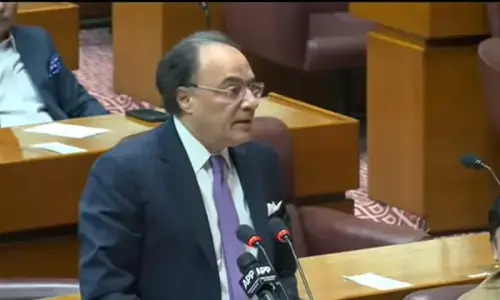
Finance Minister Muhammad Aurangzeb has outlined Pakistan’s responses to the supply shock caused by the Middle East war on the sidelines of the World Bank–IMF Spring Meetings 2026, according to the finance ministry.
According to the finance ministry, Aurangzeb has characterised the ongoing crisis in the Middle East as “one of the most significant supply shocks in recent history” and presented government responses “to address its first-order effects, including adjustments in procurement strategies, pricing frameworks, and logistics chains”.
Aurangzeb has also underscored the government’s commitment to transitioning away from broad-based subsidies, and “towards well-targeted support mechanisms aimed at protecting the most vulnerable segments of the population”.
“He noted that the government, in close coordination with the State Bank of Pakistan, is conducting a comprehensive assessment of the second and third-order effects of the crisis across key macroeconomic indicators, including inflation, economic growth, exports, remittances, and the current account,” the finance ministry says.
“The finance minister has highlighted that Pakistan has entered the current period of global uncertainty with strengthened policy buffers and has drawn important lessons from past external shocks, including the devastating floods in recent years.”