0
0

• Beef and mutton rates rise by Rs100-300 per kg
• Slaughtering of calves, dairy animals blamed for animal ‘shortage’
• Traders say prices of sacrificial animals may fall if exports drop drastically
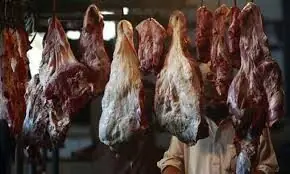
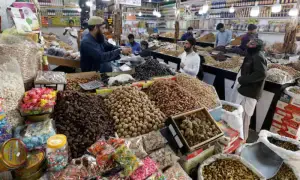
KARACHI: Despite expectations that meat prices would fall due to reported dropping exports during the Middle East war, retailers have increased beef and mutton rates by Rs100-300 per kilogram.
In Karachi, mutton rates have surged up to Rs2,700 per kg in various markets, showing a rise of up to Rs300 per kg.
The prices of veal meat with bones are hovering between Rs1,400-1,500 per kg in Karachi, up by an average Rs100 per kg, while veal boneless is selling at Rs1,800 per kg, up by Rs200 per kg.
Beef (big cow) meat with bones is priced Rs1,350-1,500 per kg, up by Rs200 per kg.
Surprisingly, the commissioner of Karachi price list issued on February 16 had fixed mutton rate at Rs2,200 per kg while veal meat with and without bones at Rs1,300 and Rs1,600. The prices of cow meat with and without bones were fixed at Rs1,000 and Rs1,300 per kg, respectively.
Nowhere in the city is meat being sold at the official rates. Meat merchants also do not display the official price list at their shops.
As always, ahead of Eidul Fitr, demand for boneless veal and beef spikes up. Mutton demand, however, does not go up like beef, but retailers had increased Rs300 per kg price over the last one and a half month despite slowdown in exports.
They first raised the prices ahead of Ramazan followed by a second price increase a few days ahead of Eidul Fitr.
Besides, demand for meat also remains high with the start of the marriage season after Eid.
Traders response
Meat traders give mixed responses over rising prices after a reported slowdown in exports to various countries, especially the Middle Eastern countries, due to the ongoing war.
They lament sharp price increase in diesel and liquefied petroleum gas rates, blaming additional cost for rising prices.
A mutton trader at Water Pump, Federal B. Area, said that meat exports were going on via air and claimed that the market was facing a shortage of goats. Beef traders made similar claims.
As Eidul Azha will be celebrated in the last week of May, already high prices of meat may keep the prices of sacrificial animals high as well.
Traders said if exports of meat fall drastically due to the soaring geo-political tensions, the prices of sacrificial animals may also fall.
However, much will depend on consumers’ buying power which has shrunk after massive rise in transportation cost owing to drastic increase in petroleum products prices.
Food inflation is also expected to rise in April and May, which will affect people’s buying power. The arrival of home remittances from abroad also plays a key role in sacrificial animal purchase.
Exports figures
Exports of meat during the past eight months of the ongoing fiscal year, 2025-6, fell to 83,321 tonnes ($370 million) from 78,883 tonnes ($338mn) in the same period of the last fiscal.
The Middle East war was started on February 28 and the March export figures will reveal the true picture of meat exports.
However, Dairy and Cattle Farmers Association (DCFA) President Shakir Gujjar said meat exports were only one to two per cent of the total consumption of red meat.
“Slaughtering of calves and female dairy animals are the main reasons for livestock shortage,” he claimed. “A dry female buffalo or a cow is not merely meat; it is a living production unit capable of producing milk and calves,” he added.
“Butchers are permanently destroying these production units for short-term profits. If this slaughter of female animals continues, Pakistan’s dairy and beef sectors will collapse completely within a few years,” Mr Shakir warned.
“The government must immediately declare the slaughter of female animals an attack on the economy and impose an outright ban. Day-old calves were the livestock’s future inventory,” he added.
“If we cannot save a 10-15kg calf today, how will we supply export-quality animals to the global market in future,” he questioned.
He urged the Planning Commission to introduce emergency programmes that provide special incentives to farmers for rearing calves.
Published in Dawn, April 13th, 2026