Why restraint matters in managing public perceptions
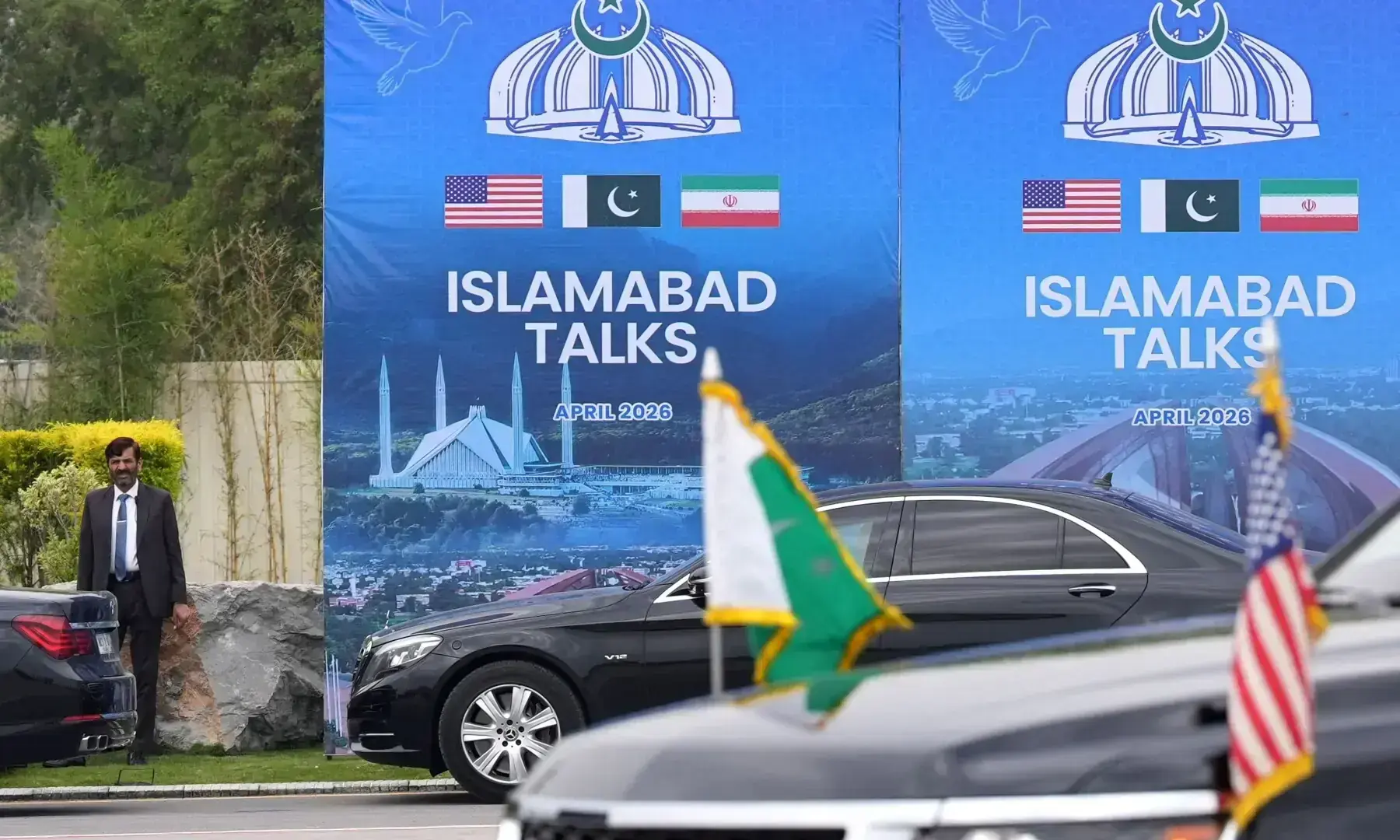
WHEN Vice President JD Vance and Iranian Speaker Mohammad Bagher Ghalibaf arrived in Islamabad with their delegations this weekend, the country was already carrying the weight of expectation.
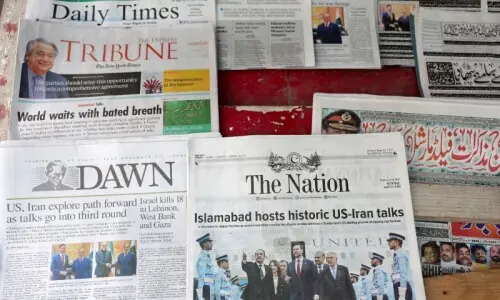
Billboards in the capital city, television coverage and social media messaging seemed to present “Islamabad Talks” as a decisive moment. These optics made the masses believe that the process was near closure, not commencement.
By Sunday morning, that framing had run ahead of events. US Vice President JD Vance said the US and Iran “just could not get to a situation where the Iranians were willing to accept our terms.” Iranian officials responded in equally firm terms. Pakistani officials, meanwhile, adopted a more measured line, emphasising their role as facilitators.
The gap between expectation and outcome did not arise from the talks themselves. Rather it reflected how the process was presented to the public at large. What took place in Islamabad was the first direct, highest-level contact between Washington and Tehran since 1979, following weeks of conflict and a fragile ceasefire. By nature, it was exploratory and contested. The issues on the table, nuclear commitments, the Strait of Hormuz, sanctions relief sequencing and getting a regional ceasefire, were too complex for quick resolution.
In high-stakes diplomacy, understatement often carries more weight than projection
In such settings, many failed to realise that perception management becomes part of diplomacy as the challenge is not only to convene the parties, but at the same time to calibrate expectations around what could be realistically delivered. The problem is that where expectations move ahead of substance, even a process that remains intact sometimes starts looking like a setback.
Something similar happened in Islamabad. The general perception among the public after the talks was therefore that of disappointment even though both parties had not slammed the door shut despite failing to secure a breakthrough. Other mediation tracks offer a contrast in approach. Qatar, during the US-Taliban negotiations, kept a low public profile over several years, limiting commentary and avoiding hype. Oman adopted a similar method in facilitating indirect US-Iran contacts, with sparse, technical readouts and minimal signalling. In both cases, restraint in public messaging helped sustain the process through difficult phases.
In Islamabad, the signalling appeared more forward-leaning. At a time when negotiators were still testing positions, some media commentary created the impression of a near-final understanding. But when the outcome revealed familiar differences, the adjustment had to be abrupt.
Officials themselves acknowledged the limits of the moment. One Pakistani official noted that “what has been achieved or not was therefore a play amongst the two, with both also burdened by their domestic audience and long-term standing,” adding that it was not for the host to discuss the substance. That assessment reflected the reality of the talks more closely than the earlier public mood.
The lesson from this episode, therefore, is that while running such processes, there should be steady messaging, which matches the pace of negotiations because perception can shape the reading of the outcome. It needs to be always remembered that in high-stakes diplomacy, understatement often carries more weight than projection.
Published in Dawn, April 13th, 2026