Short-term inflation surges by 12.15pc

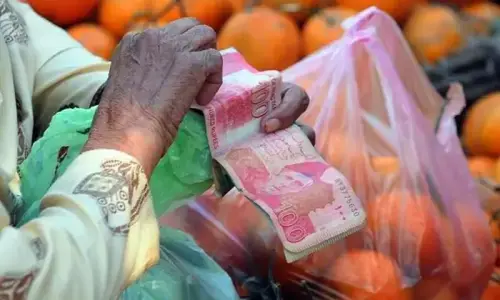
ISLAMABAD: Short-term inflation, measured by the Sensitive Price Index, rose to 12.15 per cent year-on-year in the week ending April 9, driven mainly by higher retail prices for petroleum products in the domestic market.
The increase in fuel prices twice in a month pushed up transport costs, feeding into the prices of both perishable and non-perishable items and raising overall production costs for manufacturers, which were passed on to end consumers.
Despite indications that the government may lower petroleum prices from their current peak, the effects of earlier increases are expected to persist in the coming weeks.
The SPI has now risen for the 35th consecutive week, though at a slower pace, reflecting continued pressure on household budgets. The latest increase was also supported by a sharp rise in vegetable prices and other non-perishable food items.
Fuel price hikes drive up costs of essentials
On a week-on-week basis, the index recorded a modest increase of 1.93 per cent compared to the previous week, according to official figures released by the Pakistan Bureau of Statistics here on Friday.
The conflict in the Middle East has deepened short-term inflationary pressures by disrupting supplies of essential commodities, particularly petroleum products.
The inflation outlook will now hinge on the outcome of the Islamabad talks between the United States and Iran, which are expected to determine whether the ceasefire moves towards a lasting settlement or whether regional uncertainty continues.
Weekly inflation had earlier reached a historic high of 48.35 per cent YoY in early May 2023. It subsequently moderated in the following years.
The latest movement in sugar, edible oil, pulses, and meat prices suggests that volatility in essential food commodities continues to shape short-term inflation trends, with consumers facing recurring cycles of price spikes.
The items, whose prices increased the most over the previous week included diesel (54.71pc), petrol (17.86pc), tomatoes (9.35pc), LPG (8.61pc), potatoes (4.13pc), onions (3.84pc), eggs (3.77pc), beef (1.07pc), mutton (1.05pc), cooked daal (0.88pc), georgette (0.66pc) and bread (0.47pc).
The items whose prices saw a decline week-on-week included garlic (3.78pc), bananas (3.39pc), chicken (1.05pc), wheat flour (0.73pc), vegetable ghee (2.5 kg) (0.24pc), cooking oil (5 litre) & pulse mash (0.07pc) each, and gur (0.01pc).
However, on an annual basis, the items whose prices increased the most diesel (101.02pc), LPG (65.86pc), petrol (48.70pc), onions (37.80pc), wheat flour (30.10pc), gas charges for Q1 (29.85pc), tomatoes (23.07pc), chilies powder (15.20pc), mutton (14.98pc), beef (13.95pc), powdered milk (10.23pc) and bananas (7.78pc).
In contrast, the prices of potatoes dropped by 46.32pc, followed by pulse gram (18.83pc), salt powder (12.78pc), pulse masoor and sugar (11.52pc each), chicken (9.69pc), pulse moong (1.87pc), and tea lipton (1.14pc).
The index, comprising 51 items collected from 50 markets in 17 cities, is computed weekly to assess the prices of essential commodities and services at shorter intervals. Data showed that the prices of 28 items increased, 08 decreased, and 15 remained stable compared to the previous week.
Published in Dawn, April 11th, 2026