Weekly inflation surges 9.12pc
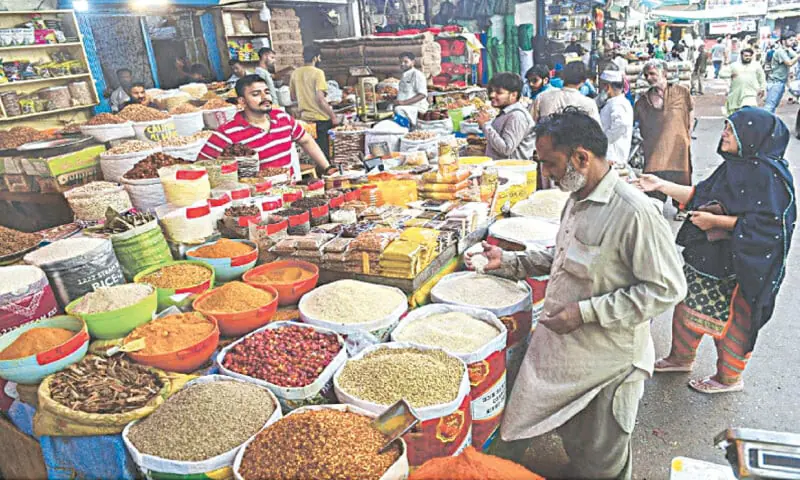

ISLAMABAD: Short-term inflation, measured through the Sensitive Price Index (SPI), increased by 9.12 per cent year-on-year in the week ending April 2, primarily due to higher retail prices of petroleum products in the domestic market.
Short-term inflation is expected to rise into double digits in the next review following a sharp increase in petroleum product prices. The current weekly review covers prices up to April 2, a day before the unprecedented hike took effect from April 3.
Higher transport charges are also expected to push up retail prices of perishable food items.
The increase marks the 34th consecutive week of rising prices, signalling sustained pressure on household budgets. The latest rise was largely driven by a sharp increase in the prices of vegetables and other perishable commodities.
FAO index up 2.4pc in March, driven by energy costs
On a week-on-week basis, the SPI rose 1.01pc, according to data released by the Pakistan Bureau of Statistics on Friday.
Short-term inflation is expected to rise further amid the ongoing conflict in the Middle East, which is disrupting the supply of essential commodities, particularly petroleum products.
The items, whose prices increased the most over the previous week included LPG (13.28pc), eggs (2.23pc), chicken (2.13pc), pulse mash (1.74pc), mutton (1.54pc), milk fresh (0.63pc), curd (0.60pc), georgette (0.42pc), shirting (0.41pc), beef (0.39pc), pulse masoor (0.28pc) and lawn printed (0.10pc).
The items whose prices declined week-on-week included tomatoes (6.03pc), garlic (3.38pc), potatoes (1.22pc), onions (1.21pc), wheat flour (0.92pc), bananas (0.50pc), mustard oil (0.33pc), firewood (0.19pc) and sugar (0.15pc).
However, on an annual basis, the items whose prices increased the most LPG (53.69pc), diesel (29.94pc), gas charges for Q1 (29.85pc), petrol (26.17pc), wheat flour (24.85pc), onions (17.57pc), chillies powder (15.20pc), mutton (14pc), beef (12.94pc), powdered milk (10.11pc), rice basmati broken (6.51pc) and gur (5.69pc).
In contrast, the prices of potatoes dropped 49.65pc, followed by pulse gram (17.52pc), chicken (16.08pc), salt powder (12.55pc), sugar (11.48pc), pulse masoor (11.32pc), garlic (10.39pc) and eggs (7.27pc).
The index, comprising 51 items collected from 50 markets in 17 cities, is computed weekly to assess the prices of essential commodities and services at shorter intervals.
Global food prices
World food commodity prices rose in March for the second month in a row, due largely to higher energy prices linked to the conflict escalation in the Near East, according to the latest benchmark measure released on Friday by the Food and Agriculture Organisation of the United Nations (FAO).
The ‘FAO Food Price Index’, which tracks monthly changes in the international prices of a basket of globally-traded food commodities, averaged 128.5 points in March, up 2.4 per cent from February and 1pc above its level a year ago.
The FAO Cereal Price Index increased by 1.5pc from the previous month, driven primarily by higher world wheat prices, which rose 4.3pc due to drought-related deterioration of crop prospects in the United States of America and expectations of reduced plantings in Australia due to higher fertiliser costs.
FAO says world rice production to expand by 2pc in 2025-26 to reach a record high of 563.3m tonnes. Bangladesh, Brazil, China, India, and Indonesia to drive this growth, more than offsetting contractions in Madagascar, Pakistan, Thailand, Tanzania, and the US.
Published in Dawn, April 4th, 2026