Govt reduces petrol price by Rs12 per litre, HSD by Rs135


 2
2
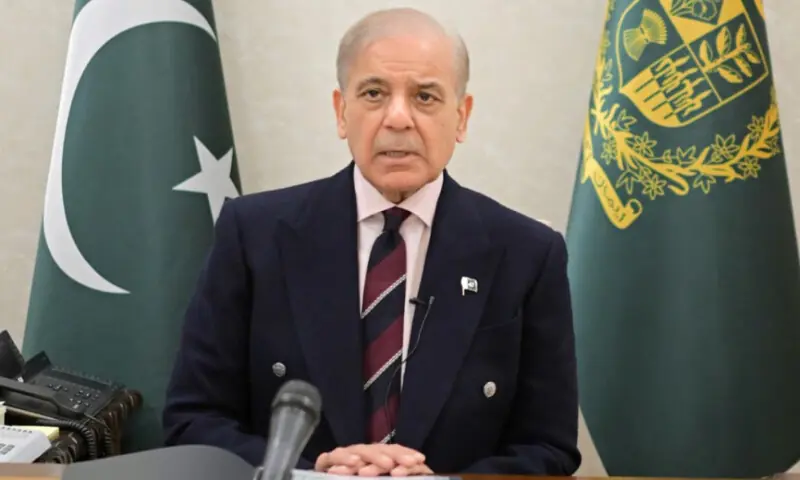

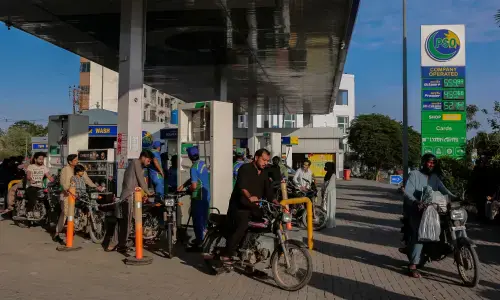
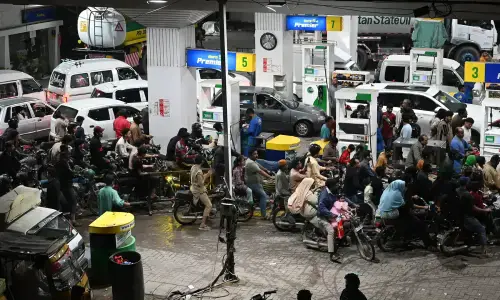
Prime Minister Shehbaz Sharif announced on Friday that the government was reducing the price of high-speed diesel (HSD) by Rs135 per litre and that of petrol by Rs12 per litre.
He made the announcement in a televised address to the nation.
PM Shehbaz said HSD would be available at Rs385 per litre and petrol at Rs366 per litre from 12am on Saturday.
Moreover, he said targeted subsidy initiatives announced by the government following the fuel crisis resulting from the Middle East crisis would not be discontinued.
Separately, Deputy Prime Minister and Foreign Minister Ishaq Dar shared the notification for the new prices on X, according to which the price of kerosene has also been reduced by Rs17.33 per litre to Rs450.15 and that of light diesel oil by Rs25.31 per litre to Rs369.72.
PM Shehbaz had begun his address by saying he was speaking to the nation at a “historic occasion”, when there was talk of peace instead of war in the Gulf.
He said that parties that had been facing each other in a war had now agreed to resolve their issues through dialogue.
He thanked the leadership of Iran and the US for accepting his proposal for a two-week ceasefire and invitation to visit Pakistan to hold talks for the restoration of peace.
He said, “Pakistan hosting these talks was not just a proud moment for Pakistan but for the entire Muslim world.”
PM Shehbaz added that in these critical times, Pakistan’s leadership was able to convince the US and Iran to agree on a temporary ceasefire and invited them to Islamabad.
“For this, I laud Deputy Prime Minister and Foreign Minister Ishaq Dar for sincerely working day and night. And I particularly commend Field Marshal Asim Munir and his team, who … played a key and historic role in dousing the flames of war and convincing the warring parties to talk,” he added. “In this regard, history will remember the services of Field Marshal Asim Munir in golden words.”
The premier said while a temporary ceasefire had been announced, a more difficult stage would be that of a long-term ceasefire and resolving issues through dialogue.
That, he said, would be a “make or break” stage.
Highlighting the impacts of the Middle East war, he spoke about a “devastating storm of inflation” and recalled that he had promised the nation that he would pass on the relief of global oil prices going down to the people.
Today, he said, there had been some reduction in oil prices in the international market.
PM Shehbaz said he had been advised not to impart the full relief of the reduction in prices to the people so that Rs129 billion that the government had spent to cushion the impact of price shocks could be compensated for to some extent.
“But, I immediately rejected that recommendation,” he said.
The PM said he had witnessed how the people bore the burden of rising prices with patience and courage. “And now, when there is a reduction in prices, it is my moral and political responsibility to pass on the relief to you.”
He said the utilisation of some of the government resources and “fiscal discipline” had also contributed to reducing the consumer price of petrol and diesel prices.
“Because wheat harvesting has begun, and it is very important at this stage to reduce the cost for our farmers. Otherwise, not just farmers’ hard work will be wasted, but the cost of food items will also rise,” he explained.
The premier then went on to announce the reduction in the prices of petrol and diesel.
The premier’s announcement on Friday came a week after the government reduced the petrol levy by Rs80 per litre, which lowered the commodity’s price for the end consumer to Rs378 per litre.
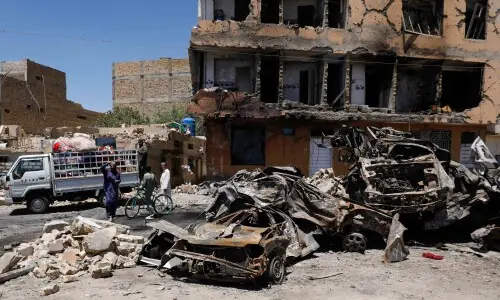
These developments have taken place as the world feels the impact of the US-Israeli war on Iran, which began on February 28, in the form of rising oil prices.
After the war began, the government initially hiked petrol and diesel prices by Rs55 per litre on March 6 and announced unprecedented austerity measures on March 9 in the first steps to deal with the situation.
On March 20, the PM said he had rejected an increase of Rs76 per litre in the price of petrol Rs177 per litre in that of HSD. The premier had also said that he had rejected a similar recommendation earlier as well, following a hike in oil prices in the international market on March 13.
A week later, he again announced that he had rejected a third recommendation for an increase of Rs95 per litre in the price of petrol and Rs203 per litre in that of HSD since the war began.
Last Friday, a cut in petrol levy had further reduced the commodity’s price to RS378 per litre.