Pakistan terms attack on Saudi plants ‘dangerous escalation’


 0
0

• PM assures crown prince of ‘unwavering solidarity’, reaffirms peace push
• Military top brass says flareup could derail peace efforts
ISLAMABAD: Pakistan on Tuesday unequivocally condemned Iran’s attack on Saudi Arabia’s key petrochemical complex as an “unnecessary” and “dangerous escalation”, while continuing to call for restraint and de-escalation amid the ongoing regional conflict.
“Condemned today’s attack on the Al Jubail oil facility. We stand shoulder to shoulder with our Saudi brothers and sisters,” the Prime Minister’s Office said in a statement after PM Shehbaz Sharif’s telephone conversation with Saudi Crown Prince Mohammed bin Salman.
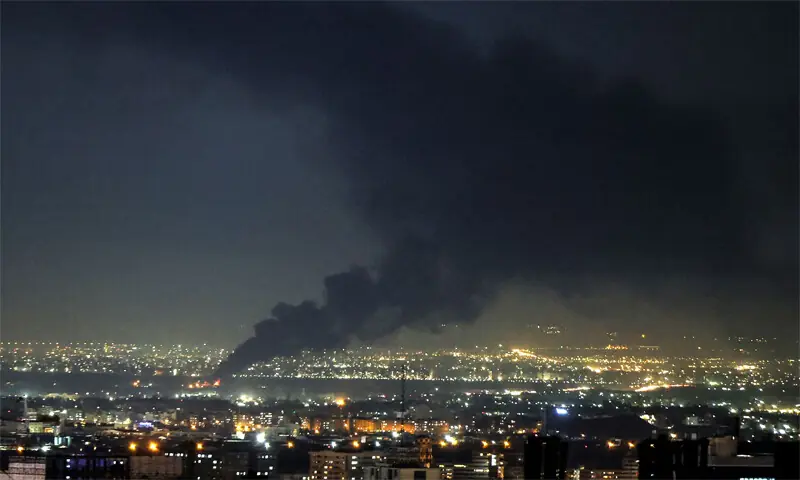
The call came after Iran carried out missile and drone strikes on Saudi Arabia’s Jubail Industrial City, a sprawling petrochemical hub in the kingdom’s eastern province. The complex, which houses facilities operated by Saudi Basic Industries Corporation and other major industrial ventures, is one of the world’s largest integrated downstream energy and chemicals zones. The strikes triggered fires and explosions, raising immediate concerns about disruption to global petrochemical supplies and further volatility in already strained energy markets.
In his conversation with the Saudi crown prince, the prime minister conveyed Pakistan’s “unwavering solidarity” with the kingdom and expressed concern over the potential consequences of the attack for regional peace.
“Reaffirmed Pakistan’s commitment to advancing peace efforts for de-escalation in the region,” the PMO quoted the PM as saying, while underscoring Islamabad’s dual-track approach of condemnation coupled with continued diplomatic outreach.
Pakistan’s reaction is consistent with its broader posture since the outbreak of the conflict, which has now entered its sixth week. Islamabad has sought to maintain a careful balance by condemning US and Israeli strikes against Iran that triggered the war, while also strongly criticising Iranian retaliatory attacks, especially those targeting critical infrastructure in Gulf states, as they risk widening the conflict.
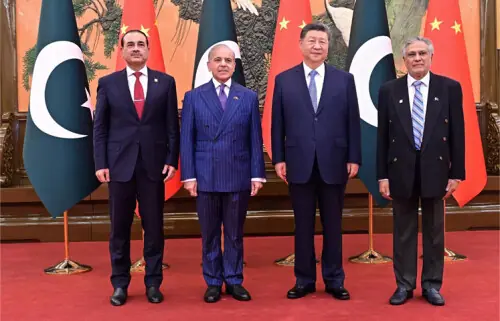
At the same time, Pakistan has emerged as an active diplomatic player, attempting to prevent further escalation through a series of coordinated initiatives. Over the past weeks, Islamabad has hosted consultations with key regional countries, maintained back-channel contacts between Tehran and Washington, and worked closely with Beijing on a framework for de-escalation that includes calls for a ceasefire, dialogue, and protection of critical infrastructure.
Officials describe Pakistan’s role as that of a facilitator rather than a mediator as it has been relaying messages, building confidence, and trying to keep communication channels open in an environment of deep mistrust.
The government’s position on the latest attack was echoed by the military leadership during a meeting of top commanders at General Headquarters in Rawalpindi.
The meeting, chaired by Chief of Army Staff and Chief of Defence Forces Field Marshal Syed
Asim Munir, “vehemently condemned” the strikes on Saudi Arabia’s petrochemical and industrial complex, describing them as an “unnecessary escalation” that could derail ongoing peace efforts.
The commanders noted that Saudi Arabia’s restraint in the face of earlier provocations had helped create space for mediation and dialogue, but warned that such attacks could undermine those efforts and could have “serious repercussions” for the efforts aimed at de-escalation and the broader regional environment.
Separately, the Foreign Office issued a strongly worded statement condemning the missile and drone attacks, calling them a serious violation of Saudi Arabia’s sovereignty and territorial integrity. It expressed condolences over the loss of life and damage to critical infrastructure, and reaffirmed Pakistan’s “unwavering support” for the kingdom’s security.
The statement also framed the attack as part of a dangerous escalation cycle that undermines regional peace and stability.
The targeting of Jubail complex, a critical node in the global petrochemical supply chain, has heightened concerns about international economic interests because of the central role of Gulf energy infrastructure in global markets. Industry analysts warn that even partial disruptions at such facilities could remove significant volumes of key chemical intermediates from the market, triggering price spikes and production disruptions across multiple sectors, from plastics to fertilisers.
Published in Dawn, April 8th, 2026