THATTA: Health experts and district officials have called for mandatory pre-marital screening, warning that a high prevalence of thalassaemia carriers in Sindh’s coastal districts is leading to a steady rise in affected births.
The appeal was made during a blood donation drive, where officials revealed that mvore than 600 children in Thatta and Sujawal currently rely on regular transfusions for survival.
Blood donation ward
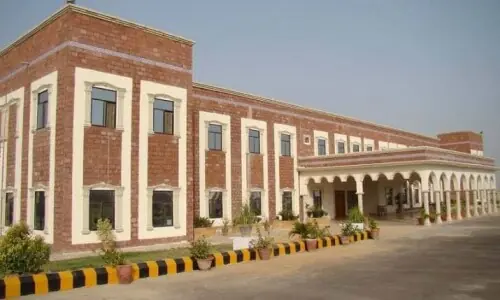
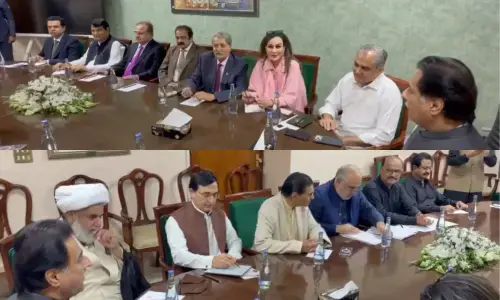
The deputy commissioner of Thatta, Sarmad Ali Bhagat, inaugurated a new blood donation ward at Civil Hospital Makli. To launch the campaign, Mr Bhagat donated blood himself, setting a practical example to encourage public participation.
Mr Bhagat noted that the families of thalassaemia patients are frequently forced to travel to Karachi and Hyderabad to source blood, causing significant financial and emotional hardship. He confirmed that the district administration has mobilised all relevant departments to promote voluntary donations.
“The wider the outreach of this campaign, the more effectively we can combat this disease,” Mr Bhagat said. He added that the drive will continue until April 10, with collected units reserved for both registered and unregistered patients.
Growing national challenge
The scale of the crisis was highlighted by health expert Dr Sikandar Shah, who provided sobering national statistics.
He said 5,000 new cases of thalassaemia major are recorded in Pakistan annually; 90,000 patients nationwide require lifelong transfusions; 10 million people are estimated to be carriers and posing a massive public health challenge.
Dr Shah and other experts expressed frustration that despite the Sindh Prevention and Control of Thalassaemia Act 2013, implementation remains weak. They emphasised that mandatory screening before marriage is the single most effective measure to prevent new cases.
Civil Surgeon Dr Yameen Shah stated that the local ward would “streamline transfusion services” and reduce reliance on distant urban centres.
Meanwhile, Dr Aleem Uqaili, incharge of the Indus Blood Bank, said work is underway to build a structured donor network to ensure no family has to struggle in an emergency.
District Health Officer Dr Safdar Ali Shah concluded by urging a shift in public culture, noting that Pakistan requires approximately 1.8 million units of blood annually. “Without a consistent blood supply, managing thalassaemia becomes an almost impossible task,” he warned.
The event was attended by senior officials, including Additional Deputy Commissioners Imranul Haq and Waleed Dawach, and Assistant Commissioner Shakir Faheem.
Published in Dawn, April 7th, 2026