Optimistic, pragmatic, alarming or doomsday. The range of scenarios for Pakistan’s economic outlook is unusually wide, even by the country’s standards of volatility, with little clarity on which way things will turn, which makes sense given the complete lack of clarity in all aspects of the current Iran-US war.
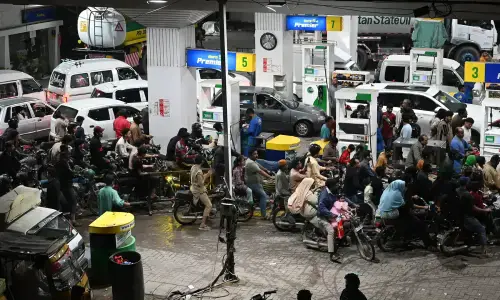
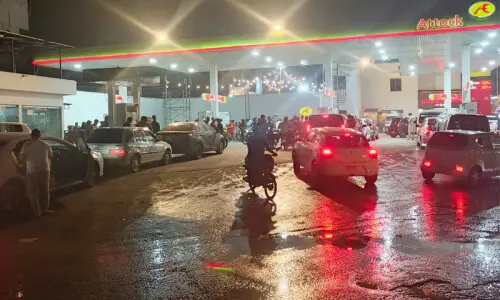
On the domestic front, at the time of writing, a series of developments have sent ripples throughout the economy. For starters, fuel prices surged, then partially eased owing to adjustments in the petroleum development levy (PDL). At the same time, news broke that Pakistan is set to return $3.5 billion in debt to the United Arab Emirates (UAE), along with the $1.3bn Eurobond due.
Together, these two events impact Pakistan’s fiscal account, add pressure on its external account and bring woes to the masses.
‘Sword of Damocles’
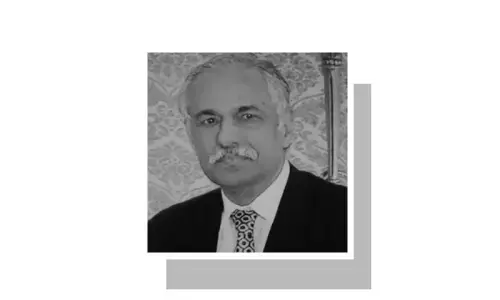
While the Eurobond repayment was likely factored into official calculations, the return of the $3.5bn UAE deposit will be “very adverse”, says economist and former advisor to the Sindh government, Kaiser Bengali. Our usual Gulf allies may no longer be able to provide us with a financial cushion, given the pressure on their oil revenues and the damage to infrastructure, he adds.
Experts and masses are dazed alike by the whirlwind changes due to the recent conflict, including a rapidly shifting petrol price and the return of $3.5bn in debt to the UAE
As of March 27, the State Bank’s net reserves stood at $16.4bn. An outflow of roughly $4.8bn would wipe out close to a third of that stock. That said, the situation is not as dire as it was in recent memory when reserves fell to a decade-low of $2.92bn in February 2023. Despite the war and current economic crisis, Pakistan’s stabilisation process has left the country on a far stronger footing than it was post-pandemic and the Russia-Ukraine crisis.
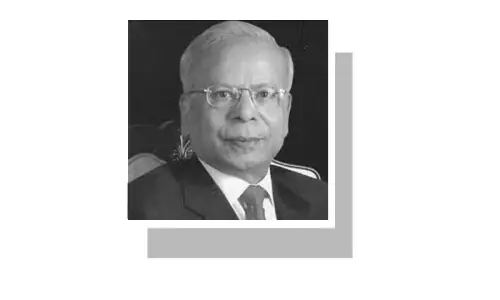
Others, however, see this moment differently. Former State Bank governor Ishrat Hussain, while cautious of the specifics of the UAE repayment, describes such short-term foreign deposits as a “Sword of Damocles.” The sooner Pakistan moves away from reliance on these liabilities, he argues, the better; hence, such a repayment would be good for the country.
For former finance minister Hafeez Pasha, the risks are more immediate. Calling the situation a “knockout blow,” he points to the compounding effect of rising oil prices, which could push the import bill up by as much as $1bn a month. In combination with debt repayments, this raises the possibility of a sharp adjustment in the exchange rate, potentially towards Rs320 to the dollar. Mr Bengali, too, expects further depreciation if the conflict deepens and remittance flows are disrupted if labour returns from the Middle East.
A stable exchange rate?
“I don’t think there will be a significant depreciation of the rupee,” says Tresmark CEO Faisal Mamsa, offering a counter-narrative to the more pessimistic outlook.
With the International Monetary Fund staff-level agreement of over $1bn in place, and a continued policy focus on managing the external account, the Eurobond and UAE loan repayments represent a difficult but manageable outflow, according to a Tresmark note.
From a flow perspective, the State Bank of Pakistan has been accumulating surplus dollars from the interbank market, as inflows currently exceed outflows. In other words, if the central bank were not absorbing these dollars, the rupee could in fact be stronger than its present level. This suggests that the exchange rate is not being artificially held, but rather managed to maintain stability, the note added.
There are, however, adjustments taking place elsewhere. Rather than drawing down reserves or relying on verbal intervention, the burden has shifted to import compression through higher interest rates, tighter letter of credit margins, and a range of fiscal and administrative controls.
The calculation behind this analysis is that Pakistan’s typical monthly energy bill is roughly $1bn for oil and $300 million for gas. Adjusting for the lack of international gas supply and lower demand, the math changes to $1.5bn in monthly oil imports (assuming Brent crude at $110) and $100m in monthly gas imports. Together, this implies a net increase of only $300m per month, which, if remittances remain strong despite the war, could be manageable.
As a result, Mr Mamsa expects the rupee to move in a gradual and controlled manner towards Rs282-284 per dollar till the end of June.
Juggling the petroleum levy
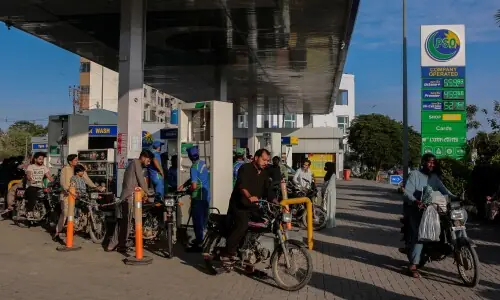
The price shock at the petrol pump is what weighs most on the hearts of the masses. At Rs458 per litre for petrol, the petroleum development levy (PDL) was Rs160 per litre, up from Rs105 in the March petroleum price hike.
However, with PDL down Rs80 as per Prime Minister Shehbaz Sharif’s announcement on Friday, the petrol levy for a month is down to around pre-war levels, while the diesel levy has been completely withdrawn. As a result, petrol is Rs378 per litre and high-speed diesel is Rs520.
Diesel is closely linked to the agricultural sector, as it powers most farm equipment and the trucks that transport produce. Higher diesel prices during harvest seasons result in a double whammy on food prices, as the price of perishables rises first when petrol prices rise; hence the decision to temporarily remove PDL on diesel.
However, former finance minister Miftah Ismail points out that more than half the petrol is consumed by the roughly 25m motorcyclists in the country, thus crushing the middle-income group the most. And subsidised fuel and the app leave the door open to corruption, providing little actual relief.
Higher fuel prices are expected to push inflation into double digits and prompt a tighter monetary policy, eroding the precious, hard-won stabilisation gains of the last couple of years. But it is precisely because of the painful stabilisation process that the macroeconomic crisis has not dragged Pakistan to default’s doorstep, as it did the last time a conflict resulted in an energy crisis.
Published in Dawn, The Business and Finance Weekly, April 6th, 2026