0
0

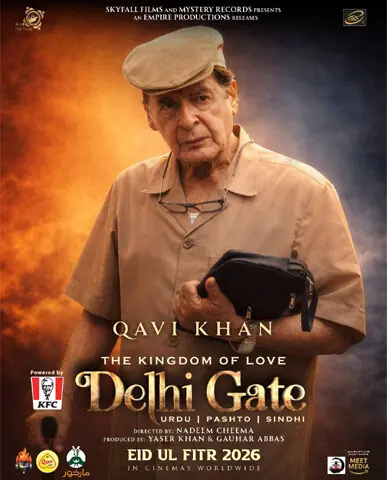
Nadeem Cheema’s Delhi Gate, scheduled to be released countrywide on Eidul Fitr, unfortunately became a victim of prolonged production delays. The project began in 2020 and, by the time it finally reached cinemas, it struggled to make an impact — especially in the presence of much stronger films such as Aag Lagay Basti Mein and Bullah.
However, what makes Delhi Gate poignant are the tragedies intertwined with its journey. Three key figures associated with it passed away before or around the time it was released — each a giant in his own right.
Veteran actor, producer and director Muhammad Qavi Khan appeared in the film posthumously, after his death in 2023, as did actor Khalid Butt, who passed away in 2024. Perhaps the most significant loss was that of writer Muhammad Kamal Pasha, who died in 2025.
Coming from a legendary lineage — he was the son of producer and director Anwar Kamal Pasha and the grandson of legendary playwright Hakim Ahmed Shuja — he carried storytelling in his blood. With over 300 films to his credit, including classics such as Sheeda Pastol (1975), Nikki Jai Haan (1999) and Raqqasa (1965), Kamal Pasha’s contribution spanned five decades.
The strange cases of films that set out to tell stories of love, loss and tragedy, only for real life to mirror and even surpass the on-screen drama
A film critic, after having watched Delhi Gate, claimed that never had such a “lethal” movie been made — one that seemed to have claimed the lives of many associated with it. From my perspective — as a student of filmmaking with a modest understanding of classic cinema — it felt like a rather tall claim.
Upon taking a walk down memory lane, I realised that, be it Lollywood or Bollywood, both have had their fair share of films completed after the loss of key cast members, all the way from the 1960s to the 1990s, whether due to prolonged production delays or untimely departures.
In the 1980s, Punjabi cinema was dominated by Sultan Rahi, who remained its most recognisable face for decades. His sudden murder in January 1996 dealt a devastating blow to the industry, leaving several of his films incomplete. With limited technical and financial resources, many Punjabi filmmakers were forced to either abandon their unfinished projects or complete them using stand-ins and dubbed performances.
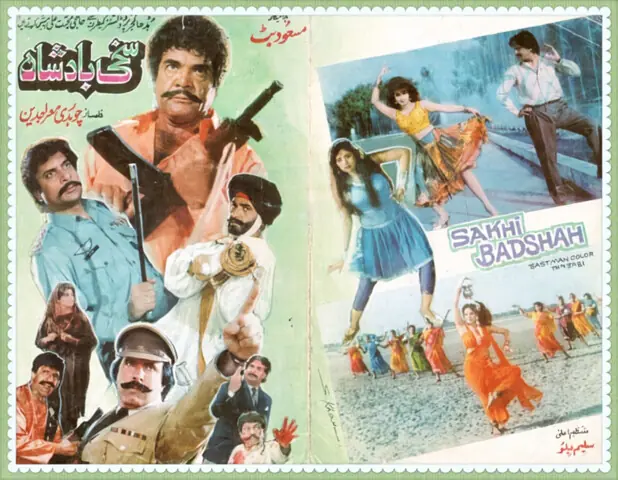
However, fate took an unexpected turn for Sakhi Badshah (1996), directed by Masood Butt. Released days before Rahi’s sudden and tragic demise, the film was initially on the verge of being pulled from cinemas due to a lack of audience interest. But, in the wake of the shocking news, its fate underwent a dramatic change and Sakhi Badshah went on to become a superhit, as people flocked to watch it.
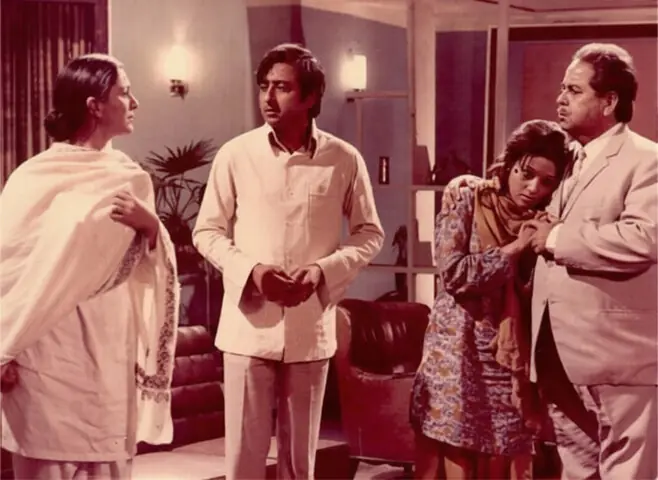
The film also holds historical significance because it featured Madam Noor Jehan’s last song, ‘Ki dum da bharosa yaar, dum aaway na aaway’ [Don’t trust breath for this one may be the last], further adding an emotional layer to its legacy. Madam Noor Jehan died in 2000.
Another film that was marked by an extraordinary series of tragedies was Hero. Its production began in 1981, and it faced repeated setbacks before its release in 1985. In the intervening years, four key figures linked to the project passed away — actor-producer Waheed Murad, legendary singer Ahmed Rushdi, lyricist Tasleem Fazli and character actor Aslam Pervaiz, between 1982 and 1984 — casting a sombre shadow over the film.
Tragically, the first loss the project suffered was that of lyricist Tasleem Fazli, who passed away in 1982, marking the beginning of a series of misfortunes that overshadowed Hero’s completion. Hero was completed after using a stunt double for Waheed Murad, who died in November 1983, and creative camera techniques also helped bridge the gaps. Thankfully, the film’s climax had already been shot.
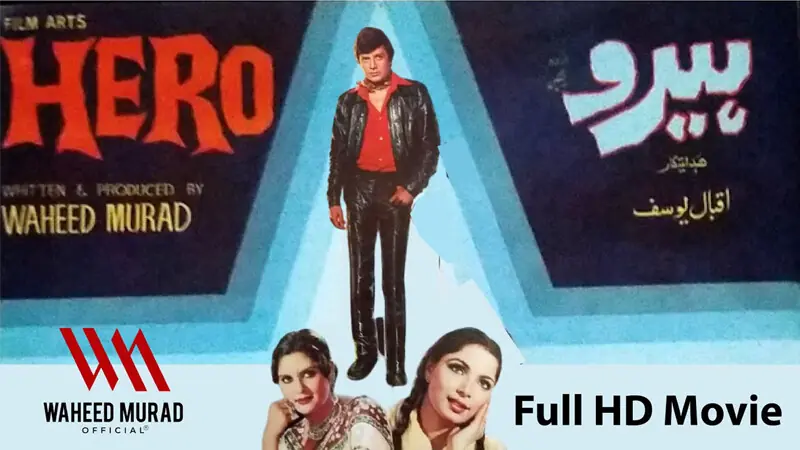
Adding to the film’s woes, vocalist Ahmed Rushdi — Waheed Murad’s playback voice — had recorded his final song in 1982, before he passed away in 1983. In a striking twist of fate, Aslam Pervaiz — widely known for portraying villains who met violent ends on screen — appeared in the film as an honest police officer, only to die six weeks before the film’s release.
Another film, marked by a series of deaths, again takes us another 11 years earlier and is closely linked to actress Nisho, who was married to Tasleem Fazli at the time of his passing. It is one of her early hits, Bahisht (1974), which premiered in cinemas after the deaths of several key figures involved in its production.
The maverick filmmaker Riaz Shahid had decided to make Bahisht, a semi-family-oriented film that reflected everyday household experiences and emotional realities, in the 1960s. He brought on board Rasheed Attre, who he had worked with in Shaheed (1962), as its music director. But with films such as Zarqa (1969), Gharnata (1971)and Yeh Aman (1971) taking priority, Bahisht was shelved for some time, only to be revived after Yeh Aman (1971) was released.
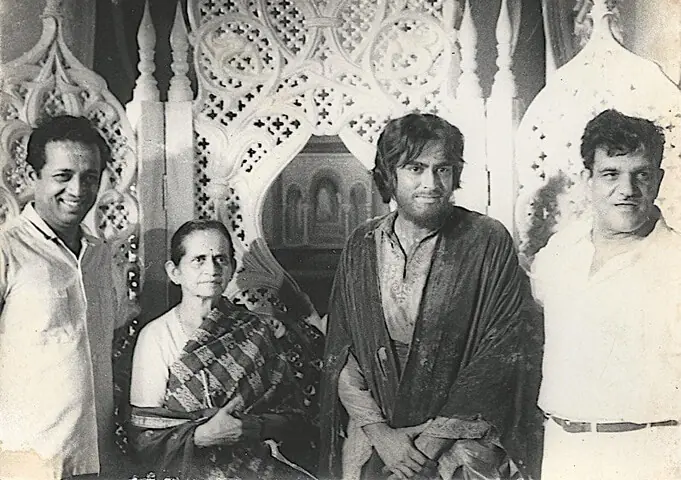
By that time, Rasheed Attre had passed away in 1967, though not before composing a few songs for the film, including ‘Naqaab tau uthaiye’ [Lift the veil], sung by Ahmed Rushdi and Naseem Begum. More ill fate followed when Naseem Begum died during childbirth in 1971. Riaz Shahid, already strained after facing penalties and censorship over Yeh Aman, later developed blood cancer and passed away in October 1972, after completing only about a quarter of the film.
With uncertainty looming over its fate, directors Hassan Tariq and S. Suleiman eventually stepped in to complete Bahisht, a gesture of respect to Shahid, who had supported both of them in the early stages of their careers. It was eventually released in 1974, two years after Riaz Shahid’s death.
Perhaps the unluckiest film ever made was Hindi cinema’s Love And God, a project that was stalled, revived and stalled again — only to emerge decades later as an incomplete vision. Conceived by K. Asif in 1962 as a grand follow-up to Mughal-i-Azam, it aimed to bring the tragic romance of doomed lovers Laila and Majnoo to the screen, with veteran actor/director Guru Dutt cast as Qais (Majnoo) and the ravishing Nimmi as Laila.
Filming began around 1963, and several sequences were completed before Guru Dutt’s sudden death in 1964, which abruptly halted production. The film remained shelved until the late 1960s, when Asif revived it with Sanjeev Kumar stepping into the role of Qais, while Nimmi continued as Laila. The cast also included Jayant and Nasir Hussain as rival fathers, and Pran as the prince who marries — but is rejected by — Laila. The film featured seven songs sung by Mohammed Rafi, with music composed by Naushad.
By the time K. Asif passed away in 1971, nearly 80 percent of the film was complete, but his death dealt a severe blow to the project. It wasn’t until the mid-80s that producer K.C. Bokadia revived the film in collaboration with Asif’s widow, Akhtar Asif — partly as a gesture of gratitude for Asif’s invaluable support during the initial days of his career.
However, tragedy continued to shadow the film. Sanjeev Kumar died in 1985 before completing his dubbing, which was later finished by the famous singer and mimicry artist Sudesh Bhosle. Imtiaz Khan, who had begun work as an assistant on the film, eventually dubbed for his father, Jayant, after his passing.
In the end, perhaps the irony is unavoidable: these films set out to tell stories of love, loss and tragedy — only for life itself to mirror, and at times even surpass, the drama behind the scenes. What unfolds on screen in these films may feel carefully conceived, but what happened off-screen is absolutely raw, unscripted and far more intense and dramatic.
The writer is a vintage cinema enthusiast. He can be reached at suhaybalavi@gmail.com
Published in Dawn, ICON, April 5th, 2026