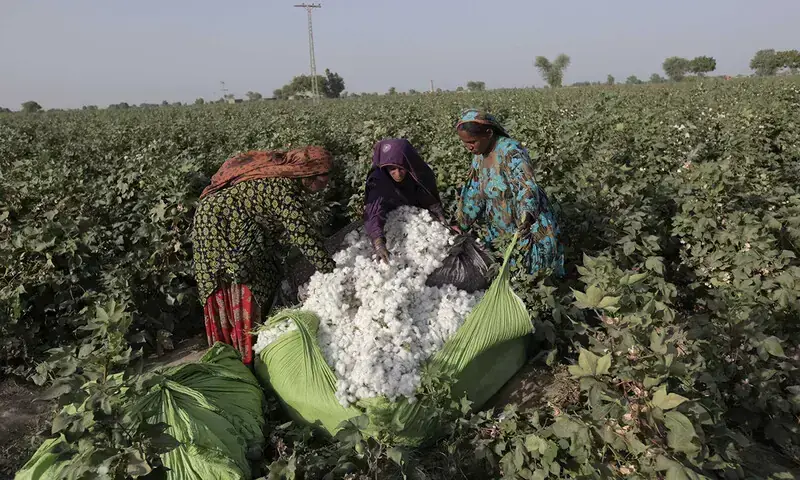
LAHORE: Despite repeated high-level meetings, clear policy directives, and an approved formula by the Economic Coordination Committee (ECC), the long-pending increase in cotton cess rates has yet to be implemented.
The continued delay is raising serious concerns about a worsening financial crisis at the Pakistan Central Cotton Committee and is undermining efforts to revive the country’s cotton sector.
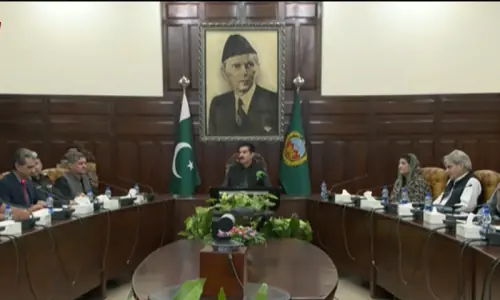
During the sixth meeting of the Cabinet Committee on Essential (Cash Crop) Commodities, held on Oct 22, 2025, under the chairmanship of Deputy Prime Minister Muhammad Ishaq Dar, it was unanimously decided that cotton cess would be collected in accordance with existing law and the ECC’s 2011 decision. The committee also approved collection through the Federal Board of Revenue (FBR). It endorsed the signing of a Memorandum of Understanding (MoU) between the Ministry of National Food Security & Research (MNFS&R)/PCCC and the FBR, granting majority representation to the cotton industry in the Pakistan Cotton Advisory Council (PCAC) or the PCCC Board of Governors, and allocating a major share of the collected cess to research and development (R&D).
However, no practical progress has been made so far, as the MNFS&R has ignored repeated reminders from the PCCC.
The delay reflects a continuation of a long-standing issue dating back to 2011. That year, the ECC approved an increase in cotton cess in principle and constituted a committee to assess the PCCC’s research requirements.
In May 2011, the committee recommended increasing the cess from Rs20 to Rs50 per bale (170 kg), along with a 30 percent increase every three years to meet rising R&D costs. In July 2012, the Federal Cabinet implemented this decision under the Cotton Cess Act 1923, setting the rate at Rs50 per bale, effective July 1, 2012, with a schedule for subsequent increases in 2015, 2018, 2021, and 2024.
However, more than 14 years later, the increase has still not been implemented. Under the ECC formula, the current rate should stand at Rs142.80 per bale, a figure also acknowledged as legally valid in 2025 meetings.
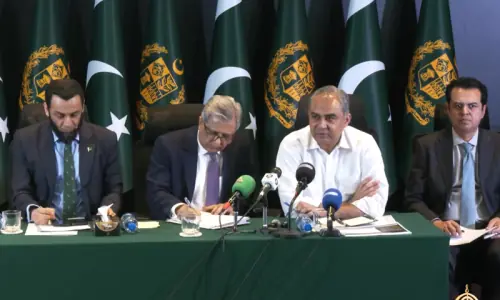
An inter-ministerial meeting chaired by Deputy Prime Minister Ishaq Dar on Dec 5, 2025, approved a Cotton Revival Plan. However, the All Pakistan Textile Mills Association (Aptma) later objected to the minutes and proposed capping the cess at Rs100 per bale. Committee members, however, recommended that the rate be determined strictly in accordance with the legal formula.
Published in Dawn, April 5th, 2026