Fuel price increase may compel motorists to travel by foot
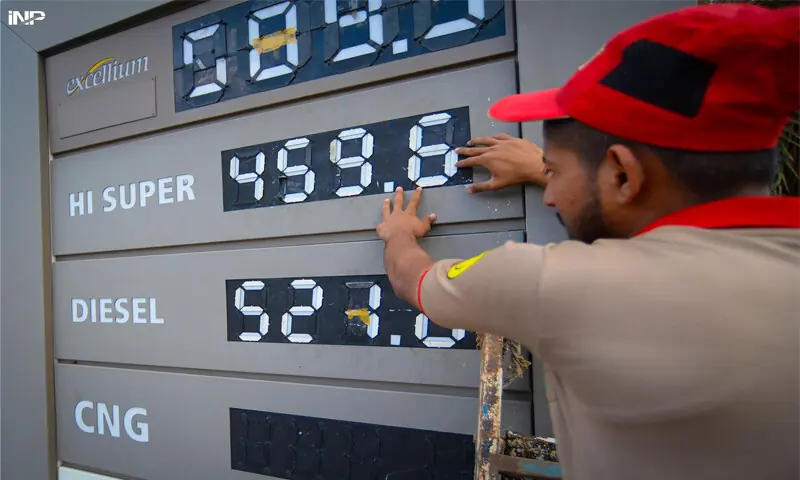

• Rising cost of petroleum products hits cash-strapped public hard
• Subsidy for school van drivers sought
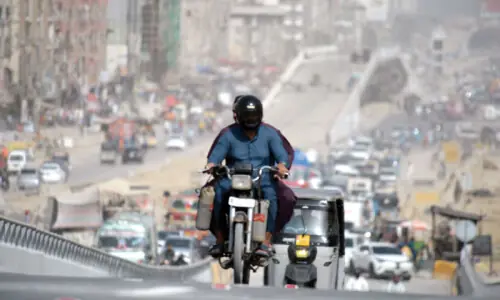
KARACHI: While the broader impact of the recent hike in prices of petroleum products on essential commodities is yet to be seen, the fresh surge has sharply increased commuting costs across the city, adding to the financial woes of the already hard-pressed citizens of the metropolis.
The government has increased the petrol price to around Rs460 per litre and diesel to Rs520.
Over the past month, the petrol prices have risen by nearly Rs200 and diesel by Rs240, including the recent increase of Rs137, making daily travel more expensive for office workers, students and daily-wage earners.
With incomes largely unchanged, many commuters say they are being forced to reconsider how and when they travel.
Karachi’s age-old problem of public transport shortage has compounded the impact.
The existing system remains unable to meet the city’s growing mobility needs, leaving commuters with limited options. Many who had turned to private vehicles now say the rising fuel cost has made that option difficult to sustain.
Public transport users report long waiting times, often ranging between 30 and 70 minutes on some routes, particularly for services such as the Red Buses and Electric Buses. Overcrowding continues to be a routine feature of daily travel.
The people say that lengthy travel times are also affecting their daily routines, with one-way journeys often taking one to two hours.
The Bus Rapid Transit Green Bus service offers limited coverage, operating from Surjani Town up to Numaish, short of several key commercial areas. As a result, passengers rely on multiple modes of transport to complete their journeys.
For middle- and upper-middle-income households, the increase in fuel costs is significant. Individuals consuming between two and six litres of fuel daily estimate an additional monthly expense of Rs10,000 to Rs35,000.
To manage costs, most commuters say they are shifting from cars to motorcycles, from motorcycles to public transport, and increasingly towards carpooling, and walking.
However, shared travel has also become more expensive, and according to commuters, per-person daily costs have increased from Rs250 to Rs450.
In households with multiple vehicles, monthly fuel expenses can run into six figures.
While the Sindh government has introduced a four-day on-site working policy for its departments, private sector employees continue to follow regular work schedules, limiting any immediate relief.
Ride-hailing services have also become costlier, with users reporting a sharp increase in fares in recent weeks, particularly affecting women who rely on these services for safer travel.
Commuters’ struggle
The rise in fuel prices and transport costs has increased frustration among commuters, many of whom describe the situation as difficult to sustain.
Aqib Qayyum, who commutes from Surjani Town to Zainab Market, said his monthly fuel expense for a motorcycle had nearly doubled from Rs8,000. “My salary remains the same, but my expenses keep rising,” he said, adding that his night shift leaves him with little choice but to continue using his motorcycle. Bus and rickshaw operators have increased fares, often without formal regulation, affecting both short- and long-distance travel.
A commuter travelling on the Bus Rapid Transit Green Line from Nazimabad said the fare of mini buses from Numaish to Lighthouse had increased from Rs30 before March to Rs50.
For low-income groups, the burden is particularly heavy.
A daily-wage worker said he now Rapid Transit Green Line from Nazimabad said the fare of mini buses from Numaish to Lighthouse had increased from Rs30 before March to Rs50.
For low-income groups, the burden is particularly heavy.
A daily-wage worker said he now spends Rs200 to Rs250 on transport out of Rs1,000 — his daily income.
A resident of Gulshan-i-Bihar, Orangi Town, said he changes three buses to reach his workplace near Civic Centre. His daily commuting cost has risen from Rs300 to Rs450, meaning Rs12,000 out of Rs30,000 of his monthly salary is being spent on transport.
Subhan, who travels from Korangi to Saddar and then to North Nazimabad, said he works two jobs and consumes around two litres of petrol daily. His transport expenses have increased by at least Rs350 per day. “Either I will have to leave one job or switch to ride-sharing,” he said.
A doctor working at the National Institute of Cardio Vascular Disease said his daily commuting cost via ride-hailing services had risen from Rs650-700 to Rs1,000-1,100.
Similarly, Asma, a resident of Gulistan-i-Jauhar, who works in Gulshan-i-Iqbal, said her daily expense on online taxi services had increased from Rs800 to Rs1,400. She said the increase had affected both her budget and sense of safety.
Residents said they were also cutting down on social visits and non-essential travel due to rising costs.
Some warned that continued increases could force families to borrow money or sell household items to manage expenses.
School vans
Syed Tariq Shah, chairman of the All Private Schools Management Association Sindh, urged the federal government to extend fuel subsidies to school vans, saying transport was directly linked to educational continuity.
Meanwhile, goods transporters have announced up to a 60 per cent increase in fares, raising concerns about a possible impact on the prices of essential commodities.
The dumpers’ association, however, has rejected the fuel price increase.
Transporters pass on the burden
Transport operators say fare increases are unavoidable due to rising fuel costs.
“As fuel is our main expense, we have no option but to raise fares. Otherwise, vehicles will have to be taken off the roads,” said a local operator.
Ride-hailing drivers also said higher fuel costs were reducing their earnings and may push many to leave the sector.
Bike riders waiting for passengers at the Numaish intersection said demand had declined as more commuters shifted to buses.
Published in Dawn, April 4th, 2026