‘Exercise in deflection masquerading as concern’: FO rejects India’s comments on Pakistan’s Shia community
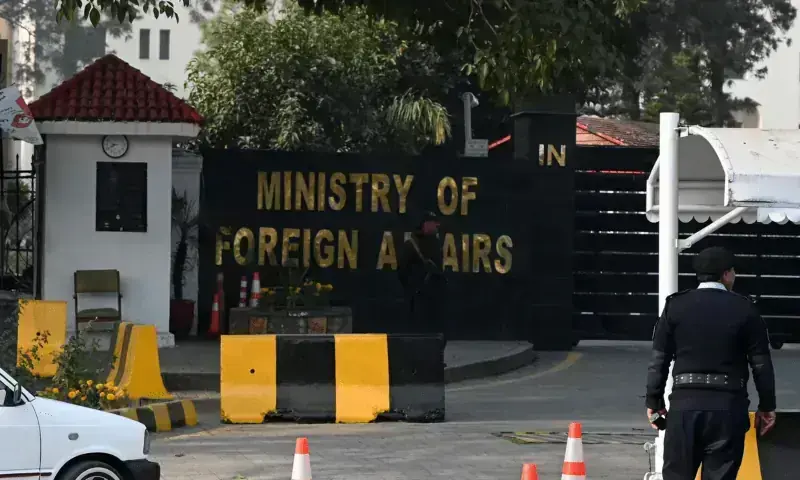
The Foreign Office (FO) on Saturday rejected the Indian Ministry of External Affairs’ concern over the treatment of Pakistan’s Shia community, terming its remarks “cynical and diversionary” and an “exercise in deflection masquerading as concern”.
The statement comes a day after the Indian Ministry of External Affairs commented on remarks it attributed to Chief of Army Staff and Chief of Defence Forces Asim Munir, wherein — during an interaction with Shia clerics — he allegedly said agitators responding violently to events in Iran should go to Iran.
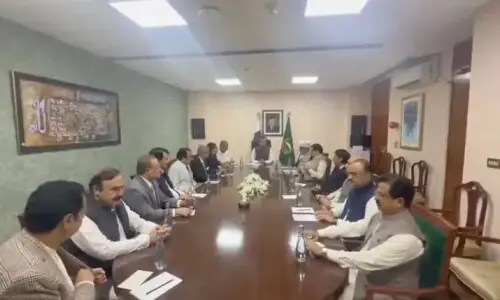
It should be mentioned that CDF Munir had met with Shia clerics in Rawalpindi earlier this month. A participant, speaking on condition of anonymity, said CDF Munir had adopted a stern tone, describing Iran as being under pressure from major powers, and asserted that Pakistan’s territory was not being used against Tehran.
The purpose of the meeting was to discuss matters of national security and the role of ulema in societal harmony, according to a statement issued by the Inter-Services Public Relations. The ISPR statement also said CDF Munir emphasised that religious sentiments must not be exploited to incite violence in the country.
On Friday, Indian Ministry of External Affairs Spokesperson Randhir Jaiswal said, according to Indian news agency ANI, that such remarks were part of Pakistan’s “systemic victimisation of minorities”.
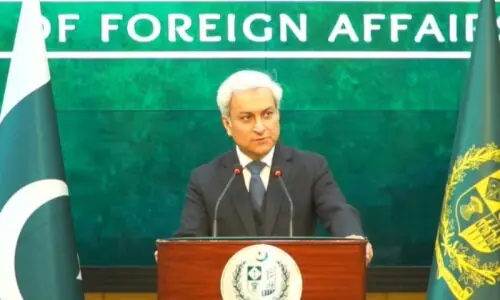
In response, FO Spokesperson Tahir Andrabi issued a statement on Saturday, saying, “Pakistan rejects India’s remarks as cynical and diversionary — an exercise in deflection masquerading as concern.”
He said that India’s comments could not “mask its own record of the steady normalisation of discrimination and violence against Muslims, Christians, and other marginalised communities — from curbs on worship to mob vigilantism and the targeting of homes and livelihoods”.
“These patterns are well-documented,” he said.
“The escalating wave of mob lynchings targeting Muslims is deeply abhorrent and underscores a climate of unchecked brutality. In 2025, more than 55 Muslims were reportedly lynched in India, and since January 2026, over 19 Muslims have been killed by violent mobs,” he said.
“Extremist groups have unlawfully sought the destruction of 11 mosques. Perpetrators of crimes against Muslims often act with impunity, enabled by state patronage, and are seldom held to account,” he said.
“Pakistan urges India to address these serious and well-documented concerns within its own borders, ensure the protection of Muslim, Christians and other communities in accordance with its constitutional and international obligations, and refrain from making unfounded and politically motivated statements about others,” the statement concluded.
Earlier this week, after the Indian foreign minister expressed anger and hissed expletives over Islamabad’s mediation in indirect peace talks underway between Iran and the United States, the FO had termed the language “undiplomatic” and reflective of frustration.
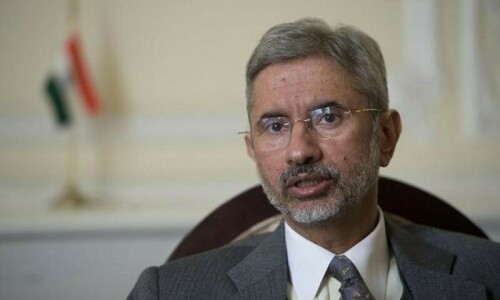
External Affairs Minister S. Jaishankar had said on Wednesday that India cannot act as a ‘broker’ nation in global geopolitics, using an Urdu/Hindi term that means ‘brothel keeper’, and is considered a derogatory and abusive term in South Asia, by and large. He was referring to concerns raised by the opposition over Pakistan’s emergence as a mediator in the Middle East crisis.
Responding to the remarks, the FO spokesperson said such rhetoric “betrays a deeper sense of frustration”.