Sindh govt decides to implement watermarking system to prevent cheating in exams
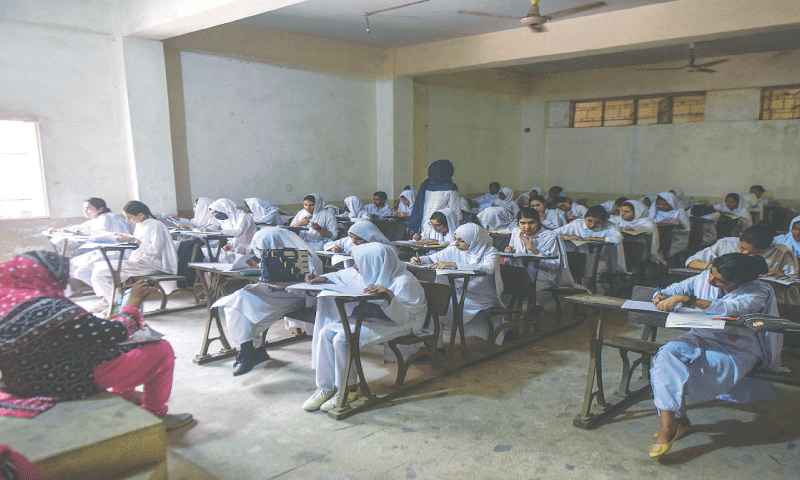
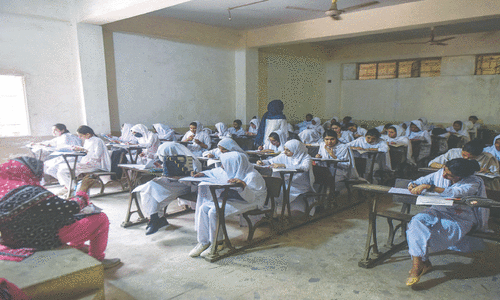
KARACHI: The Sindh government has decided to implement a modern watermarking system to prevent cheating in examinations, through which those responsible for leaking exam papers can be immediately traced.
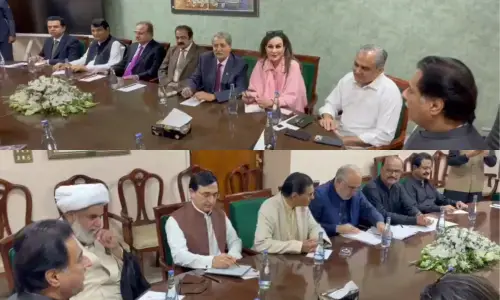
This was said by Sindh Minister for Universities and Boards Muhammad Ismail Rahu while presiding over an important meeting at the office of the universities and boards department secretary regarding the preparations for the new academic year examinations.
The meeting was attended by universities and boards department Secretary Muhammad Abbas Baloch, chairmen of educational boards, including Faqir Muhammad Lakho, Syed Alamdaar Raza, Nawaz Sohoo and others.
The meeting reviewed in detail the security of examination centers, furniture, drinking water, electricity supply and measures to prevent cheating, along with other facilities. Briefings were also given on the procurement of examination materials, tenders and budget matters.
The minister directed all the board chairmen to utilise all resources for the transparent and timely conduct of examinations, warning that no negligence would be tolerated. He made it clear that if any paper was leaked, strict action would be taken against the chairman of the concerned board.
According to Ismail Rahu, across Sindh, 1,353,258 students from class nine to 12 will participate in the examinations starting next month on April 7, with more than 1,600 examination centers established in the province.
He said that in Karachi, exams for class 9 and 10 would begin on April 7, while exams for class 11 and 12 would start on April 25. In Sukkur division, exams for class nine and 10 would begin on March 30 and for class 11 and 12 on April 15.
The provincial minister stated that in Sukkur and Shaheed Benazirabad divisions, all examinations would be conducted under e-marking while in the Larkana board, eight papers from class nine to 12 would be conducted through e-marking. In Karachi, all class nine exams and two matriculation papers would be conducted under e-marking.
Ismail Rahu also said that a provincial-level complaint cell would be established in the Universities and Boards secretary office to monitor examination centers and vigilance teams. Mobile phones would be banned in all examination centers, and Section 144 would be enforced there.
The provincial minister instructed that issues of drinking water, furniture and other basic facilities in all examination centers be resolved immediately, while letters would be sent to Hesco, K-Electric, and other relevant institutions to ensure there was no load shedding during the exams.
Published in Dawn, March 28th, 2026