
ISLAMABAD: After a delay of almost three decades and sitting on huge surplus generation capacity, Pakistan on Tuesday completed the legal process for the auction of electricity at a wheeling charge, beginning with a notional 800 megawatt capacity to gradually enable a competitive electricity market.
“The Competitive Market Operations Date (CMOD) stands declared with effect from Jan 22, 2026. Accordingly, the Framework Guidelines became effective on January 22, 2026, and the auction process takes immediate operational effect,” said the National Electric Power Regulatory Authority (Nepra) on Tuesday. “Further, the authority also directs that all relevant entities must complete their required actions linked with CMOD as per the approved timelines and applicable documents”, it added.
Pakistan embarked on power sector reforms in the early 1990s to break up the Water and Power Development Authority (Wapda) and convert state-controlled power generation, transmission and distribution into a competitive electricity trading market under covenants with the World Bank. But it could not go beyond creating more than a dozen and a half entities that still remain under state control, maintain a monopoly over the power sector, and keep bleeding the economy and consumers at large.
The country has more than 42,000MW of installed generation capacity, but could barely exceed 27,000MW of supply during peak summers. The government cut the wheeling charge by over 20pc in January to around Rs9 per unit to facilitate big industry participation in competitive bilateral trading.
Nepra declares CMOD, enabling auction of 800MW after decades of reform delays
Nepra also directed the Independent System and Market Operator (ISMO) — one of those over a dozen entities under the Power Division — to immediately operationalise this auction process and commence the preparatory proceedings required to issue the request for proposal (RFP), ensuring strict adherence to the principles of transparency, competition, and procedural fairness as given in the detailed order.
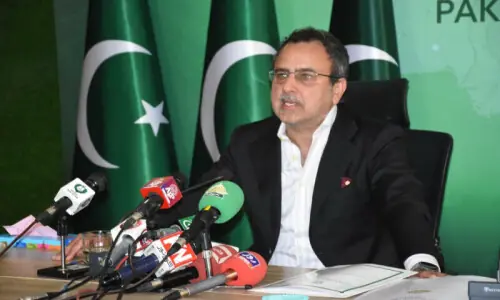
Power Minister Sardar Awais Leghari welcomed the regulatory step, saying it marked “a defining milestone in Pakistan’s power sector reform journey with the declaration of the CMOD. This transition from a single-buyer model to a competitive, transparent, and market-based framework reflects years of policy development, regulatory strengthening, and institutional coordination”.
Under the Nepra’s determination issued on Tuesday, the ISMO shall publish an annual auction calendar by June 15 each year for the annual auction to be conducted in the next fiscal year, outlining the timeline for each stage of the annual auction, from publication of the calendar to the award of the wheeling quantum.
The annual auction will be held on the date specified in the calendar, except in case of unforeseen or unavoidable circumstances, for which sufficient notice of change shall be provided to the market in advance. The ISMO shall publish templates of eligibility documents and any other information relevant to the auction, including the connection process, within one month after publication of the auction calendar, with a two-month time for auction participants to complete eligibility requirements.
The ISMO shall constitute an “independent” auction committee to oversee each auction and to function as an independent, neutral body responsible for eligibility evaluation, grievance redressal, and compilation of auction results. The seven-member auction committee will be led by a senior official of the ISMO and will comprise one member each from the National Grid Company, the Private Power Infrastructure Board, two distribution companies, and two private experts, again to be selected by the ISMO.
The private sector players, including business houses and chambers, had expressed dissatisfaction with the 800MW auction quantum, but Nepra noted that Pakistan’s electricity market was presently at a transitional and infant stage, and the direct replication of auction designs used in mature electricity markets was neither feasible nor suitable.
It said the aggregate wheeling quantum of 800MW, the one-year bid value payment structure, and the absence of a predetermined upper or lower cap for bid value had been set by the federal government under the National Electricity Plan and the Framework Guidelines. “These parameters are therefore not subject to regulatory re-evaluation.”
Published in Dawn, March 25th, 2026