Chitral farmers lack govt compensation despite growing livestock predation
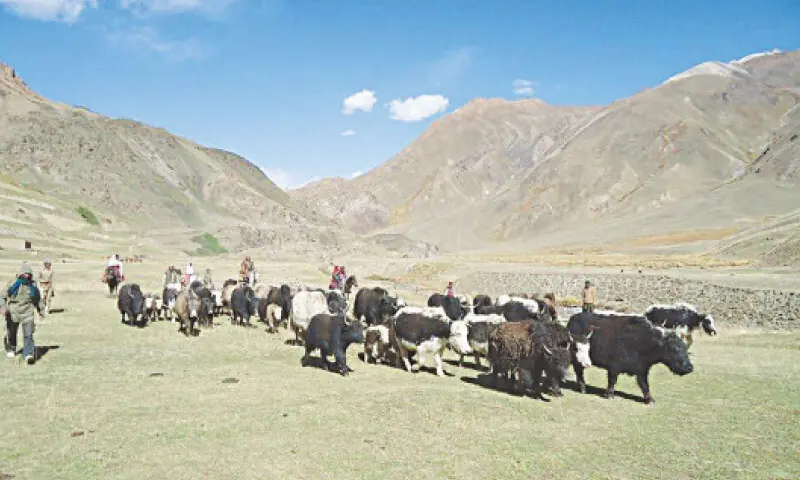


CHITRAL: A conflict between human beings and carnivores is reaching a breaking point in the Chitral region, as increasing livestock predation and a lack of government compensation push local farmers toward desperate measures.
The iconic snow leopard tops a list of eleven predator species currently preying on livestock in the area.
Experts told Dawn that the crisis was driven by the rapid depletion of natural prey habitats, forcing carnivores to target animals grazing in open pastures or secured within village corrals.
While the people of Chitral have historically shown a high degree of tolerance toward wildlife, that patience was wearing thin.
Saleemuddin, a local village conservation activist, noted that livestock was the sole source of sustenance for many families.
“With the rising price of livestock, farmers are changing their behavior to protect their livelihoods,” he said.
“In the past, they might have accepted the loss of a sheep to a wolf or snow leopard, but that is no longer sustainable.”
The legal framework has also come under fire.
Critics argue that the KP Wildlife & Biodiversity Act, 2015, had failed to include any provision for farmer compensation, an omission that Saleemuddin described as a major policy oversight.
The scale of the economic hit is significant.
A recent two-year study (2022-23) conducted by an international organization in the Gahiret-Golen conservancy documented the loss of 315 animals, including cattle, goats and chickens, to predators like the snow leopard, lynx and wolf. The total financial loss was estimated at $20,758.
The study warned that these losses do more than just hurt the local economy; they foster a “negative attitude” that frequently leads to the retaliatory killing of rare and endangered species.
In another research study on the topic for MPhil in Zoology in University of Peshawar during 2019-20, Mohammad Shujaul Haq Baig, has found a grim situation of human-carnivore conflict in Broghil valley where 100 per cent households depended on livestock keeping as due to extreme climatic condition no cultivation activity is possible there.
The gravity of the situation can be gauged from the fact that out of the 94 households surveyed by Mr Baig, 88 were found affected as they lost their goats totalling 1-10 to the predators, including snow leopard, wolf, lynx, brown bear and fox.
When contacted, divisional forest officer for wildlife Farooq Nabi said that the department was aware of the “legislative gaps”.
He, however, said there was a biodiversity fund available with the department that could be utilised for the purpose.
Published in Dawn, March 24th, 2026