IMPRISONMENT of writers and poets is not something unusual and history tells us that putting authors behind bars has never been rare, notwithstanding the reasons behind. But incarceration of a poet for 23 years is indeed rare. Masood Sa’ad Salman Lahori (1046-1121) — a poet who composed poetry in three languages — spent about 23 years in jail, says Dr Naazir Hasan Zaidi (1917-2004) in one of his articles. The verses that Masood Saad Salman Lahori composed during the imprisonment are a valuable addition to the prison literature written in the Persian language.
Born in Lahore, he was known for his bravery and his adversaries asked the then Ghaznavid ruler of Lahore to keep an eye on him as Masood, so they thought, had political aspirations and could pose a threat to the ruler. Masood was sent to jail and released after about 10 years, but was arrested again after a short while and spent 13 more years in prison. Dr Naazir Hasan Zaidi in his article on Masood Lahori has discussed his life, poetry and valour, citing historical sources and reproducing Masood’s moving Persian verses that he had composed while in prison.
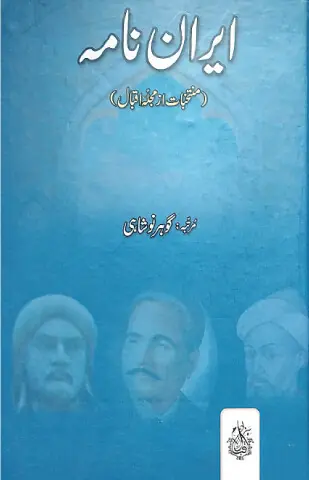
The article is part of the book Iran Nama: Muntakhabaat Az Mujalla Iqbal. It proffers 10 remarkable research and critical articles on Persian literature and language. Studded with glimpses of Iran’s history, literature and culture, these pieces were initially published in Iqbal, the periodical published by Lahore’s Bazm-i-Iqbal, says Prof Dr Tehseen Firaqi, the director, in his intro.
These remarkable papers were first published in the book form in 1971 and Dr Gohar Naushahi had compiled them. Dr Naushahi had penned additional annotations and introductory notes on the writers whose papers were included in the book. In this second edition, published by Bazm-i-Iqbal, Dr Rafaqat Ali Shahid has updated the biographical and bibliographical details of the contributors, adds Firaqi. Iqbal was launched in 1952 and had become a bit tardy some years ago but in recent years it has been appearing regularly under the editorship of Dr Firaqi. Some bigwigs, such as M. M. Sharif, Waheed Qureshi and Ahmed Nadeem Qasmi, have been associated with it as editors.
The book includes papers that require some serious study and contemplation. A paper in the book, for instance, is on the letter ‘zaal’ in the Persian alphabet and discusses its use in the Persian language over the centuries. Written by Dr Shaukat Sabzwari (1908-1973), it begins with Ghalib’s assertion that ‘zaal’ was essentially an Arabic letter and its use in Persian words did not make sense. Ghalib advocated the use of letter ‘zey’ instead. Though many scholars, including Ghalib’s contemporaries and some latter-day towering figures, such as Qazi Abdul Wadood and Abdus Sattar Siddiqi, disagreed and tried to prove that Ghalib had erred in this debate since the Persian language did have the letter ‘zaal’ since the ancient times. But Shaukat Sabzwari says — quoting words written in Old Persian and referring the debates on historical phonetics of the Persian language — that the ancient forms of the Persian language did not have the sound that was later on represented by letter ‘zaal’. It was written as ‘zaal’ by the calligraphers, mostly after Iran’s Arab conquest, says Sabzwari.
Other papers that have made it to the anthology are: ‘Tareekh-i-Tasavvuf Ka Irani Aur Hindi Pas Manzar’, or ‘Iranian and Indian background of history of Sufism’, by Abul Lais Siddiqi (1916-1994); ‘Yurish-i-Tatar Aur Mutasavvufana Afkarr-o-Azkaar’, or ‘The Tatar Invasion and Mystic Thought and Remembrance’, by Syed Abid Ali Abid (1906-1971); ‘Ayvaan-i-Madaain Aur Khaqani Shervani’, or ‘The Palace of Madain and Khaqani Shervani’, by In’aamul Haq Kausar (1931-2104); ‘Ameer Abun-Najm Ayaz Uymaq’ (the Persian poet and slave of the Ghaznavid era), by Syed Hashmi Fareedabadi (1890-1964); ‘Shah-i-Hamadan’ (the Persian poet, scholar and Sufi Saint popularly known as Mir Syed Ali Hamadani), by Dr Muhammad Riaz (1935-1994); ‘Mulla Shah’ (a Persian poet and Sufi Saint also known as Mulla Shah Badakhshani, who was also a disciple of Hazrat Mian Mir of Lahore), by Dr Zahooruddin Ahmed (1914-2014); ‘Mirza Abdul Qadir Bedil Ki Shakhsiyet Aur Un Ka Usloob’, or ‘Mirza Abdul Qadir Bedil’s Personality and His Style’, by Dr Abdul Ghani (1910-1989); and ‘Iqbal Aur Ghazal’, by Dr Syed Muhammad Akram Ikraam (1934-2022).
Dr Gohar Naushahi (1940-2021), the compiler, was a scholar of Urdu and Persian. He had served several prestigious institutions in different capacities, such as, Mashad University, NUML, NLA, Majlis-e-Taraqqi-e-Adab and Bazm-i-Iqbal.
The book is a gift for Iranophiles.
Published in Dawn, March 23rd, 2026