ISLAMOPHOBIA today is not some nebulous concept, but a real-world threat experienced by many of the world’s two billion Muslims. That is why today, on the International Day to Combat Islamophobia, it is important to identify the key threats to the safety of the global Muslim population, as well as the measures that can be taken, particularly by states, to check this menace.
In the current scenario, geopolitical conflict, racial prejudice and religious bigotry all contribute to the threats Muslims face. Moreover, the far right in many non-Muslim states has zeroed in on immigrants and Muslims as the source of all the problems in these societies, thus normalising bigotry against the followers of Islam.
The Iran war, as well as the genocide in Gaza, have fuelled Islamophobia in many non-Muslim societies. American Muslim rights group CAIR says that a “broad attack on Muslim life” was witnessed in the US last year. There were also attempts to falsely label the group a “foreign terrorist organisation”. Other monitors say the Iran war has led to an acceleration in anti-Muslim speech.
The fact that many Republican lawmakers have publicly used vile language to target the entire American Muslim community has signalled that it is okay to dehumanise Muslims. Equally troubling are reports that US military personnel have used divisive religious language while urging troops to fight against Iran; Israel has used similar terms to justify the genocide of Palestinians in Gaza. Meanwhile in Europe, far-right parties are gaining strength, while demonising Muslims and immigrants. Indian Muslims, as well as Muslims in occupied Kashmir, have also seen their rights erode under BJP rule, as Hindutva flexes its muscles in the ‘world’s biggest democracy’.
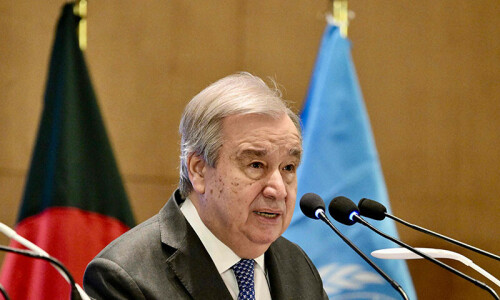
In his message linked to the day, UN Secretary-General António Guterres has urged governments to take “concrete steps to address hate speech” while urging “online platforms … to wipe out hate speech and harassment”. Indeed, hate speech, amplified by social media sites, can have a deadly impact. Rumours and untruths spread online have real-world consequences, including violent attacks on entire communities. Therefore, the UN chief’s call to governments and online platforms must be heeded. When lawmakers use offensive language against religious or ethnic communities, and are not censured, it tells the public that it is acceptable to otherise and demean these groups. Similarly, social media sites have a lot to answer for. Under the guise of free speech, their algorithms push hateful rhetoric against Muslims and other groups, often reflecting the twisted views of their billionaire owners. In a just world, there can be no room for Islamophobia and other forms of faith- and race-based hatred.
Published in Dawn, March 15th, 2026