FBR moves Supreme Court against Federal Service Tribunal ruling on wedlock policy


 1
1
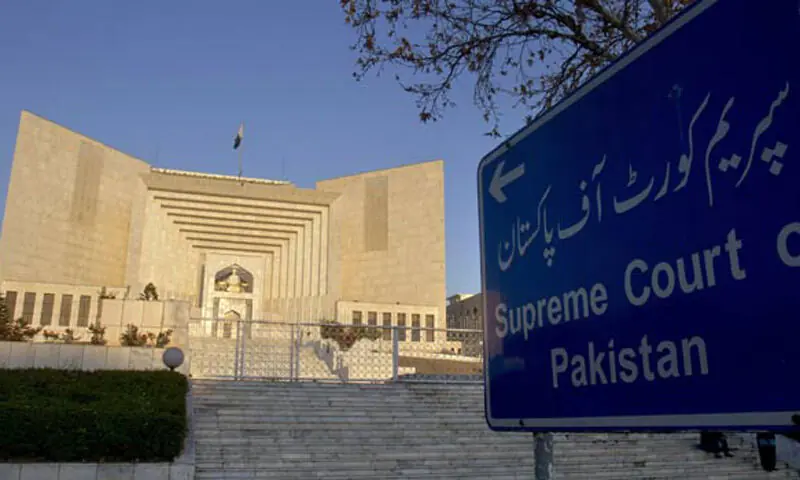

ISLAMABAD: The Federal Board of Revenue (FBR) has challenged before the Supreme Court the April 30, 2025 judgement of the Federal Service Tribunal (FST) regarding the scope of the government’s wedlock policy.
The key question before the SC is whether the policy grants a civil servant an absolute right to remain posted at a particular station of service for an indefinite period.
The FBR filed the petition through senior counsel Hafiz Ehsaan Ahmad Khokhar, warning that the tribunal’s interpretation could have far-reaching consequences for the civil service structure across Pakistan.
The matter came up recently before a three-judge SC bench, headed by Justice Jamal Khan Mandokhail. After a brief hearing, the bench issued notices to the respondents, including Jan Muhammad, an FBR employee who had earlier approached the tribunal against his transfer order.
Court to determine if civil servant can claim indefinite posting at one station
Jan Muhammad had been posted in Peshawar, where he served for more than 17 years before being transferred to Sahiwal.
The SC adjourned the hearing after framing a question for determination: whether the wedlock policy can confer an absolute legal right upon a civil servant to remain posted at a particular station, or whether, under the Civil Servants Act, a government servant remains liable to serve anywhere in Pakistan and an administrative policy cannot override statutory provisions.
The FST, in its decision, had held that genuine hardship and special circumstances should be considered when applying the wedlock policy and had consequently cancelled his transfer order.
During the hearing, Advocate Khokhar argued that the FST judgement runs contrary to the statutory framework governing civil servants and undermines the lawful administrative authority of the government in matters relating to postings and transfers.
He contended that the tribunal overlooked the clear statutory scheme under the Civil Servants Act, 1973. Section 10 of the Act expressly empowers the competent authority to regulate appointments, postings and transfers in accordance with prescribed rules.
The statutory scheme, the counsel maintained, clearly recognises that a civil servant holds a transferable post and serves the state rather than any particular station. Therefore, no civil servant has a vested or permanent right to remain posted at a specific place.
He also referred to Section 22 of the Civil Servants Act, 1973, which authorises the federal government to frame rules regulating the terms and conditions of service of civil servants. These rules led to the formulation of service regulations and administrative frameworks, including the Establishment Code.
Under these rules, officers holding transferable posts may be posted anywhere in Pakistan depending upon administrative requirements and the exigencies of service.
Published in Dawn, March 8th, 2026