0
0

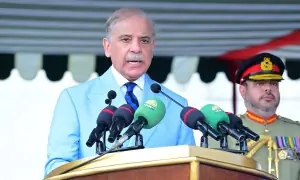
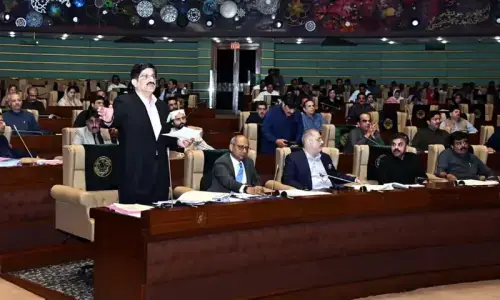
WITH the region in flames, Pakistan must calibrate its foreign policy accordingly; it has to deal with some difficult neighbours in a way that the country’s security interests are protected and disputes do not turn into permanent hostilities. In this regard, regional security was one of the main themes of President Asif Ali Zardari’s address to a joint session of parliament on Monday. The president, who called himself a “lifelong advocate for peace”, said, with reference to Afghanistan and India, that while Pakistan desires calm, it is also ready to face threats to its stability from external actors. He suggested moving “away from warfare to meaningful negotiation”, describing it as the “only path for regional security”.
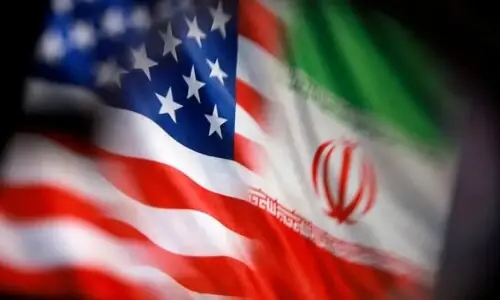
Indeed, considering the extreme volatility on nearly all of Pakistan’s borders, a negotiated settlement is the most desirable option, though some of the country’s neighbours do not appear to be in the mood to talk. The situation on the western border with Iran is perhaps most alarming at the moment, as the US-Israeli aggression against Tehran is threatening to envelop the entire Greater Middle East in a ball of fire. Meanwhile, hostilities with the obdurate Afghan Taliban regime continue in the shape of Operation Ghazab lil-Haq. On the other side, relations with India have touched rock-bottom. While the eastern border is quiet, New Delhi continues to spew bellicose rhetoric, and persists with controversial projects on transboundary rivers, posing a serious threat to Pakistan’s water rights. President Zardari rightly termed this “water aggression” during his parliamentary address.
Pakistan has demonstrated that when appeals to the Afghan Taliban to rein in terrorist groups like the TTP fall on deaf ears, it can take action against the supporters of these violent groups across the border. It has proved itself capable of repelling aggression from Afghanistan, as the current operation illustrates and can impose costs on the Taliban for their lack of will to stop cross-border terrorism. But keeping in view the regional volatility, long-term hostilities with Afghanistan are not in Pakistan’s interest. Perhaps now, a renewed push should begin for the “meaningful negotiation” that Mr Zardari mentioned. This, of course, will not be easy, as several rounds of dialogue with the Taliban, mediated by foreign friends, have brought Pakistan few tangible results. But kinetic action should eventually lead to purposeful dialogue, where the Taliban commit to preventing attacks on Pakistan. As for India, during the clashes of last May, Pakistan clearly demonstrated that it can repel aggression by its eastern neighbour. But a permanent state of hostility in the subcontinent suits no one. Though New Delhi is unlikely to respond positively, Pakistan should keep the door open for talks, in case it is interested in a negotiated settlement.
Published in Dawn, March 4th, 2026