0
0
BEIJING/MOSCOW: China’s foreign minister urged Gulf countries to unite to oppose external interference on Monday, after US-Israeli attacks on Iran triggered a widening conflict in the region.
China hoped that the Gulf states would strengthen unity and develop neighbourly friendship to “keep their future and destiny in their own hands”, Chinese Foreign Minister Wang Yi said in a phone call with his Omani counterpart, according to a statement released by the ministry.
In a phone call with Iranian Foreign Minister Abbas Araqchi on the same day, Wang said he believed that Iran could maintain national and social stability as well as attach importance to the legitimate concerns of its neighbours, a separate statement showed.
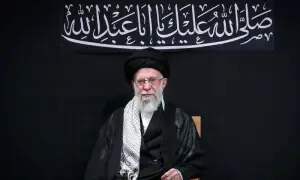
Attacks by the United States and Israel from Saturday killed Iran’s Supreme Leader Ali Khamenei and prompted retaliatory Iranian strikes on Israel and other Gulf countries hosting US military bases.
Putin calls for ceasefire in Middle East in calls with leaders
Chinese citizen killed
Wang voiced support for Gulf countries in safeguarding their sovereignty and national security, as well as for Iran in safeguarding its own legitimate rights and interests.
In a phone call with France’s foreign minister on Monday, Wang called on Paris to work with China to promote the easing of tensions, according to another ministry statement.
The Iran conflict killed one Chinese citizen in the capital Tehran, while more than 3,000 were evacuated from the country, Mao Ning, a spokesperson for China’s foreign ministry, said. China was not informed in advance about the US military action, Mao added.
She also denied Beijing was close to a deal to sell Iran supersonic anti-ship missiles, saying China was a responsible major power that “always fulfilled its international obligations”. Six people with knowledge of the negotiations said last month that such a deal was near completion.
Jia Guide, China’s ambassador to the United Nations, told the UN Human Rights Council in Geneva on Monday that the attacks against Iran and killing of the Iranian leader violated the principles of the UN Charter and the human rights of Iranians.
Putin urges ceasefire
Russian President Vladimir Putin urged a ceasefire in the Middle East during phone calls with the leaders of several Gulf states on Monday as the war triggered by US and Israeli strikes on Iran spreads throughout the region.
Retaliatory strikes from Tehran have hit targets across the Gulf, forcing authorities to close airspace and stalling traffic at big hubs such as Dubai and Abu Dhabi. Putin on Monday held calls with Saudi Crown Prince Mohammed bin Salman as well as with the leaders of the UAE, Qatar and Bahrain.
In a call with Emirati President Mohamed bin Zayed Al Nahyan, both leaders “emphasised the need for an immediate ceasefire and a return to the political and diplomatic process”, the Kremlin said in a readout.
The Russian leader also said he was ready to convey the UAE’s concerns about Iranian retaliation strikes to Tehran and to help stabilise the situation in the region.
During the call with Qatari Emir Sheikh Tamim bin Hamad Al Thani, both leaders shared concerns about “the risks of the conflict’s expansion and the danger of third countries being drawn into it,” the Kremlin said.
The Russian foreign ministry earlier slammed “any attacks on civilian targets, whether in Iran or Arab countries,” in the conflict.
Facing isolation from the West after sending troops to Ukraine, Putin has sought to strengthen partnerships in the Middle East, maintaining close relations both with Iran and the Gulf monarchies.
The UAE has emerged as a key mediator in the four-year-long Russia-Ukraine war, brokering a number of prisoner exchanges between the two sides and most recently hosting talks between US, Russian and Ukrainian officials on a US-drafted plan to end the fighting.
Tehran is a key ally of Moscow and has supplied it with the Shahed drones used in the Ukraine offensive.
Published in Dawn, March 3rd, 2026