Expert highlights global importance of ancient settlements in Sindh’s coastal areas
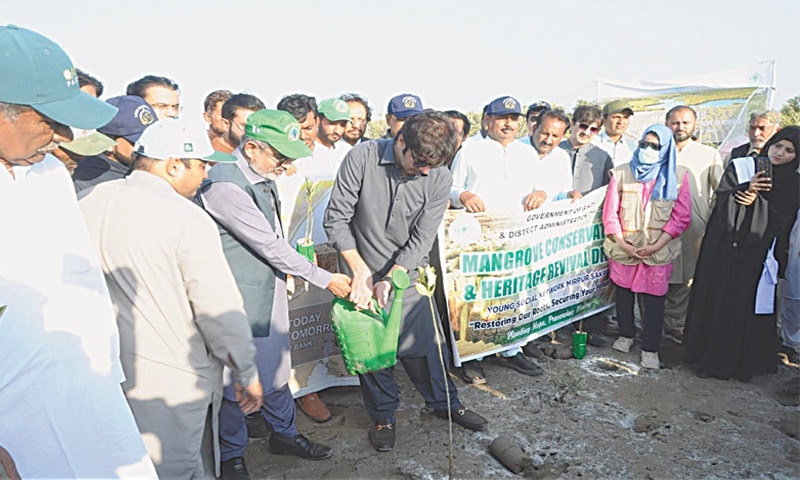

THATTA: The discoveries made during the excavation in Sindh’s coastal areas demonstrate global historical importance of settlements in the region.
This was stated by Dr Stéphane Pradines, head of the Indus Delta Excavation Project, which concluded in Bhanbore on Friday.
Excavation under the project was carried out by the Sindh Culture, Tourism, Antiquities & Archives Department in collaboration with the Aga Khan University and international partners, including the United Kingdom.
It was observed that Sindh’s historical port cities — including Bhanbore, Laari Bandar, Keti Bandar and Shah Bandar — are facing a rapid degradation due to climate change, sea intrusion and coastline erosion, threatening both historical ruins and submerged archaeological remains in the Indus delta.
Mangrove plantation drive launched to control rapid degradation of environment, climate change impacts
The situation underscores an urgent need for measures to protect heritage and check environmental degradation.
Dr Pradines said that the excavation carried out under the project has discovered 249 cannonballs at the Jam Jasker site, besides inscriptions at the Thamban (or Tamba) Wari Mosque and an exceptional collection of Persian pottery at Larri Bandar. “These discoveries confirm the strategic and maritime significance of Sindh’s ancient port cities,” he said.
The conclusion of the excavation coincided with a mangrove plantation drive, inaugurated by Thatta Deputy Commissioner Sarmad Ali Bhagat. Officials of the Forest and Culture Departments, archaeologists, environmentalists and local community participated in the plantation activity.
Speaking to them, the DC emphasised that mangrove plantation is essential to protect coastal areas from climate-induced threats.
He said mangroves act as natural barriers against sea intrusion, storm velocity and coastal erosion. “This initiative is aimed at protecting Sindh’s rich cultural heritage and coastal environment from climate change impacts and degradation,” he said.
He added that mangroves also protect underwater cultural heritage, submerged port structures, shipwrecks and coastal archaeological remains, by stabilising sediments and resisting wave impact.
Submerged archaeological remains are valuable historical assets; and mangroves’ restoration helps protect them from permanent damage being caused by erosion and rising sea levels, he said.
Ms Zahida Quadri, the Field Director of the Pakistan Excavation Team, warned that climate change is accelerating environmental degradation in the delta. The historic port cities of Sindh are experiencing rapid land erosion and environmental damage, she said, and emphasised the need for coordinated efforts by government institutions and local communities to safeguard the archaeological heritage.
Director General of Antiquities Abdul Fatah Shaikh appreciated the collaboration between Sindh government and the international partners.
He said that the joint initiative reflects a strong commitment to protecting Sindh’s archaeological heritage and coastal environment, highlighting the importance of partnerships in safeguarding the historically significant port cities.
He said that this initiative marks a significant step in combining archaeological conservation with environmental protection, particularly through mangroves plantation, which is widely recognised as an effective nature-based method to check climate change impacts.
Mangrove forests serve as natural coastal defence systems that help stabilise fragile archaeological sites and protect them from erosion, tidal surges and extreme weather conditions, he said.
The ceremony concluded with a collective pledge by government authorities, archaeologists, conservation experts and community members to continue mangrove restoration and heritage conservation efforts to protect Sindh’s coastal ecosystem and preserve its historic legacy for future generations.
Published in Dawn, March 1st, 2026