Frequent delays in Islamabad’s LG polls undermine grassroots democracy: report


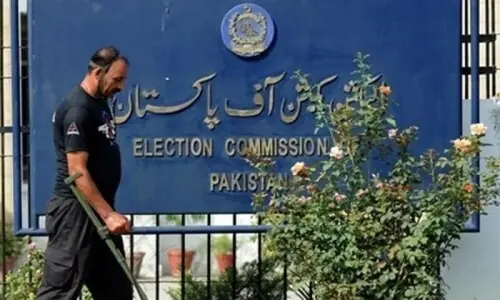
ISLAMABAD: The repeated postponement of the local government elections in Islamabad - six times in five years - represents a direct assault on grassroots democracy and raises serious concerns about the subordination of the Election Commission of Pakistan (ECP) to the executive.
This was stated by Pattan-Coalition38 (a network of associations, community-based organisations, labour unions and human rights activists) in its latest research report, which was released on Friday.
It said democratic participation in the federal capital had been systematically obstructed, at enormous financial and political cost.
The research report pointed out that a total of 7,866 candidates in two aborted elections collectively paid Rs37.74 million in nomination fees. Beyond this, candidates spent heavily on legal representation and campaign mobilisation. The total estimated expenditure for the two cancelled elections stands at a staggering Rs544.30 million.
“This is not merely financial loss; it is the erosion of citizens’ constitutional right to representation too.
A total of 7,866 candidates in two aborted elections collectively paid Rs37.74m in nomination fees
The report stated that 70pc of candidates and 61pc of voters opposed the amendments made to the Local Government Act 2015 through an ordinance when National Assembly was in session.
It pointed out that 66pc of candidates and 49pc of voters rejected the abolition of the Metropolitan Corporation.
“Over 50pc opposed indirect elections for town corporations. 90pc of candidates and 60pc of voters rejected inclusion of businessmen and technocrats in workers/peasant’s quota seats. These amendments were introduced through an ordinance, without stakeholders’ consultation, during an active session of the National Assembly. Respondents widely perceive this as executive overreach designed to centralise control and weaken elected local bodies.”
Importantly, 40pc of candidates opposing these amendments belonged to ruling parties, demonstrating that resistance transcends partisan lines, read the report.
Why were elections being postponed?
The report pointed that more than one-third respondents believed elections were postponed out of fear of defeat of the ruling parties.
It said that nearly 40pc blamed the bureaucracy, alleging resistance to working under elected representatives.
“Over 10pc believe members of the National Assembly seek to preserve monopoly over patronage and development funds. Together, these perceptions suggest a nexus of political and bureaucratic interests actively undermining local democracy.”
It survey report pointed out troubling patterns within political parties: 71pc of party office-bearers were appointed by party leaders rather than elected. Only 29pc reached office through internal party elections.
“This concentration of power mirrors the broader democratic deficit at the local government level,” the report said.
It recommended that ECP should immediately refund nomination fees to candidates in cancelled elections. The government should compensate candidates for financial losses incurred due to election cancellations.
It said instead of holding all union council elections on a single day, elections should be staggered - 20pc every two years - to ensure continuity of local governance.
“Given widespread opposition to key amendments, a referendum should be held to ensure local government institutions are democratic, transparent, accountable and fully autonomous. A clear definition of terms, such as ‘businessman’ and guarantees of political, fiscal and administrative empowerment must be provided along with constitutional protection for local government institutions. Democracy delayed is democracy denied,” the report said.
Published in Dawn, February 28th, 2026